



One year on, childcare safety reforms show progress in reporting and training, but true safeguarding depends on culture and daily practice.



The Child Safe Standards provide a framework to ensure that every child in early childhood education is protected, respected, and empowered. These standards are not just compliance requirements; they are everyday practices that safeguard children’s well-being while fostering environments where they can thrive.
For educators, translating these standards into age‑appropriate strategies is essential. Babies, toddlers, and preschoolers each experience safety differently, and educators must adapt their approaches to meet developmental needs. This guide offers practical checklists and examples to help educators embed child safety into daily routines, interactions, and learning experiences.

All children have the fundamental right to feel safe, valued, respected and supported while attending early childhood education and care (ECEC) in NSW. To reinforce this right, the NSW Government has amended the Children (Education and Care Services) National Law (NSW) as part of recent child safety reforms. These changes introduce new provisions that make it an offence to subject a child in ECEC to “inappropriate conduct” and clearly define what that means in an early childhood context.

In the ongoing discourse around quality early childhood education, educator-to-child ratios often dominate the conversation. While ratios are undeniably important for supervision and safety, a critical yet under-addressed factor is the physical space allocated to each child. The reality is stark: even with ideal ratios, overcrowded rooms can undermine well-being, learning outcomes, and emotional safety.

In light of the recent Four Corners investigation and the distressing realities it has brought to the surface, the following is a sample letter to share with families. This letter is designed to offer calm, transparent reassurance while reaffirming your service's commitment to safeguarding every child in your care. This letter may be used, edited, and adapted for your particular service to reassure families that their concerns are valid and their children are safe.

The concept of supervision zones is a practical strategy to enhance child safety and educator accountability where educators are assigned to actively supervise and engage with children.

Here are 5 gentle, emotionally intelligent, story-based resources designed to help young children understand body boundaries, safe adults, and protective behaviors.
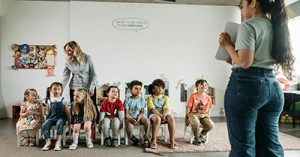
Talking to young children about child protection is one of the most powerful ways to build their sense of safety, agency, and trust. It’s not about instilling fear—it’s about giving them language, confidence, and clarity to navigate their world. Here’s how to approach it with warmth, honesty, and age-appropriate care.
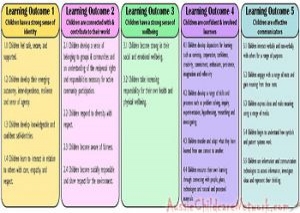 Here is the list of the EYLF Learning Outcomes that you can use as a guide or reference for your documentation and planning. The EYLF… Read More
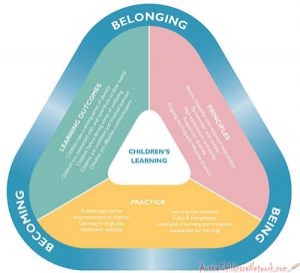 The EYLF is a guide which consists of Principles, Practices and 5 main Learning Outcomes along with each of their sub outcomes, based on identity,… Read More
 This is a guide on How to Write a Learning Story. It provides information on What Is A Learning Story, Writing A Learning Story, Sample… Read More
 One of the most important types of documentation methods that educators needs to be familiar with are “observations”. Observations are crucial for all early childhood… Read More
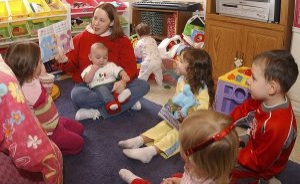 To support children achieve learning outcomes from the EYLF Framework, the following list gives educators examples of how to promote children's learning in each individual… Read More
 Reflective practice is learning from everyday situations and issues and concerns that arise which form part of our daily routine while working in an early… Read More
 When observing children, it's important that we use a range of different observation methods from running records, learning stories to photographs and work samples. Using… Read More
 Within Australia, Programming and Planning is reflected and supported by the Early Years Learning Framework. Educators within early childhood settings, use the EYLF to guide… Read More
 This is a guide for educators on what to observe under each sub learning outcome from the EYLF Framework, when a child is engaged in… Read More
 The Early Years Learning Framework describes the curriculum as “all the interactions, experiences, activities, routines and events, planned and unplanned, that occur in an environment… Read More

In the rhythm of early childhood education, weekly programs often become the heartbeat of practice—a...
See more...
A service assessment and rating visit is an opportunity to demonstrate the strengths of your...
See more...
Quality Area 5: Relationships with Children is fundamental in early childhood education as it lays...
See more...