



For all services, both persons in day-to-day charge and all nominated supervisors must complete an approved child protection course.
The ACT's 354 National Quality Framework-approved early childhood services reported more than 500 serious incidents last financial year, translating to an average of almost 150 serious incidents per 100 National Quality Framework-approved services - well above the national average of 99.3.
Illawarra child care provider Big Fat Smile has been fined $24,000 fine, plus costs, after a sleeping three-year-old boy was left undiscovered at a Wollongong centre for almost an hour after closing time.
Three Perth women have had their child care supervisor accreditation cancelled, and one faced a criminal charge after a six-year-old autistic boy was smacked and had soap put in his mouth.
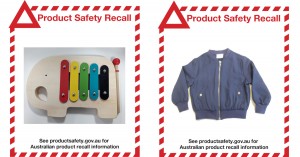
There has been a product safety recall from Product Safety Australia for the Jumbo Wooden Xylophone and Big W Girls Bomber Jacket.
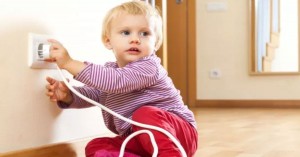
Thousands of children across Australia may be at risk after a loophole for dodgy childcare centre operators to buy businesses without a safety audit.
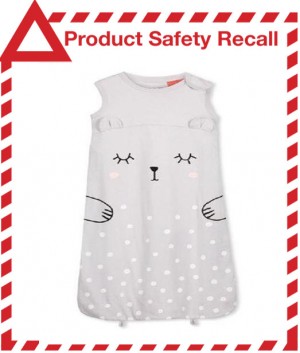
There has been a product safety recall from Product Safety Australia regarding the Cotton On Kids— Baby Summer Bundler Sleeping Bag, purchased between 1 October 2017 - 8 December 2017.
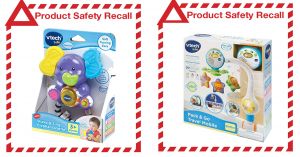
There has been a product safety recall from Product Safety Australia for the VTech Baby Pack & Go Travel Mobile and VTech Baby Shake and Sing Elephant Rattle
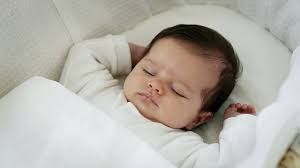
From the 01 Oct, a new National Regulation will be put in place that will give Educators the right to overrule parents requests for their child's sleep arrangements to reduce the risk of SIDS (Sudden Infant Death Syndrome).
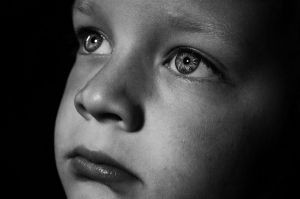
As part of a $53 million Mental Health in Education program, announced by the Turnbull government, three-year-olds in childcare and students from preschool and kindergarten upwards will be taught about suicide awareness and mental health.
Early Childhood Australia CEO Sam Page said helping to develop resilient children who were aware of their emotions and mental health could have a real impact in preventing them from being at risk of suicide later on in life.
“If we teach all children how to name their emotions, how to feel sad and how to recover from that ... then we are more likely to have reduced instances of depression and that in turn will reduce the number of children trying to suicide,” Ms Page said.
While the word “suicide” won’t be used directly with three-year-olds, discussions around feelings of “not wanting to be here” or “wanting to die” could be addressed in the right context.
Health Minister Greg Hunt will announce teachers from childcare through to Year 12 will be provided additional mental health and suicide training in their university degrees or VET education.
Those already teaching will undergo additional online and face-to-face training to better improve the discussion with children around the issue.
The program will be run by Beyond Blue in partnership with Early Childhood Australia and Headspace.
It will begin early next year with two-thirds of all schools to be involved — 2000 Early Learning Services and 6000 schools — by June 2019.
Reference:
Rudd, Matilda (2017), Three Year Olds Discuss Suicide Awareness, Daily Mail Australia
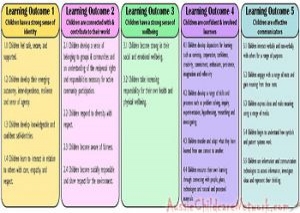 Here is the list of the EYLF Learning Outcomes that you can use as a guide or reference for your documentation and planning. The EYLF… Read More
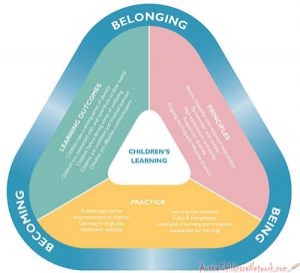 The EYLF is a guide which consists of Principles, Practices and 5 main Learning Outcomes along with each of their sub outcomes, based on identity,… Read More
 This is a guide on How to Write a Learning Story. It provides information on What Is A Learning Story, Writing A Learning Story, Sample… Read More
 One of the most important types of documentation methods that educators needs to be familiar with are “observations”. Observations are crucial for all early childhood… Read More
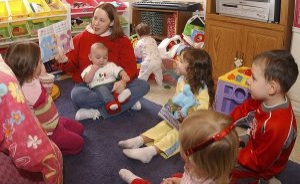 To support children achieve learning outcomes from the EYLF Framework, the following list gives educators examples of how to promote children's learning in each individual… Read More
 Reflective practice is learning from everyday situations and issues and concerns that arise which form part of our daily routine while working in an early… Read More
 When observing children, it's important that we use a range of different observation methods from running records, learning stories to photographs and work samples. Using… Read More
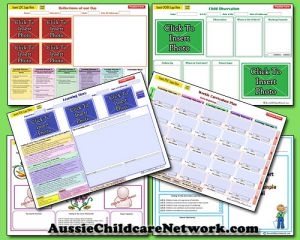 Within Australia, Programming and Planning is reflected and supported by the Early Years Learning Framework. Educators within early childhood settings, use the EYLF to guide… Read More
 This is a guide for educators on what to observe under each sub learning outcome from the EYLF Framework, when a child is engaged in… Read More
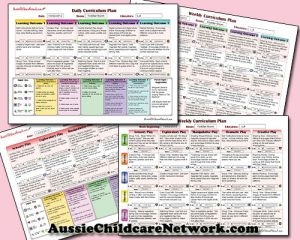 The Early Years Learning Framework describes the curriculum as “all the interactions, experiences, activities, routines and events, planned and unplanned, that occur in an environment… Read More

A Meet the Team wall is more than just a display of photos; it’s a...
See more...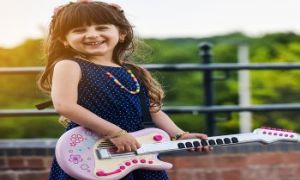
Children begin to learn that music and movement communicate messages and represents actions. Music naturally delights...
See more...
Regulatory authorities administer the National Quality Framework (NQF) in each state and territory, usually as...
See more...