



This three-part foundational webinar series, from TAFE NSW, presented by Josh Brown, a proud Worimi man and co-founder of Deadly Ed, empowers early childhood educators and teachers to confidently and respectfully embed culturally authentic Aboriginal perspectives into their everyday teaching.
Aligned with the Early Years Learning Framework (EYLF), participants will build confidence in selecting, using, and advocating for authentic Aboriginal resources in their everyday teaching practice.
Reconciliation in early childhood is not a one‑week event; it’s a daily practice. Embedding reconciliation means weaving respect, truth‑telling, and cultural awareness into routines, environments, and relationships. For educators, this is about creating spaces where Aboriginal and Torres Strait Islander perspectives are visible, valued, and celebrated.

In early childhood, the playground is more than a place to play; it's a living classroom. Caring for Country invites children to see the land as a friend, not just a space. Through simple, sensory experiences, educators can nurture respect for nature and embed Aboriginal and Torres Strait Islander perspectives in everyday play.
National Reconciliation Week (27 May – 3 June) invites children and educators to celebrate the shared story of Australia and deepen understanding of Aboriginal and Torres Strait Islander cultures. In early childhood, this begins with simple, meaningful experiences: listening to stories, exploring nature, creating art, and learning about respect and belonging.
The Reconciliation Week Lesson Plan helps educators embed reconciliation through play‑based learning, group discussions, and interest‑area exploration. Each day builds on the theme “All In," encouraging children to see themselves as part of a caring, respectful community.

Creating Aboriginal and Torres Strait Islander displays in early childhood education (ECE) settings is about more than decoration—it’s about embedding cultural respect, identity, and belonging into the learning environment. Here are some practical and meaningful approaches.

Acknowledgement of Country is more than a ritual—it’s a daily opportunity to connect children with respect, gratitude, and belonging.

Australia Day, observed on 26 January, is a day of celebration for some but a day of mourning for many First Nations peoples. As educators, we hold the responsibility to model respect, inclusion, and truth-telling. Reframing the day as Our Land and Community Day allows us to celebrate what is beautiful about Australia—its land, animals, foods, and cultural diversity—while acknowledging the pain this date represents.
This approach is not about division. It is about honesty, empathy, and creating a safe, inclusive space for children and families.

Embedding Aboriginal and Torres Strait Islander perspectives is not a themed week or a token gesture; it’s a commitment to truth-telling, respect, and inclusion woven through everyday practice. Done well, it strengthens children’s sense of belonging and deepens their connection to Country, done poorly, it risks tokenism, cultural harm, and misrepresentation.
This guide supports educators to embed Indigenous perspectives in ways that are meaningful, safe, and aligned with the EYLF, NQS, and service philosophy.

Embedding Aboriginal and Torres Strait Islander perspectives is a core part of high‑quality early childhood education. But occasionally, families may express uncertainty or request that their child not participate in these experiences. This is a practical guide for early childhood educators on addressing family concerns about Aboriginal and Torres Strait Islander perspectives, with culturally safe responses, EYLF‑aligned explanations, and NQS‑based professional guidance.

In early childhood education, we work at the intersection of family values, children’s rights, and professional obligations. Most days, these elements align beautifully. But sometimes, they collide, and one of the most challenging situations arises when a family requests that their child not participate in Aboriginal and Torres Strait Islander cultural activities or learning.
This article unpacks how educators can navigate this respectfully, confidently, and in line with the EYLF and NQS with practical examples you can use immediately.
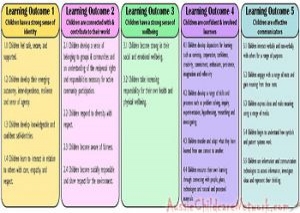 Here is the list of the EYLF Learning Outcomes that you can use as a guide or reference for your documentation and planning. The EYLF… Read More
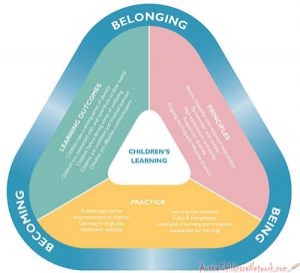 The EYLF is a guide which consists of Principles, Practices and 5 main Learning Outcomes along with each of their sub outcomes, based on identity,… Read More
 This is a guide on How to Write a Learning Story. It provides information on What Is A Learning Story, Writing A Learning Story, Sample… Read More
 One of the most important types of documentation methods that educators needs to be familiar with are “observations”. Observations are crucial for all early childhood… Read More
 To support children achieve learning outcomes from the EYLF Framework, the following list gives educators examples of how to promote children's learning in each individual… Read More
 Reflective practice is learning from everyday situations and issues and concerns that arise which form part of our daily routine while working in an early… Read More
 When observing children, it's important that we use a range of different observation methods from running records, learning stories to photographs and work samples. Using… Read More
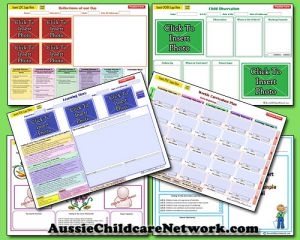 Within Australia, Programming and Planning is reflected and supported by the Early Years Learning Framework. Educators within early childhood settings, use the EYLF to guide… Read More
 This is a guide for educators on what to observe under each sub learning outcome from the EYLF Framework, when a child is engaged in… Read More
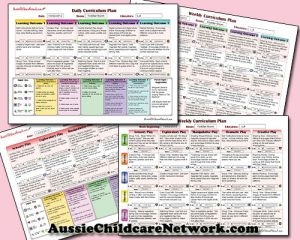 The Early Years Learning Framework describes the curriculum as “all the interactions, experiences, activities, routines and events, planned and unplanned, that occur in an environment… Read More

Exceeding Theme 1 focuses on practice being embedded in service operations and highlights that high-quality approaches...
See more...
As the words indicate, Open-ended questions have no right or wrong answers and thus cannot...
See more...
Anxiety and fear are natural parts of growing up. They often indicate that children are...
See more...