


Australia is home to the world’s oldest continuous cultures, with First Nations Peoples holding stories, knowledge, and connections to Country that stretch back more than 65,000 years. Now, educators and students can explore these stories in a new way through Deep Time, a digital resource created by the ABC Education team.

In early childhood education, stories are more than entertainment; they’re vessels of culture, emotion, and connection. Aboriginal children’s books that explore water, wind, and nature offer rich opportunities to embed Indigenous perspectives, foster environmental awareness, and support holistic development. When paired with the 8 Aboriginal Ways of Learning and the EYLF, these stories become powerful tools for relational, symbolic, and experiential learning.

In a landmark move toward equity and empowerment, Aboriginal Community Controlled Organisation (ACCO) services are expanding across New South Wales, offering families more choice, more places, and more opportunities for culturally grounded early childhood education.
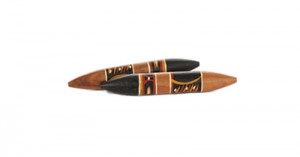
Music is a universal language—and in Aboriginal and Torres Strait Islander cultures, it’s also a powerful vessel for storytelling, ceremony, and connection. Introducing Aboriginal music into early learning environments not only enriches children’s understanding of Australia’s First Nations peoples but also fosters respect, curiosity, and cultural awareness from a young age.
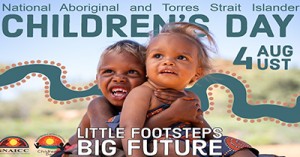
On Monday, 4 August 2025, early childhood communities across Australia will come together to honour the strength, spirit and journeys of Aboriginal and Torres Strait Islander children for National Children’s Day. The 2025 theme—Little Footsteps, Big Future—reflects the profound significance of culture, community, and Country in guiding each child’s path as they grow.

In a heartwarming episode of Playschool titled “Island Life", Uncle Charles Passi, a proud Torres Strait Islander, joins the show and introduces viewers to the sit-down dance “Taba Naba", a traditional Torres Strait Islander song that celebrates island life, the sea, and community connection. This is a great opportunity for educators to learn to dance to teach children.
NAIDOC Week is a powerful opportunity to introduce toddlers and preschoolers to Aboriginal and Torres Strait Islander cultures in ways that are respectful, age-appropriate, and deeply meaningful. The following article provides a list of celebration ideas tailored for early childhood settings, blending creativity, sensory exploration, and cultural appreciation.

For babies, the Acknowledgment of Country is often expressed through sensory-rich, rhythmic, and visual experiences that help them connect to the land and its Traditional Custodians in developmentally appropriate ways. The following article provides Acknowledgment Of Country Ideas For The Babies Room.

As part of National Reconciliation Week, Early Childhood Australia is offering two free professional learning courses. Initiating a Reconciliation Action Plan: Where do I start? and Reconciliation in Children’s Education and Care: Taking the First Steps, available free until 3 June.

Introducing Indigenous Australian stories to young children is vital for fostering cultural awareness, respect, and understanding. It teaches children about the histories and realities of Aboriginal and Torres Strait Islander peoples, promoting empathy and inclusivity, and emphasizes the importance of caring for the land and respecting nature, instilling a sense of responsibility in young readers.
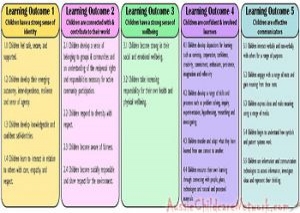 Here is the list of the EYLF Learning Outcomes that you can use as a guide or reference for your documentation and planning. The EYLF… Read More
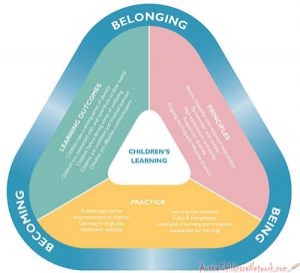 The EYLF is a guide which consists of Principles, Practices and 5 main Learning Outcomes along with each of their sub outcomes, based on identity,… Read More
 This is a guide on How to Write a Learning Story. It provides information on What Is A Learning Story, Writing A Learning Story, Sample… Read More
 One of the most important types of documentation methods that educators needs to be familiar with are “observations”. Observations are crucial for all early childhood… Read More
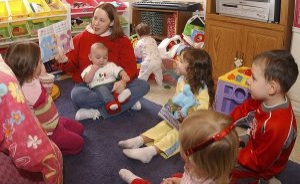 To support children achieve learning outcomes from the EYLF Framework, the following list gives educators examples of how to promote children's learning in each individual… Read More
 Reflective practice is learning from everyday situations and issues and concerns that arise which form part of our daily routine while working in an early… Read More
 When observing children, it's important that we use a range of different observation methods from running records, learning stories to photographs and work samples. Using… Read More
 Within Australia, Programming and Planning is reflected and supported by the Early Years Learning Framework. Educators within early childhood settings, use the EYLF to guide… Read More
 This is a guide for educators on what to observe under each sub learning outcome from the EYLF Framework, when a child is engaged in… Read More
 The Early Years Learning Framework describes the curriculum as “all the interactions, experiences, activities, routines and events, planned and unplanned, that occur in an environment… Read More
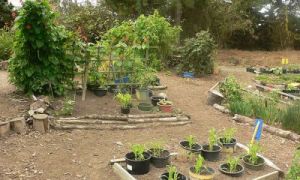
Sustainability in early childhood education is an important part of the curriculum and should be...
See more...
When a service operates without external cleaning staff, it’s reasonable to expect educators to maintain...
See more...
Sensory Play is an early childhood educational approach that allows children to use all their...
See more...