Embed the 8 Ways Learning Framework in early childhood programs story, land, community, maps, and symbols for holistic EYLF outcomes.
The 8 Ways Learning Framework offers culturally responsive pedagogy rooted in Aboriginal perspectives. Embedding these approaches enriches programs, fosters inclusivity, and strengthens children’s connection to story, land, and community while aligning with the EYLF principles of belonging, being, and becoming.
The 8 Ways in Practice
Story Sharing
- Program Example: Circle time storytelling, oral histories, puppet shows.
- Practical Strategy: Invite Elders or families to share narratives.
- EYLF Link: Outcome 1 – Children develop a strong sense of identity.
- Benefit: Builds empathy, listening, and cultural awareness.
Learning Maps
- Program Example: Visual flowcharts of routines, mind maps for projects.
- Practical Strategy: Use pictorial schedules and collaborative mapping.
- EYLF Link: Outcome 4 – Children are confident and involved learners.
- Benefit: Supports sequencing, planning, and self‑regulation.
Non-Verbal
- Program Example: Dance, gesture games, yoga, role play without words.
- Practical Strategy: Encourage kinesthetic exploration and silent reflection.
- EYLF Link: Outcome 3 – Children have a strong sense of wellbeing.
- Benefit: Strengthens body awareness, emotional regulation, and intra‑personal skills.
Symbols and Images
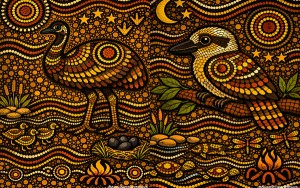
- Program Example: Art projects using metaphors, visual storytelling, Aboriginal symbols.
- Practical Strategy: Use picture cards, murals, and symbolic play.
- EYLF Link: Outcome 5 – Children are effective communicators.
- Benefit: Enhances abstract thinking and cultural literacy.
Land Links
- Program Example: Nature walks, gardening, mapping local landmarks.
- Practical Strategy: Connect learning to local environment and Country.
- EYLF Link: Outcome 2 – Children are connected with and contribute to their world.
- Benefit: Builds environmental awareness and place‑based identity.
Non-Linear
- Program Example: Open‑ended projects, lateral problem‑solving, combining art and science.
- Practical Strategy: Encourage divergent thinking and innovation.
- EYLF Link: Outcome 4 – Children are confident and involved learners.
- Benefit: Promotes creativity, flexibility, and systems thinking.
Deconstruct/Reconstruct
- Program Example: “Watch then do” activities — cooking, craft, construction.
- Practical Strategy: Scaffold tasks by modelling, then breaking into parts.
- EYLF Link: Outcome 4 – Children are confident and involved learners.
- Benefit: Builds mastery through observation, imitation, and practice.
Community Links
- Program Example: Local excursions, community projects, family involvement.
- Practical Strategy: Partner with local organisations and cultural groups.
- EYLF Link: Outcome 2 – Children are connected with and contribute to their world.
- Benefit: Strengthens belonging, responsibility, and social contribution.
Linking Strategies Table
| Way of Learning | Program Example | EYLF Outcome | Skills Developed |
|---|---|---|---|
| Story Sharing | Circle storytelling | Outcome 1 | Identity, empathy |
| Learning Maps | Visual routine charts | Outcome 4 | Sequencing, planning |
| Non-Verbal | Dance & gesture play | Outcome 3 | Kinesthetic, emotional regulation |
| Symbols & Images | Art with metaphors | Outcome 5 | Abstract thinking |
| Land Links | Nature walks | Outcome 2 | Environmental awareness |
| Non-Linear | Open-ended projects | Outcome 4 | Creativity, innovation |
| Deconstruct/Reconstruct | Cooking “watch then do” | Outcome 4 | Mastery, scaffolding |
| Community Links | Local excursions | Outcome 2 | Belonging, contribution |
Challenges & Tips
- Cultural Respect: Ensure Aboriginal perspectives are acknowledged authentically.
- Balance: Integrate all 8 ways, not just the familiar ones.
- Documentation: Link activities to EYLF outcomes for accountability.
- Community Engagement: Build genuine partnerships with families and local groups.
Embedding the 8 Ways Learning Framework into early childhood programs creates culturally responsive, holistic learning experiences. By weaving in story sharing, learning maps, symbols and images, and strong community links, educators nurture identity, connection to land, and collaborative growth. This approach not only strengthens EYLF outcomes but also honours diverse ways of knowing, doing, and being ensuring every child’s journey is meaningful, inclusive, and grounded in culture.
Further Reading
8 Aboriginal Ways Of Learning
Top 10 Popular Indigenous Australian Books for Young Children


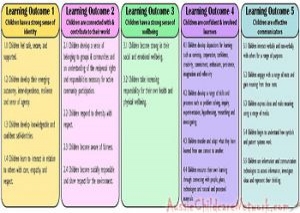 Here is the list of the EYLF Learning Outcomes that you can use as a guide or reference for your documentation and planning. The EYLF
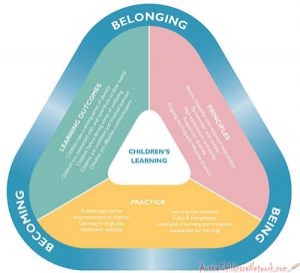 The EYLF is a guide which consists of Principles, Practices and 5 main Learning Outcomes along with each of their sub outcomes, based on identity,
 This is a guide on How to Write a Learning Story. It provides information on What Is A Learning Story, Writing A Learning Story, Sample
 One of the most important types of documentation methods that educators needs to be familiar with are “observations”. Observations are crucial for all early childhood
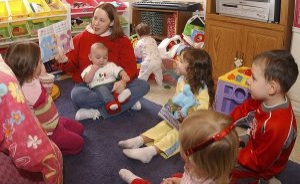 To support children achieve learning outcomes from the EYLF Framework, the following list gives educators examples of how to promote children's learning in each individual
 Reflective practice is learning from everyday situations and issues and concerns that arise which form part of our daily routine while working in an early
 When observing children, it's important that we use a range of different observation methods from running records, learning stories to photographs and work samples. Using
 Within Australia, Programming and Planning is reflected and supported by the Early Years Learning Framework. Educators within early childhood settings, use the EYLF to guide
 This is a guide for educators on what to observe under each sub learning outcome from the EYLF Framework, when a child is engaged in
 The Early Years Learning Framework describes the curriculum as “all the interactions, experiences, activities, routines and events, planned and unplanned, that occur in an environment