Educators are constantly seeking ways to make children’s learning visible—not only for compliance and documentation, but also to celebrate achievements, strengthen family partnerships, and empower children to reflect on their own growth. One powerful approach is the “Our Learning Journey” display. This visual narrative captures the progression of experiences, projects, and milestones, turning everyday learning into a collective story.
Getting Started
- Choose a metaphor: A winding road, train track, or timeline works beautifully to symbolize progression.
- Set a timeframe: Decide if the journey will cover a week, a term, or a whole year.
- Identify anchor points: Link each stage to EYLF outcomes (identity, community, wellbeing, learning, and communication).
Linking to the EYLF
The Learning Journey is most powerful when explicitly connected to the Early Years Learning Framework (EYLF).
- Outcome 1 – Identity: Photos of role play, storytelling, or collaborative projects.
- Outcome 2 – Community: Teamwork, cultural celebrations, excursions.
- Outcome 3 – Wellbeing: Safety lessons, healthy eating, emotional regulation.
- Outcome 4 – Learning: Inquiry projects, experiments, problem-solving.
- Outcome 5 – Communication: Writing samples, puppet shows, group discussions.
Example caption: “We asked questions about how babies grow—Outcome 4: Children are confident and involved learners.”
Display Strategies
- Interactive elements: Flaps, pockets, and QR codes linking to digital portfolios.
- Child voice: Quotes, drawings, reflections.
- Family input: Invite parents to add photos or notes from home.
- Visual progression: Arrows, footprints, and numbered weeks to show movement.
Practical Ideas
- Weekly updates: Dedicate 10 minutes each week to add highlights.
- Mini-projects: Feature one key activity per week.
- Student-led curation: Children choose which work/photo represents their learning.
- Cross-curricular links: Pair literacy with art, science with storytelling.
When to End
- Natural closure: End at the close of a term, project, or event.
- Celebration point: Use the final stage as a reflection wall.
- Transition tool: Archive into a scrapbook or digital slideshow for families.
Daily Diary, Curriculum, or Project?
- Not a replacement for daily diaries: Families still need practical updates (meals, rest, care). The Learning Journey shows the big picture of learning progression.
- Not a substitute for curriculum planning: Curriculum requires intentional design. The Learning Journey documents what has happened, providing evidence of curriculum in action.
- Perfect for project themes: It works beautifully to document project-based learning (e.g., “Exploring Water,” “Our Community”), showing how children’s questions and explorations evolve.
Think of it as a bridge:
- Daily diaries → practical updates
- Curriculum planning → intentional design
- Learning Journey → visual narrative that connects the two
Photo Ideas


Examples by Age Group
Babies (0–2 years)
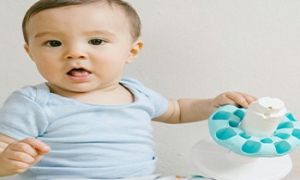
- Photos of sensory play (water, sand, textures).
- Captions like “We explored cold and warm water—Outcome 3: Children have a strong sense of well-being.”
- Family contributions: “At home, we noticed she loves splashing too!”
Toddlers (2–3 years)
- Document role play, block building, and early language.
- Captions like “We built towers together—Outcome 2: Children are connected with and contribute to their world.”
- Include toddler quotes: “I made a big one!”
Preschoolers (3–5 years)
- Showcase inquiry projects, storytelling, and science experiments.
- Captions like “We asked questions about how plants grow—Outcome 4: Children are confident and involved learners.”
- Add writing samples, drawings, and group reflections.
Why It Works
- Makes learning visible and valued.
- Strengthens home–school partnerships.
- Encourages reflection and metacognition in children.
- Provides evidence for assessment and compliance documentation.
“Our Learning Journey” is more than a display—it’s a storytelling tool that captures the richness of children’s experiences. It doesn’t replace daily diaries or curriculum planning, but it complements them by showing the continuity of learning. Whether documenting a baby’s sensory exploration, a toddler’s teamwork, or a preschooler’s inquiry project, the journey board becomes a collective celebration of growth.
By starting with a clear theme, linking to EYLF outcomes, and ending with reflection, educators can create a meaningful narrative that honors children’s voices, engages families, and strengthens professional practice.
Image References:
Image 1 - No Name, Pinterest
Image 2 – No Name, Pinterest
Image 3 - Georgia Grant, Pinterest
Image 4 – Claire Tomlinson, Pinterest
Image 5 – No Name, Pinterest
Image 6 – No Name, Pinterest
Image 7 – No Name, Pinterest
Image 8 – No Name, Pinterest
Image 9 – No Name, Pinterest
Image 10 – No Name, Pinterest
Image 11 – No Name, Pinterest
Further Reading
Learning Journey Summary
Designing A Documentation Wall
Blurbs For Wall Displays
Setting Up Displays In An Early Learning Environment
Importance of Displaying Children's Artwork
Guidelines For Documenting In Early Childhood Services
Pedagogical Documentation
Documentation Services Required to Support Quality Area 1
Guidelines For Documenting In Early Childhood Settings
Safe Language in Documentation
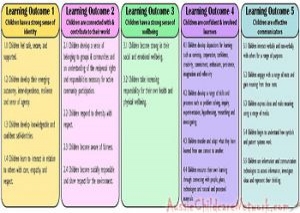 Here is the list of the EYLF Learning Outcomes that you can use as a guide or reference for your documentation and planning. The EYLF
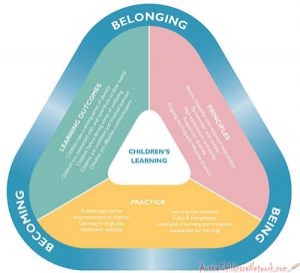 The EYLF is a guide which consists of Principles, Practices and 5 main Learning Outcomes along with each of their sub outcomes, based on identity,
 This is a guide on How to Write a Learning Story. It provides information on What Is A Learning Story, Writing A Learning Story, Sample
 One of the most important types of documentation methods that educators needs to be familiar with are “observations”. Observations are crucial for all early childhood
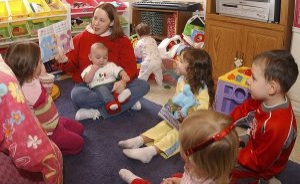 To support children achieve learning outcomes from the EYLF Framework, the following list gives educators examples of how to promote children's learning in each individual
 Reflective practice is learning from everyday situations and issues and concerns that arise which form part of our daily routine while working in an early
 When observing children, it's important that we use a range of different observation methods from running records, learning stories to photographs and work samples. Using
 Within Australia, Programming and Planning is reflected and supported by the Early Years Learning Framework. Educators within early childhood settings, use the EYLF to guide
 This is a guide for educators on what to observe under each sub learning outcome from the EYLF Framework, when a child is engaged in
 The Early Years Learning Framework describes the curriculum as “all the interactions, experiences, activities, routines and events, planned and unplanned, that occur in an environment