Child-led programming places children’s interests, choices, and agency at the heart of curriculum design. Rather than educators dictating activities, the program evolves from what children notice, question, and explore. This approach fosters creativity, independence, and authentic engagement.
What Does “Child-Led” Mean?
- Children initiate: Activities begin with children’s ideas, curiosities, or play themes.
- Educators facilitate: Adults provide resources, space, and encouragement without directing outcomes.
- Process over product: The focus is on exploration and discovery, not polished final results.
- Dynamic programming: Plans shift as children’s interests evolve, rather than sticking to rigid templates.
Practical Child-Led Program Ideas
Here are strategies educators can embed into daily practice:
1. Interest-Based Provocations
- Provide open-ended materials (blocks, natural items, art supplies).
- Observe how children use them and extend based on their choices.
2. Observation-Driven Planning
- Document children’s questions and play themes.
- Build experiences around what they are already exploring.
3. Flexible Routines
- Allow time for spontaneous projects.
- Example: A child’s curiosity about insects could lead to a group nature walk and bug journal.
4. Creative Agency
- Avoid pre-cut templates or adult-assembled crafts.
- Let children design, construct, and finish their own creations.
5. Collaborative Storytelling
- Invite children to co-create narratives, plays, or role-play scenarios.
- Educators act as facilitators, not directors.
6. Real-Life Connections
- Follow children’s questions about the world (e.g., “Where does rain come from?”).
- Turn these into mini-investigations with books, experiments, or community input.
7. Peer-Led Learning
- Encourage children to share skills with each other (e.g., teaching a friend how to build a tower).
- Celebrate peer collaboration as part of the program.
Benefits of Child-Led Programming
- For children: Builds confidence, independence, and problem-solving skills.
- For educators: Encourages reflective practice and deeper observation.
- For families: Provides reassurance that learning is meaningful and responsive to children’s needs.
Top 10 Child-Led Program Ideas
(Empowering children’s voices in daily practice)
1. Follow Their Curiosity
Notice children’s questions and turn them into mini-investigations (e.g., “Where does rain come from?” → water play, books, experiments).
2. Open-Ended Materials
Offer loose parts, natural items, and art supplies without instructions. Let children decide how to use them.
3. Flexible Routines
Build in time for spontaneous projects. Allow play themes to evolve instead of rushing transitions.
4. Creative Freedom
Skip templates and pre-cut crafts. Encourage children to design, construct, and finish their own creations.
5. Peer-Led Learning
Celebrate when children teach each other skills (e.g., building towers, drawing shapes).
6. Collaborative Storytelling
Invite children to co-create narratives, plays, or role-play scenarios. Educators act as facilitators, not directors.
7. Real-Life Connections
Use everyday events or community happenings as springboards for exploration (e.g., local weather, cultural festivals).
8. Outdoor Explorations
Let children lead nature walks, bug hunts, or garden projects. Document their discoveries.
9. Child-Created Displays
Encourage children to decide what goes on the walls—photos, drawings, or collections they curate themselves.
10. Reflection Together
Sit with children to reflect on what they enjoyed. Use their words and ideas to shape the next day’s program.
Child-led programming is about trusting the process. Educators step back, observe, and provide resources, while children’s voices and choices guide the learning journey.
Child-led programming is not about abandoning structure—it’s about creating conditions where children’s voices shape the curriculum. By stepping back, observing, and trusting the process, educators foster authentic learning experiences that reflect children’s identities and curiosities.
Further Reading
Capturing Children's Voices In Early Childhood Settings
How To Implement A Child-Led Inquiry Map
Child-Centered Learning
Gathering Children's Voices For The Program




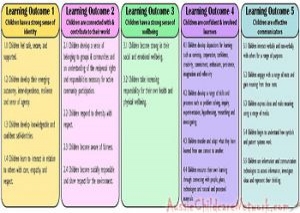 Here is the list of the EYLF Learning Outcomes that you can use as a guide or reference for your documentation and planning. The EYLF
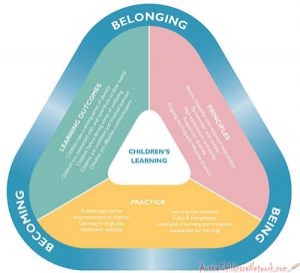 The EYLF is a guide which consists of Principles, Practices and 5 main Learning Outcomes along with each of their sub outcomes, based on identity,
 This is a guide on How to Write a Learning Story. It provides information on What Is A Learning Story, Writing A Learning Story, Sample
 One of the most important types of documentation methods that educators needs to be familiar with are “observations”. Observations are crucial for all early childhood
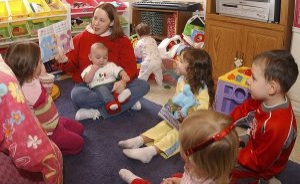 To support children achieve learning outcomes from the EYLF Framework, the following list gives educators examples of how to promote children's learning in each individual
 Reflective practice is learning from everyday situations and issues and concerns that arise which form part of our daily routine while working in an early
 When observing children, it's important that we use a range of different observation methods from running records, learning stories to photographs and work samples. Using
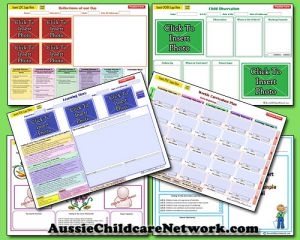 Within Australia, Programming and Planning is reflected and supported by the Early Years Learning Framework. Educators within early childhood settings, use the EYLF to guide
 This is a guide for educators on what to observe under each sub learning outcome from the EYLF Framework, when a child is engaged in
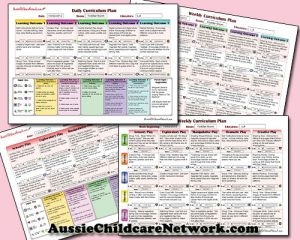 The Early Years Learning Framework describes the curriculum as “all the interactions, experiences, activities, routines and events, planned and unplanned, that occur in an environment