Strengths-based documentation is more than a compliance tool, it’s a way of honouring children’s voices, identities, and learning journeys. By mapping affirming, child-centered phrases directly to the EYLF Learning Outcomes, educators can embed the framework naturally into observations, induction processes, and audit preparation. This guide offers a practical cheat sheet tailored to infants, toddlers, and preschoolers, supporting emotionally intelligent practice and sector well-being.
Why Strengths-Based Language Matters
- Shifts focus from deficits to growth: Celebrates what children can do rather than what they lack.
- Supports audit alignment: Demonstrates clear links to EYLF outcomes without needing separate outcome lists.
- Empowers educators: Provides ready-to-use language for observations, reflections, and family communication.
- Centers child's voice: Embeds authentic, affirming phrases that respect identity, culture, and agency.
EYLF Cheat Sheet
Infant (0–12 months)
| Strengths-Based Phrase | EYLF Outcome |
|---|---|
| Responds to familiar voices with smiles and eye contact | Outcome 1: Identity |
| Explores textures and sounds with focused curiosity | Outcome 4: Learning |
| Shows comfort and security through cuddles and calm body language | Outcome 3: Wellbeing |
| Reaches for objects and adjusts grip with growing control | Outcome 4: Learning |
| Uses vocalizations and gestures to express needs and preferences | Outcome 5: Communication |
| Engages in reciprocal interactions with trusted adults | Outcome 2: Community |
Toddler (1–3 years)
| Strengths-Based Phrase | EYLF Outcome |
|---|---|
| Chooses materials independently and explores with joy | Outcome 1: Identity |
| Joins peers in play and shares space with growing awareness | Outcome 2: Community |
| Expresses emotions through movement, sound, and facial expressions | Outcome 3: Wellbeing |
| Persists with stacking, sorting, or pouring tasks | Outcome 4: Learning |
| Uses simple phrases to describe actions or make requests | Outcome 5: Communication |
| Shows empathy by comforting others or noticing feelings | Outcome 2: Community |
Preschool (3–5 years)
| Strengths-Based Phrase | EYLF Outcome |
|---|---|
| Creates stories, drawings, or constructions with imaginative flair | Outcome 4: Learning |
| Negotiates roles and rules during group play with confidence | Outcome 1: Identity |
| Demonstrates care for living things and the environment | Outcome 2: Community |
| Uses movement, music, or sensory play to regulate emotions | Outcome 3: Wellbeing |
| Explains ideas clearly and listens to others with interest | Outcome 5: Communication |
| Reflects on challenges and celebrates achievements with pride | Outcome 4: Learning |
Practical Tips for Educators
- Embed naturally: Use these phrases in “Emerging Strengths” sections rather than listing outcomes separately.
- Audit prep: Color-code or highlight phrases during documentation review to show outcome alignment.
- Induction tool: Train new educators to shift from deficit-based to strengths-based language.
- Template integration: Adapt phrases into observation formats, caption kits, or digital dashboards.
Reflection Prompts for Teams
- How do strengths-based language and the way we view children’s learning change?
- Which outcomes do we naturally capture most often, and which need more intentional focus?
- How can we ensure our documentation reflects both individual growth and community contribution?
This cheat sheet is more than a compliance aid, it’s a sector resource that nurtures authentic documentation, emotionally intelligent practice, and educator confidence. By embedding affirming language into everyday observations, educators strengthen their alignment with EYLF outcomes while honoring the dignity and joy of children’s learning journeys.
Further Reading
Summative Assessment Cheat Sheet For Educators
EYLF Principles & Practices Cheat Sheet
Early Childhood Theory Cheat Sheet For Documentation
Free EYLF Version 2.0 Posters and Cheat Sheets
EYLF Documentation Cheat Sheet for Educators


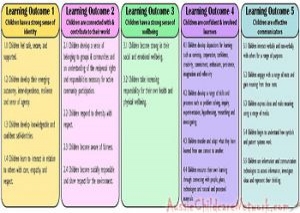 Here is the list of the EYLF Learning Outcomes that you can use as a guide or reference for your documentation and planning. The EYLF
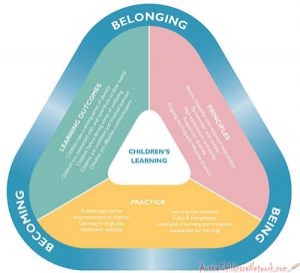 The EYLF is a guide which consists of Principles, Practices and 5 main Learning Outcomes along with each of their sub outcomes, based on identity,
 This is a guide on How to Write a Learning Story. It provides information on What Is A Learning Story, Writing A Learning Story, Sample
 One of the most important types of documentation methods that educators needs to be familiar with are “observations”. Observations are crucial for all early childhood
 To support children achieve learning outcomes from the EYLF Framework, the following list gives educators examples of how to promote children's learning in each individual
 Reflective practice is learning from everyday situations and issues and concerns that arise which form part of our daily routine while working in an early
 When observing children, it's important that we use a range of different observation methods from running records, learning stories to photographs and work samples. Using
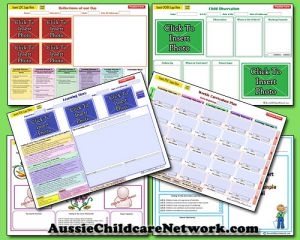 Within Australia, Programming and Planning is reflected and supported by the Early Years Learning Framework. Educators within early childhood settings, use the EYLF to guide
 This is a guide for educators on what to observe under each sub learning outcome from the EYLF Framework, when a child is engaged in
 The Early Years Learning Framework describes the curriculum as “all the interactions, experiences, activities, routines and events, planned and unplanned, that occur in an environment