A rotation calendar is a powerful tool for educators to intentionally schedule and manage the refresh of learning environments, materials, and activities. When paired with a program plan, it ensures that both the physical setup and the learning journey are purposeful, engaging, and aligned with the EYLF.
What Does a Rotation Calendar Do?
It helps educators:
- Plan ahead for when and how different areas of the room will be updated.
- Ensure variety and engagement by introducing new themes, materials, or provocations.
- Align experiences with EYLF outcomes, developmental goals, and children’s interests.
- Balance consistency and novelty, giving children time to explore while keeping the environment stimulating.
What Might Be Rotated?
- Learning Areas: Dramatic play corners, sensory tables, and construction zones.
- Themes/Provocations: Seasons, community helpers, emotions, sustainability.
- Books & Literacy Materials: Rotated weekly to match EYLF focus.
- Loose Parts & Manipulatives: Natural items, recycled materials, and open-ended resources.
- Outdoor Play Setups: Gross motor challenges, nature-based provocations.
- Art & Craft Materials: Linked to weekly or monthly themes.
Example:
- Week 1: Grocery store dramatic play with baskets, pretend food, and price tags.
- Week 2: Nature sensory table with leaves, bark, magnifying glasses.
- Week 3: Obstacle course outdoors with tunnels and balance beams.
Rotation Calendar vs Program Plan
| Feature | Rotation Calendar | Program Plan |
|---|---|---|
| Purpose | Schedules when and how environments/materials are changed | Documents what children will learn and how educators will support that learning |
| Focus | Physical setup & resource management | Learning outcomes, experiences, intentional teaching |
| Scope | Covers areas like dramatic play, sensory tables, construction zones | Covers EYLF outcomes, child interests, goals, educator strategies |
| Timeframe | Weekly, fortnightly, or monthly | Daily, weekly, or fortnightly |
| Driven by | Engagement levels, interest cycles, logistics | Observations, developmental needs, EYLF |
| Example | Week 1: Grocery store dramatic play | Monday: Explore emotions through storytelling |
How They Work Together
- Rotation Calendar keeps the environment fresh and responsive.
- Program Plan ensures learning is intentional, documented, and outcome-driven.
- Together, they create a rich, engaging, and purposeful learning journey.
EYLF-Linked Rotation & Program Planner (Weekly Example)
| Week | EYLF Outcome Focus | Learning Area Setup | Child Interests/Observations | Intentional Teaching Strategies | Resources/Materials | Documentation Notes |
|---|---|---|---|---|---|---|
| Week 1 | Outcome 1: Identity | Dramatic Play – “All About Me” home corner | Children sharing family stories | Encourage storytelling, use emotion cards | Mirrors, dress-ups, family photos | Capture quotes, photos, peer interactions |
| Week 2 | Outcome 2: Community | Sensory Table – Nature & Recycling | Interest in bugs/outdoor play | Model sustainable practices, explore community roles | Leaves, bark, magnifying glasses, bins | Document group discussions |
| Week 3 | Outcome 3: Wellbeing | Movement Zone – Yoga & Obstacle Course | Children showing need for regulation | Teach breathing techniques, promote safe risk-taking | Mats, tunnels, balance beams | Note physical milestones, emotional responses |
| Week 4 | Outcomes 4 & 5: Learning & Communication | Inquiry Table – Science & Writing Station | Curiosity about magnets/storytelling | Pose open-ended questions, support mark-making | Magnets, paper, pencils, puppet theatre | Record experiments, drawings, verbal reflections |
Ongoing Zones (Stable Throughout)
- Art Area: Open-ended materials linked to the weekly theme.
- Reading Nook: Books rotated weekly to match EYLF focus.
- Outdoor Play: Gross motor and nature-based provocations.
Planning Tips
- Use the planner during team meetings to co-design setups and strategies.
- Link observations directly to EYLF outcomes for streamlined documentation.
- Rotate materials based on engagement, not just the calendar.
- Include children’s voices and family input wherever possible.
- Pair with documentation walls to visually capture learning journeys.
Extended Examples
- Identity Wall + Rotation Calendar: Week 1 dramatic play “All About Me” links to Outcome 1 and feeds into a documentation wall with family photos and quotes.
- Community Map + Sensory Rotation: Week 2 recycling sensory table links to Outcome 2 and is documented with a mini community map showing children’s local places.
- Wellbeing Zone + Outdoor Rotation: Week 3 yoga/obstacle course links to Outcome 3 and is documented with photos of children practicing mindfulness.
This combined approach makes planning modular, intentional, and emotionally intelligent. It ensures environments evolve with children’s interests while educators maintain clear documentation aligned to EYLF.
Further Reading
Interest Areas In Childcare
Benefits Of Interest Areas
Interest Areas In A Learning Environment
Interest Area Posters
Interest Area Signs
Benefits Of Play Posters


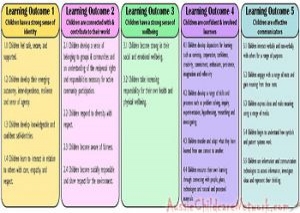 Here is the list of the EYLF Learning Outcomes that you can use as a guide or reference for your documentation and planning. The EYLF
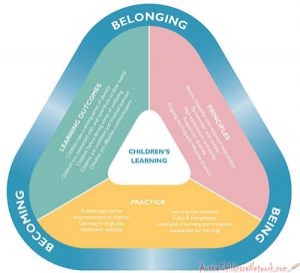 The EYLF is a guide which consists of Principles, Practices and 5 main Learning Outcomes along with each of their sub outcomes, based on identity,
 This is a guide on How to Write a Learning Story. It provides information on What Is A Learning Story, Writing A Learning Story, Sample
 One of the most important types of documentation methods that educators needs to be familiar with are “observations”. Observations are crucial for all early childhood
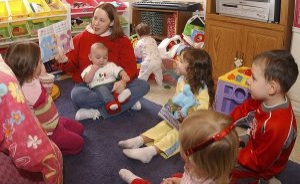 To support children achieve learning outcomes from the EYLF Framework, the following list gives educators examples of how to promote children's learning in each individual
 Reflective practice is learning from everyday situations and issues and concerns that arise which form part of our daily routine while working in an early
 When observing children, it's important that we use a range of different observation methods from running records, learning stories to photographs and work samples. Using
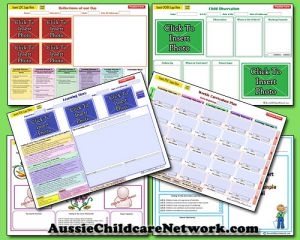 Within Australia, Programming and Planning is reflected and supported by the Early Years Learning Framework. Educators within early childhood settings, use the EYLF to guide
 This is a guide for educators on what to observe under each sub learning outcome from the EYLF Framework, when a child is engaged in
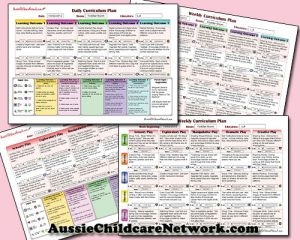 The Early Years Learning Framework describes the curriculum as “all the interactions, experiences, activities, routines and events, planned and unplanned, that occur in an environment