Observation, linking EYLF Outcomes and evaluation are the backbone of meaningful documentation. Yet many educators feel overwhelmed by duplication or unsure about what’s required. The good news: it’s simpler than you think.
This guide shows the easiest way to document observations, link EYLF outcomes, and write evaluations, without unnecessary repetition.
Step 1: Write the Observation
- Record what the child did factually — actions, words, interactions.
- Keep it descriptive, not interpretive.
- Think of it as a snapshot of learning in action.
Example:
Luca spent 15 minutes building a tall tower using wooden blocks. He experimented with different shapes, adjusted pieces when they wobbled, and proudly showed his finished structure to peers.
Step 2: Link EYLF Outcomes
- Select or record the EYLF Outcomes that match the evidence in the observation.
- This is the compliance link — it shows which developmental areas the child demonstrated.
- You only need to link Outcomes once, in the observation.
Example:
- Outcome 4.1: Children develop dispositions for learning such as curiosity, cooperation, confidence.
- Outcome 4.2: Children develop a range of skills and processes such as problem‑solving and experimentation.
Step 3: Write the Evaluation
- The evaluation is your professional reflection.
- It explains how the child demonstrated the linked Outcomes and what that means for their learning journey.
- No need to re‑link Outcomes here — the observation already provides the evidence.
Example:
Luca showed persistence and problem‑solving as he tested block combinations. His confidence in sharing achievements highlighted emerging social skills.
Next step: Provide opportunities for collaborative construction to extend teamwork.
More Practical Examples
Creative Arts
Observation: Ava mixed red and yellow paint to make orange, then shared her discovery with the educator.
Linked Outcomes: Outcome 5.3 & Outcome 4.3.
Evaluation: Ava showed curiosity and early scientific thinking. Her excitement reflected strong engagement and communication.
Next step: Introduce colour‑mixing jars and vocabulary cards to deepen experimentation.
Outdoor Play
Observation: Maya balanced across a beam, first with support, then independently, repeating several times.
Linked Outcomes: Outcome 3.2 & Outcome 1.2.
Evaluation: Maya demonstrated resilience and growing autonomy. Her persistence highlighted emerging gross motor confidence.
Next step: Add varied balancing challenges (stepping stones, rope walk) to extend skills.
Literacy
Observation: Ethan selected a favourite book and asked the educator to read. He pointed to pictures, repeated key words, and laughed at familiar phrases.
Linked Outcomes: Outcome 5.2 & Outcome 1.1.
Evaluation: Ethan demonstrated strong engagement with familiar texts and growing vocabulary. His enjoyment showed a secure relationship with the educator.
Next step: Encourage Ethan to retell the story with props or puppets to extend comprehension.
Key Messages for Educators
- Observation = evidence.
- Linked Outcomes = coding of that evidence.
- Evaluation = reflection on how the child demonstrated Outcomes + planning next steps.
- You don’t need to link Outcomes twice — once in the observation is enough.
Quick Checklist
- Did I describe what the child did factually?
- Did I link the relevant EYLF Outcomes once?
- Did I reflect on how the child demonstrated those Outcomes?
- Did I plan what comes next?
This approach keeps documentation meaningful, streamlined, and compliance‑ready, while freeing educators to focus on what matters most: children’s learning journeys.
Further Reading
Q: How Do I Write An Observation?
Observations in Childcare
Different Types Of Observation Methods
Step-by-Step Guide to Writing an Observation
Q: Do All Observations and Learning Stories Require A Follow Up
Q: How Many Observations Are Required From Educators?
How Children Achieve EYLF Learning Outcomes



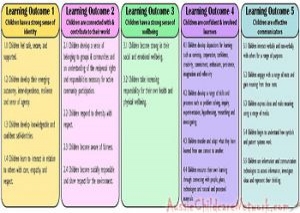 Here is the list of the EYLF Learning Outcomes that you can use as a guide or reference for your documentation and planning. The EYLF
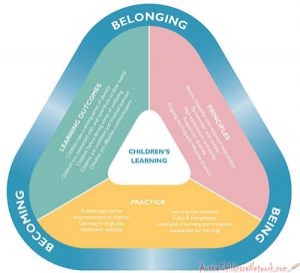 The EYLF is a guide which consists of Principles, Practices and 5 main Learning Outcomes along with each of their sub outcomes, based on identity,
 This is a guide on How to Write a Learning Story. It provides information on What Is A Learning Story, Writing A Learning Story, Sample
 One of the most important types of documentation methods that educators needs to be familiar with are “observations”. Observations are crucial for all early childhood
 To support children achieve learning outcomes from the EYLF Framework, the following list gives educators examples of how to promote children's learning in each individual
 Reflective practice is learning from everyday situations and issues and concerns that arise which form part of our daily routine while working in an early
 When observing children, it's important that we use a range of different observation methods from running records, learning stories to photographs and work samples. Using
 Within Australia, Programming and Planning is reflected and supported by the Early Years Learning Framework. Educators within early childhood settings, use the EYLF to guide
 This is a guide for educators on what to observe under each sub learning outcome from the EYLF Framework, when a child is engaged in
 The Early Years Learning Framework describes the curriculum as “all the interactions, experiences, activities, routines and events, planned and unplanned, that occur in an environment