
Educator well-being has been one of the most urgent conversations in early childhood this year. For too long, wellbeing was treated as a “personal responsibility,” something educators were expected to manage on their own, often in the margins of already overloaded days. But 2025 revealed something different: wellbeing is not an individual add‑on. It is a systemic, cultural, and professional issue that requires collective attention.
The Shift in Understanding
This year, educators and leaders began reframing well-being in three important ways:
- From self‑care to systemic care: Wellbeing is not solved by yoga classes or mindfulness apps alone. It requires workload reform, supportive leadership, and realistic expectations.
- From silence to voice: Educators spoke openly about burnout, stress, and the emotional labour of the job—breaking the stigma that wellbeing struggles mean weakness.
- From endurance to sustainability: The sector began recognising that “pushing through” is not sustainable. Boundaries, rest, and respect are essential to long‑term practice.
Key Lessons We Learned
- Wellbeing is professional, not personal: Protecting educator wellbeing is part of safeguarding quality for children. Exhausted educators cannot deliver authentic, responsive pedagogy.
- Invisible labour must be named: Emotional support for families, conflict resolution among children, and cultural sensitivity are all forms of labour that deserve recognition.
- Documentation overload is a wellbeing issue: Over‑documentation was repeatedly identified as a driver of stress. Streamlined, identity‑based approaches reduced pressure and restored joy.
- Leadership matters more than perks: Educators reported that supportive, emotionally intelligent leaders had a greater impact on wellbeing than any external program or initiative.
- Boundaries are a form of advocacy: Saying no to unsustainable practices is not selfish—it is a professional stance that protects both educators and children.
What Changed in Practice
Across services, wellbeing was supported in new, practical ways:
- Teams introduced reflection rituals instead of endless paperwork.
- Leaders prioritised breaks, rosters, and realistic workloads.
- Services began embedding restorative practices—from decluttered environments to slower pedagogies.
- Educators reclaimed time with children as the most restorative part of their day.
The Emotional Impact
Perhaps the most powerful lesson was this: wellbeing is not about avoiding stress altogether. It is about creating cultures where educators feel valued, supported, and able to recover. This year, educators discovered that wellbeing thrives when:
- They are trusted to make professional judgments.
- Their voices are heard in decision‑making.
- Their boundaries are respected.
- Their joy in working with children is protected.
Looking Ahead
The sector now understands that educator wellbeing is not optional. It is foundational. As we move into the new year, the challenge is to embed these lessons into everyday practice, not as one‑off initiatives, but as a cultural shift.
Wellbeing is not a luxury. It is the ground on which quality early childhood education stands.
Further Reading
Wellbeing Wednesday Ideas That Actually Work
Mindfulness In Early Childhood Setting
A to Z Of Mindfulness Posters
Mindfulness Activity Cards
Quotes For Educators Posters
Deep Breathing Posters
Mental Health and Well-Being Of Educators




 The Children’s Services Award introduces a streamlined classification system and updated pay rates designed to better recognise the skills, qualifications, and responsibilities of early childhood
 The Children’s Services Award has 8 clear levels. These levels make it easier to understand where you fit, based on your experience, qualifications, and responsibilities.
 When working as a qualified early childhood teacher (with a university degree) within a service, your rate of pay will come from the Educational Services
 Diploma-qualified educators play a vital role in early childhood services, taking on responsibilities that range from supporting children’s learning and development to leading rooms and
 Certificate III qualified educators form the backbone of early childhood services, providing essential care and learning support for children across all settings. Their wages under
 Early Childhood Teachers (ECTs) play a vital role in leading curriculum and pedagogy in early learning settings. Regulation 272 of the Education and Care Services
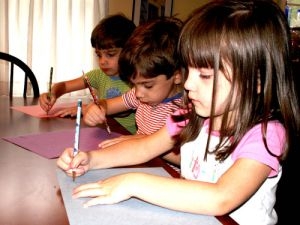 Discover how school readiness programs support children’s independence, confidence, and skills for a successful transition into primary school.
 When an Educator is not performing their tasks or responsibilities at best practice, these issues need to be addressed for the Educator to understand where
 Educators can maximise tax deductions by claiming classroom supplies, training, union fees, and home office costs this financial year.
 A staff appraisal is a formal, systematic process of determining and reviewing the performance of early childhood educators over a period of time, usually a