



With National Science Week on from 9th to 17th August 2025, this is a great opportunity to introduce science to babies. For babies it’s less about formal experiments and more about sensory exploration, pattern recognition, and curiosity-driven play—all foundational to scientific thinking and nurturing their natural curiosity and helping them explore the world through sensory-rich, playful experiences.

Young children often explore their world through touch and close contact, but rough play can lead to upset or hurt feelings. Introducing personal space and consent concepts early helps preschoolers learn boundaries, empathy, and respectful interactions.
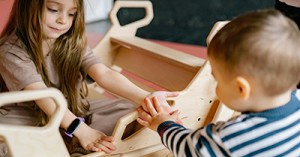
Teaching young children how to use their hands for kindness rather than harm is foundational to building a caring classroom culture. At ages four and five, children are still developing self-regulation and may act out physically when emotions feel overwhelming. As educators, we can guide them toward prosocial alternatives, equip them with emotional vocabulary, and partner with families to reinforce healthy touch at home.
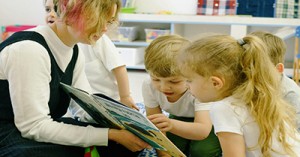
Children don’t learn to read by starting with phonics worksheets—they begin with listening, talking, imagining, and playing. Pre-reading skills emerge organically when environments are rich in language, storytelling, and joyful exploration. These foundational abilities must be nurtured before formal reading instruction begins.

In a world where safeguarding begins with everyday interactions, teaching consent to toddlers and preschoolers isn’t just possible—it’s essential. Long before children understand the word “consent,” they can learn what it feels like to be respected, heard, and safe. These early lessons lay the foundation for lifelong boundaries, empathy, and self-worth.
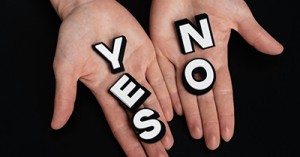
Simple songs about consent gently introduce children to concepts like body autonomy, boundary-setting, and respectful communication in ways that feel playful, affirming, and easy to remember. By pairing repetitive rhymes with hand motions, call-and-response, and relatable scenarios, these songs help children internalize messages such as “I can say no,” “I ask before I touch,” and “My voice matters.” Whether used in circle time, transition moments, or home routines, they offer educators and families an emotionally safe, joyful way to teach consent from the ground up.
Creating a safe and empowering environment for preschoolers begins with intentional, age-appropriate education around body autonomy, emotional literacy, and help-seeking skills. This article offers a collection of EYLF-aligned, trauma-informed Child Protection activities designed to foster safety, resilience, and voice in young learners.

Snakes are one of nature's most fascinating creatures, often misunderstood yet deeply woven into Australia’s unique biodiversity and Indigenous culture. By exploring native Australian snakes through play and learning, children can develop respect for wildlife, connect to Country, and expand their understanding of animal behaviors, habitats, and cultural significance. The following article provides information on Snake Theme Activity Ideas, Importance Of Learning About Snakes, Goals For a Snake Theme, Linking To The EYLF, Follow Up Themes and more.

In a heartwarming episode of Playschool titled “Island Life,” features Uncle Charles Passi, a proud Torres Strait Islander, joins the show and introduces viewers to the sit-down dance “Taba Naba,” a traditional Torres Strait Islander song that celebrates island life, the sea, and community connection. This is a great opportunity for educators to learn to dance to teach children.
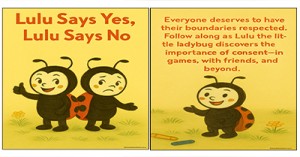
In a world where children are constantly learning how to navigate relationships, boundaries, and emotions, Lulu Says Yes, Lulu Says No is a free children's story to introduce the concept of consent. Through the eyes of Lulu the Ladybug, children explore what it means to feel safe, respected, and empowered to make choices about their own bodies. This story is more than a tale—it's a teaching tool that supports social-emotional learning, body autonomy, and respectful communication in early childhood settings. The following article provides the free children's book Lulu Says Yes, Lulu Says No, Learning Objectives, Link to the EYLF, Discussion Prompts, Extension Ideas and more.
 The Children’s Services Award introduces a streamlined classification system and updated pay rates designed to better recognise the skills, qualifications, and responsibilities of early childhood… Read More
 The Children’s Services Award has 8 clear levels. These levels make it easier to understand where you fit, based on your experience, qualifications, and responsibilities.… Read More
 When working as a qualified early childhood teacher (with a university degree) within a service, your rate of pay will come from the Educational Services… Read More
 Diploma-qualified educators play a vital role in early childhood services, taking on responsibilities that range from supporting children’s learning and development to leading rooms and… Read More
 Certificate III qualified educators form the backbone of early childhood services, providing essential care and learning support for children across all settings. Their wages under… Read More
 Early Childhood Teachers (ECTs) play a vital role in leading curriculum and pedagogy in early learning settings. Regulation 272 of the Education and Care Services… Read More
 Children need safe and positive environments to learn and grow. To ensure this, services and educators need to ensure effective supervision at all times. The… Read More
 Floorbook is a documentation approach that uses a large book with blank pages for children to record different aspects of their learning in small groups… Read More
 In Norway and most other Scandinavian countries, children nap in the outdoors. According, to research outdoor sleeping not only promotes better daytime sleeping, but it… Read More
 From 2026, every educator covered by the Children’s Services Award will move into a new, simplified classification structure. Instead of navigating 30 different levels, educators… Read More

The Planning Cycle in documenting for educators, as outlined in QA1 of the NQS, involves...
See more...
To make the Early Years Learning Framework (EYLF) planning cycle more impactful and engaging, you...
See more...
The following lists the sub outcomes, examples of evidence when children can achieve each sub...
See more...