


Mark-making refers to the earliest forms of visual expression—scribbles, lines, dots, and patterns—that children create to explore ideas, communicate meaning, and experiment with representation. Within the Reggio Emilia approach, these marks are not seen as mere preparation for writing but as a powerful language of childhood, embodying thought, emotion, and identity.

Storybook baskets (sometimes called book buckets) are a powerful way to transform a simple read-aloud into an interactive, multi-sensory experience. By pairing books with props, toys, and open-ended materials, educators can help children connect more deeply with stories, practice language skills, and extend their learning through play.
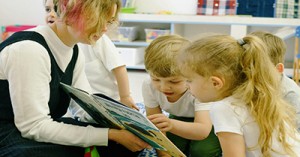
Children don’t learn to read by starting with phonics worksheets—they begin with listening, talking, imagining, and playing. Pre-reading skills emerge organically when environments are rich in language, storytelling, and joyful exploration. These foundational abilities must be nurtured before formal reading instruction begins.
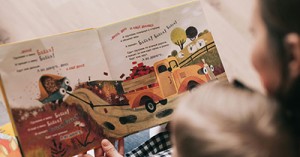
A recent report shared by 7NEWS Australia warns of a troubling trend: fewer Australian parents are reading to their children. While the headline sparks concern about declining literacy and emotional development, it risks overlooking a deeper reality—one that goes far beyond the bedtime book ritual.
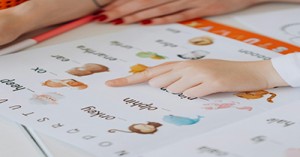
In a world where classroom outcomes are often skewed by postcode, language background, or parental education, one early predictor quietly cuts through the noise: phoneme awareness. As Brady (2020) starkly highlights, this foundational skill outranks intelligence and socioeconomic status when forecasting reading success.

Environmental print refers to the print that children see in their everyday environment, such as signs, logos, labels, and symbols. The following article provides information on Benefits Of Environmental Print, Incorporating Environmental Print in Early Childhood Settings, Examples Of Environmental Print, Activities Related To Environmental Print, Linking To The EYLF and more.
A literacy-rich environment is one that gives children numerous opportunities to engage in emergent literacy experiences in a meaningful and authentic way. The following provides a list of literacy activities for children that can be incorporated into an emerging literacy environment.

The EYLF explains literacy as the children’s “capacity, confidence and disposition to use language in all its forms”. Thus literary includes not only talking, listening, viewing, reading and writing but a range of modes of communication including music, movement, dance, storytelling, visual arts, media and drama. The following provides information on the Literacy Rich Environment, Characteristics Of A Literacy-rich Environment, Components Of A Literacy-rich Environment, Strategies and more!

The Early Years Learning Framework identifies that positive attitudes and competencies in literacy and numeracy are important aspects
of communication and are vital for children’s successful learning. The indicators have been developed to support teachers to extend and enrich every preschool child’s numeracy and literacy learning. The following article provides information on What Are The Indicators, the Importance of The Indicators, Learning Processes, Numeracy and Literacy Indicators and more.

Hua-Chen Wang, Lecturer in the School of Education at Macquarie University, said that they have found in research that day time nap of children, has positive effects on their literacy skills. More specifically they found that daytime naps influence the learning of letter-sound mapping and reading unfamiliar words.
There are very few research findings are available that establish a positive relationship between daytime naps pre-schoolers literacy skills. In the journal “Child Development,” a study has provided evidence that says the child who has daytime nap is sounder in learning letter-sound mapping techniques.
 The Children’s Services Award introduces a streamlined classification system and updated pay rates designed to better recognise the skills, qualifications, and responsibilities of early childhood… Read More
 The Children’s Services Award has 8 clear levels. These levels make it easier to understand where you fit, based on your experience, qualifications, and responsibilities.… Read More
 When working as a qualified early childhood teacher (with a university degree) within a service, your rate of pay will come from the Educational Services… Read More
 Diploma-qualified educators play a vital role in early childhood services, taking on responsibilities that range from supporting children’s learning and development to leading rooms and… Read More
 Certificate III qualified educators form the backbone of early childhood services, providing essential care and learning support for children across all settings. Their wages under… Read More
 Early Childhood Teachers (ECTs) play a vital role in leading curriculum and pedagogy in early learning settings. Regulation 272 of the Education and Care Services… Read More
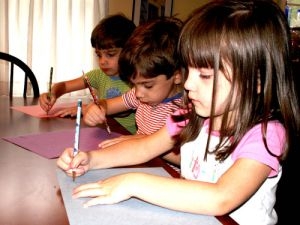 Discover how school readiness programs support children’s independence, confidence, and skills for a successful transition into primary school.
Read More
Discover how school readiness programs support children’s independence, confidence, and skills for a successful transition into primary school.
Read More
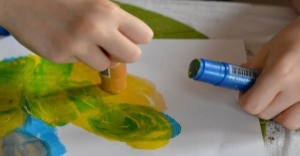 Floorbook is a documentation approach that uses a large book with blank pages for children to record different aspects of their learning in small groups… Read More
 When an Educator is not performing their tasks or responsibilities at best practice, these issues need to be addressed for the Educator to understand where… Read More
 Educators can maximise tax deductions by claiming classroom supplies, training, union fees, and home office costs this financial year.
Read More
Educators can maximise tax deductions by claiming classroom supplies, training, union fees, and home office costs this financial year.
Read More

Creating your very own herb garden within the learning environment is a fantastic method for...
See more...
Play in OOSH settings is more than just fun; it is a powerful tool for...
See more...
Encouraging children to self-serve food and drinks during mealtimes is more than just a practical...
See more...