School readiness in early childhood refers to the cognitive, social, emotional, and physical skills that prepare children for formal schooling. High-quality early childhood education programs play a crucial role in enhancing school readiness by fostering language, literacy, numeracy, and social-emotional development.
Supporting Transitions To School
Supporting children during their transition to school in Australia involves a combination of family involvement, continuity of learning, and structured transition programs. Here are some key strategies:
- Involving Children and Families: Encouraging open conversations about school expectations, using activities like drawing or storytelling to help children express their feelings about school.
- Continuity of Learning: Schools and early childhood education centers collaborate to ensure children experience familiar ways of learning, making transitions smoother.
- Transition Programs: Programs that introduce children to school environments gradually, such as buddy systems where older students help younger ones adjust.
- Building Social Skills: Teaching children turn-taking, sharing, listening, and following instructions to help them form positive relationships.
School Readiness Activities
Here are some school readiness activities that can help children transition smoothly into primary school in Australia:
Social & Emotional Development
-
Playdates & Group Play: Encourage interactions with peers to develop social skills like sharing and turn-taking.
-
Role-Playing: Pretend play helps children practice real-life scenarios, such as asking for help or making friends.
-
Board Games: Games like Snap or Memory teach patience, cooperation, and handling wins and losses gracefully.
-
Emotion Cards: Use picture cards to help children recognize and express different emotions.
-
Emotion Charades: Act out different emotions and have children guess them.
-
Friendship Bracelets: Encourage children to make and exchange bracelets to build connections.
-
Storytelling with Puppets: Helps children express emotions and practice communication.
Cognitive & Language Skills
-
Alphabet Treasure Hunts: Children search for and identify letters, making learning fun.
-
Storytelling Sessions: Encourage children to predict outcomes or fill in blanks to enhance comprehension.
-
Counting Games: Sorting and categorizing objects help develop early numeracy skills.
-
Story Sequencing: Have children arrange pictures in order to tell a story, improving comprehension.
-
Letter & Number Tracing: Use sand, playdough, or finger painting to make learning tactile and fun.
-
Memory Games: Play games that challenge children to recall sequences or match objects.
-
Letter & Number Bingo: A fun way to reinforce recognition skills.
-
Sorting & Matching Games: Use objects of different colors, shapes, or sizes to develop categorization skills.
-
Interactive Storytelling: Have children contribute to a group story by adding their own ideas.
Fine Motor Skills
-
Scavenger Hunts: Following instructions and working as a team improves coordination.
-
Obstacle Courses: Teach concepts like big/little, in front/behind, and long/short.
-
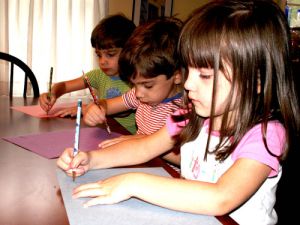
Arts & Crafts: Activities like cutting, coloring, and threading beads strengthen hand muscles for writing.
-
Threading & Beading: Strengthen hand muscles for writing.
-
Outdoor Exploration: Activities like climbing, jumping, and balancing improve coordination.
-
Sensory Play: Engage in activities like water play, sand play, or finger painting to develop motor skills.
-
Nature Walks & Scavenger Hunts: Encourage exploration and movement.
-
Building with Blocks: Helps develop spatial awareness and problem-solving skills.
-
Dance & Movement Games: Improve coordination and listening skills.
Goals For School Readiness
School readiness goals focus on preparing children for a successful transition into formal education. These goals typically cover five key domains:
- Approaches to Learning – Encouraging curiosity, problem-solving, and persistence in tasks.
- Social & Emotional Development – Building relationships, self-regulation, and emotional awareness.
- Language & Literacy – Developing communication skills, vocabulary, and early reading abilities.
- Cognition – Enhancing reasoning, memory, and early math concepts.
- Physical Development – Strengthening fine and gross motor skills for writing, movement, and coordination.
School readiness is not just about children being prepared for school but also about families supporting learning and schools being ready for children.
Further Reading
School Readiness Program
How Play Based Learning Supports School Readiness
Supporting Children's Transition To School
Development Of School Readiness Skills Posters
 The Children’s Services Award introduces a streamlined classification system and updated pay rates designed to better recognise the skills, qualifications, and responsibilities of early childhood
 The Children’s Services Award has 8 clear levels. These levels make it easier to understand where you fit, based on your experience, qualifications, and responsibilities.
 When working as a qualified early childhood teacher (with a university degree) within a service, your rate of pay will come from the Educational Services
 Diploma-qualified educators play a vital role in early childhood services, taking on responsibilities that range from supporting children’s learning and development to leading rooms and
 Certificate III qualified educators form the backbone of early childhood services, providing essential care and learning support for children across all settings. Their wages under
 Early Childhood Teachers (ECTs) play a vital role in leading curriculum and pedagogy in early learning settings. Regulation 272 of the Education and Care Services
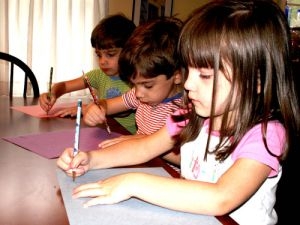 Discover how school readiness programs support children’s independence, confidence, and skills for a successful transition into primary school.
 When an Educator is not performing their tasks or responsibilities at best practice, these issues need to be addressed for the Educator to understand where
 Educators can maximise tax deductions by claiming classroom supplies, training, union fees, and home office costs this financial year.
 A staff appraisal is a formal, systematic process of determining and reviewing the performance of early childhood educators over a period of time, usually a