



Carol Dweck (born October 17, 1946) is an American psychologist and professor at Stanford University, best known for her pioneering research on mindsets in learning and achievement. Her work on the growth mindset has transformed education worldwide, showing that children’s beliefs about intelligence and ability profoundly shape their motivation, resilience, and success.

Ellen Beate Hansen Sandseter is a Norwegian researcher and professor at Queen Maud University College of Early Childhood Education. She is internationally recognized for her work on risky play in early childhood, highlighting how safe risk-taking supports children’s confidence, resilience, and wellbeing. Sandseter challenges overprotective practices in schools and families, arguing that shielding children from risk can hinder their development.

Alison Gopnik (born June 16, 1955) is a leading developmental psychologist and philosopher at the University of California, Berkeley. She is best known for her research on how children learn through exploration, play, and causal reasoning. Gopnik’s work emphasizes that children are active learners who construct and test ideas, much like scientists.

Preparing children for the leap into formal schooling involves more than academic knowledge—it means supporting their holistic development across cognitive, social, emotional, and physical domains. This checklist supports educators and families in identifying foundational skills and strengths, in alignment with the Early Years Learning Framework (EYLF) outcomes and contributing toward Quality Improvement Plan (QIP) goals such as practice refinement, documentation, and improved transition planning.

Here’s a breakdown of developmental milestones for children aged 2 to 3 years, along with examples of how they link to the EYLF.
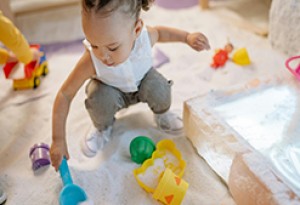
Here’s how Physical Development, Cognitive & Language Development, and Social & Emotional Development for 12 to 24 months align with the Early Years Learning Framework (EYLF).

Here’s how each developmental milestone from birth to 12 months aligns with the EYLF outcomes.


Attachment theory is a key concept in developmental psychology that examines the importance of early relationships between children and their Educators.The following article provides information on What Is Attachment Theory, Key Aspects of Attachment Theory, Significance of Strong, Secure Attachments, Practical Strategies For Attachment Theory, How Lack Of Attachment Can Impact On Development and more.

Caring for babies in their gross motor development stage involves encouraging activities that promote strength, coordination, and balance. The following article provides information on Strategies For Supporting Babies In Their Gross Motor Development, How To Encourage Sitting Unsupported, Structured Activities To Encourage Babies Gross Motor Development, and more.
 The Children’s Services Award introduces a streamlined classification system and updated pay rates designed to better recognise the skills, qualifications, and responsibilities of early childhood… Read More
 The Children’s Services Award has 8 clear levels. These levels make it easier to understand where you fit, based on your experience, qualifications, and responsibilities.… Read More
 When working as a qualified early childhood teacher (with a university degree) within a service, your rate of pay will come from the Educational Services… Read More
 Diploma-qualified educators play a vital role in early childhood services, taking on responsibilities that range from supporting children’s learning and development to leading rooms and… Read More
 Certificate III qualified educators form the backbone of early childhood services, providing essential care and learning support for children across all settings. Their wages under… Read More
 Early Childhood Teachers (ECTs) play a vital role in leading curriculum and pedagogy in early learning settings. Regulation 272 of the Education and Care Services… Read More
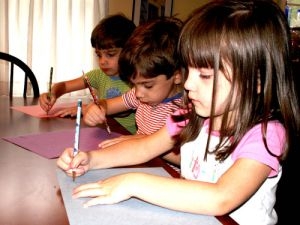 Discover how school readiness programs support children’s independence, confidence, and skills for a successful transition into primary school.
Read More
Discover how school readiness programs support children’s independence, confidence, and skills for a successful transition into primary school.
Read More
 When an Educator is not performing their tasks or responsibilities at best practice, these issues need to be addressed for the Educator to understand where… Read More
 Educators can maximise tax deductions by claiming classroom supplies, training, union fees, and home office costs this financial year.
Read More
Educators can maximise tax deductions by claiming classroom supplies, training, union fees, and home office costs this financial year.
Read More
 A staff appraisal is a formal, systematic process of determining and reviewing the performance of early childhood educators over a period of time, usually a… Read More

Aboriginal and Torres Strait Islander people cultures are valued and significant in Australia and it's...
See more...
Stories shape how children make sense of their world. When we tell stories through a...
See more...
On 26 January we celebrate Australia Day. A day to reflect on what we have...
See more...