



As Educators when communicating with Parents (through verbal or non-verbal communication), there will be times where we need to discuss issues or concerns that may arise. During this time, we may use negatives to describe the child's behavioural or personality traits (weaknesses) that they may be displaying. However, these weaknesses are hidden strengths, forming the chid's unique personality and abilities.

There are 6 different types of play that children participate in over the course of their development.

Gardner proposed a theory of multiple intelligences that suggests there is more than one intelligence – He considers children and adults to be individuals who all have skills and areas that we enjoy and excel at and that these fit into our major intelligence.

Piaget discovered that all children’s cognitive development progressed through four stages, beginning in infancy and are completed by adolescence. Thinking becomes more and more complex as the child ages. Each stage of thinking causes the child to see the world in a different way.

ABC Kids has a range of free content for Early Childhood Educators to use with children which aligns with early childhood pedagogy and the national approved learning frameworks.

Letterland is a system for teaching children basic literacy skills on how to read, how to write and how to spell using a story-based approach. The following article provides information on What Is Letterland, How It Works, Examples, Free Resources and more!

Erik Erikson developed a psychosocial theory to understand how we each develop our identities through eight stages of psychosocial development from infancy to adulthood. The following article provides information on Erikson's Eight Stages, Eriksons Theories In Practice and more.
 The Children’s Services Award introduces a streamlined classification system and updated pay rates designed to better recognise the skills, qualifications, and responsibilities of early childhood… Read More
 The Children’s Services Award has 8 clear levels. These levels make it easier to understand where you fit, based on your experience, qualifications, and responsibilities.… Read More
 When working as a qualified early childhood teacher (with a university degree) within a service, your rate of pay will come from the Educational Services… Read More
 Diploma-qualified educators play a vital role in early childhood services, taking on responsibilities that range from supporting children’s learning and development to leading rooms and… Read More
 Certificate III qualified educators form the backbone of early childhood services, providing essential care and learning support for children across all settings. Their wages under… Read More
 Early Childhood Teachers (ECTs) play a vital role in leading curriculum and pedagogy in early learning settings. Regulation 272 of the Education and Care Services… Read More
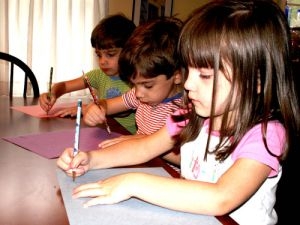 Discover how school readiness programs support children’s independence, confidence, and skills for a successful transition into primary school.
Read More
 When an Educator is not performing their tasks or responsibilities at best practice, these issues need to be addressed for the Educator to understand where… Read More
 Educators can maximise tax deductions by claiming classroom supplies, training, union fees, and home office costs this financial year.
Read More
 A staff appraisal is a formal, systematic process of determining and reviewing the performance of early childhood educators over a period of time, usually a… Read More

The Quality Areas are central to the National Quality Standard (NQS), which promotes high-quality outcomes...
See more...
Nursery rhymes provide a lot of learning opportunities to children. Nursery rhymes also play an...
See more...
Educators and families deserve a system that mirrors real-time quality and safety—one that responds instantly...
See more...