


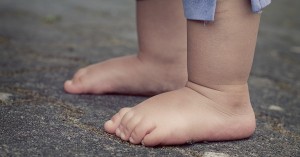
Children love being barefoot! It's comfortable and it enables them to feel free. Feeling the freedom of their movements allows them to feel more liberated. The following article provides information on the Benefits Of Being Barefoot, Safety Considerations and Strategies To Get Started.
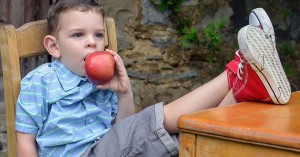
Progressive mealtimes are giving an opportunity for children to choose when they want to eat within a certain timeframe instead of eating at a set time. The following article provides information on the Benefits of Progressive Mealtimes, Drawbacks, Strategies and Ideas On Implementing Progressive Mealtimes and more.
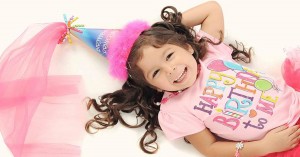
Celebrating children's birthdays is important to the child and their families. The following article provides information on Ideas To Celebrate Birthdays In Early Childhood, Healthier Food Options For Birthdays and more.
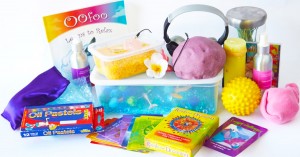
A calm down box has a variety of sensory tools that a child is encouraged to use when they are feeling frustrated, intense anger to calm-down emotions.The following article provides a list of self-regulates that can be included inside a calm down box.
There are 6 different types of play that children participate in over the course of their development.
The aim of environmental cleaning is to minimise the number of germs to reduce the spread of infection, that survive on surfaces in the education and care service.

One of the biggest hazards we face as early childhood Educators is back injuries. The amount of times we bend, stretch, and lift throughout the day is endless and this can put a strain on your back, causing serious long-term injuries. The following article provides information on Back Risks, Prep Before The Day, Strategies To Support Back Care Throughout The Day and more.
For Educators, one of the hardest tasks is getting children to listen. It may be easier for some but for others (especially Educators who are casual) it can be difficult to get the children to pay attention and to listen to your instructions.
On Thursday 19 May Educators, Teachers and Children have the opportunity to try learning outside the classroom as we celebrate Outdoor Classroom Day. Outdoor Classroom Day is a global campaign to celebrate and inspire outdoor learning and play. On the day, thousands of schools around the world take lessons outdoors and prioritise playtime.
As Educators working with children, it's important to understand each theoretical approach and use parts of different theorists in context. Each theorist’s ideas are independent of the other, but when put together, they give us a good overall understanding of how children develop as they age. The following is an overview of popular child theorists, a brief description of their theories and how to implement their theories into practice within the early childhood environment.
 Toddlers have a greater understanding of the world around them by this stage. Their cognitive development (also known as intellectual development and thinking skills) continues… Read More
 Infants begin to develop trust when parents begin to fulfil their needs. Such as changing an infant's nappy when needed, feeding on request and holding… Read More
 Beginning at birth the construction of thought processes, such as memory, problem solving, exploration of objects etc, is an important part of an infant’s cognitive… Read More
 Toddlers want to do more on their own and do not like it when you begin to establish limits on their behaviour. Tantrums can become… Read More
 Your preschooler is now able to focus their attention more accurately and is less influenced by distractions. The intensity of questions increase as your child… Read More
 John Dewey is often seen as the proponent of learning by doing – rather than learning by passively receiving. He believed that each child was active,… Read More
 Erik Erikson developed a psychosocial theory to understand how we each develop our identities through eight stages of psychosocial development from infancy to adulthood. The… Read More
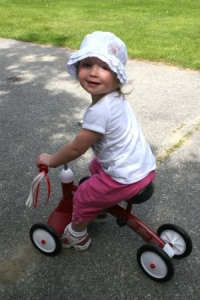 Toddler advance and gains new skills in Gross Motor Development milestones achieved throughout earlier years. Co-ordination and challenges that could not be performed before such… Read More
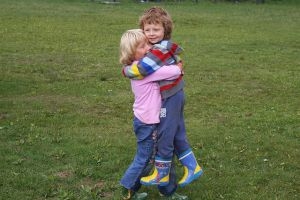 At this point preschoolers begin to interact effectively with others. Play becomes more innovative and organized and “boyfriend” or “girlfriend” begins to emerge. Preschoolers have… Read More
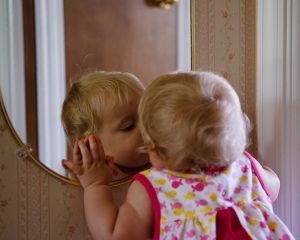 From now, babies begin to identify and respond to their own feelings, understanding other's feelings & needs and interact positively with others. A baby's social and… Read More
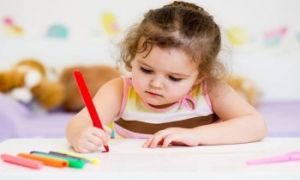
The development of writing skills depends on a variety of physiological and environmental factors. Children...
See more...
It's always difficult to bring up behavioural issues with parents, it can be nerve wrecking...
See more...
Among the most significant indicators of emotional well-being is positive self-esteem. Like with many other...
See more...