


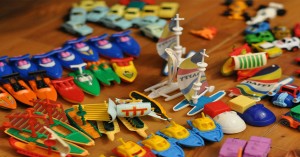
On April 22 is Earth Day. This year's campaign is to End Plastic Pollution. As Educators, we spend our days setting up experiences for children to be engaged in by using a variety of resources and materials including the use of plastic.

As educators, we need to incorporate cultural celebrations within the setting in a sensitive and respectful manner by avoiding cultural tokenism - which is the act of making a small minimal effort towards something.
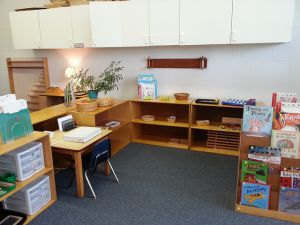
Within the physical environment, Interest Areas are prepared and maintained to encourage children in their learning. These areas are well planned and are purposefully created to enable children to experiment, discover, explore and create.
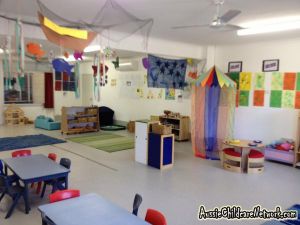
The physical environment in an early childhood setting creates an atmosphere that is welcoming, inviting and engaging. For the children it is an atmosphere where they can develop their skills and interests and become independent and confident learners. The overall learning environment creates a feeling of safety and comfort- a place where all children belong.
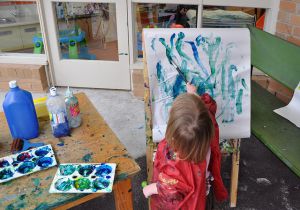
Creating interest areas within an early childhood settings are beneficial to both children and educators. For children, interest areas guide play, exploration and discovery which are all used to foster children’s holistic development. Interest areas enable educators to think intentionally about how to organize the space and involve the children to provide accessible materials that engage children and enhance their play experiences.
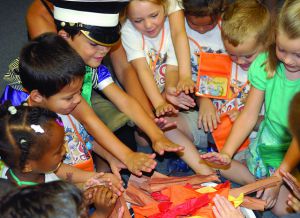
Within early childhood settings and as part of the daily routine, group time has become a teaching strategy in order to gather children together to have discussions, read stories, sing songs, etc. The following article provides information on What Is Group Time, When To Have Group Time, What To Do During Group Time, Managing group Time and more.
 Toddlers have a greater understanding of the world around them by this stage. Their cognitive development (also known as intellectual development and thinking skills) continues… Read More
 Infants begin to develop trust when parents begin to fulfil their needs. Such as changing an infant's nappy when needed, feeding on request and holding… Read More
 Beginning at birth the construction of thought processes, such as memory, problem solving, exploration of objects etc, is an important part of an infant’s cognitive… Read More
 Toddlers want to do more on their own and do not like it when you begin to establish limits on their behaviour. Tantrums can become… Read More
 Your preschooler is now able to focus their attention more accurately and is less influenced by distractions. The intensity of questions increase as your child… Read More
 John Dewey is often seen as the proponent of learning by doing – rather than learning by passively receiving. He believed that each child was active,… Read More
 Erik Erikson developed a psychosocial theory to understand how we each develop our identities through eight stages of psychosocial development from infancy to adulthood. The… Read More
 Toddler advance and gains new skills in Gross Motor Development milestones achieved throughout earlier years. Co-ordination and challenges that could not be performed before such… Read More
 At this point preschoolers begin to interact effectively with others. Play becomes more innovative and organized and “boyfriend” or “girlfriend” begins to emerge. Preschoolers have… Read More
 From now, babies begin to identify and respond to their own feelings, understanding other's feelings & needs and interact positively with others. A baby's social and… Read More

Having a solid grasp of developmental stages will help you evaluate children's play and learning...
See more...
Preparing children for the leap into formal schooling involves more than academic knowledge—it means supporting...
See more...
The language development of a school age child is quite vast and typically a wide...
See more...