


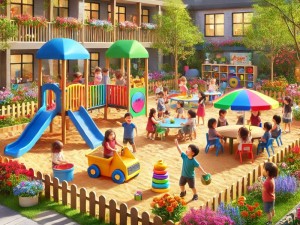
Designing engaging outdoor learning spaces offers stimulating resources and rich play-based learning opportunities that cater to all children’s interests, capabilities, cultures, and communities. The following article provides information on Physical Features Of Outdoor Spaces, Characteristics Of Outdoor Learning Spaces, Consideration For The Design Of Outdoor Spaces, Roles Of Adults In The Outdoor Learning Spaces and more.
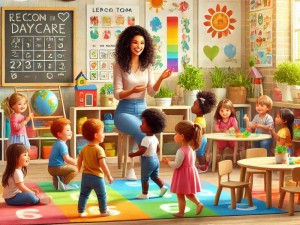
Environmental print refers to the print that children see in their everyday environment, such as signs, logos, labels, and symbols. The following article provides information on Benefits Of Environmental Print, Incorporating Environmental Print in Early Childhood Settings, Examples Of Environmental Print, Activities Related To Environmental Print, Linking To The EYLF and more.

Anti-bias education in early childhood is about creating an inclusive environment where all children feel respected, valued, and empowered. The following article provides information on, Helping Children Through Bias, How Anti-Bias Education Can Be Implemented, Anti-bias Framework, How To Create An Inclusive Environment, Using Language That Avoids Stereotypes and more.
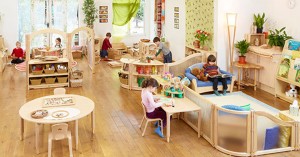
Developed in northern Italy after the Second World War, the Reggio Emilia is a child-centred approach to early childhood education. It puts a child’s sense of self-worth and agency at the heart of its pedagogical ideas and its practices are aimed at nurturing children’s multiple capabilities. The following article provides information About Reggio Emilia, The Reggio Emilia Environment, The Reggio Curriculum, Role Of The Educator, Principles and Practices and more.
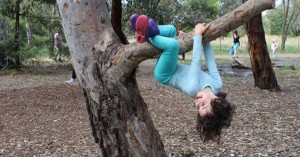
Early education care services are increasingly making bush kinders part of their educational programs. These involve excursions to sites in the midst of nature and away from structured service settings. The following article provides information about the Benefits of Bush Kinders, Supervision, Planning and more.
Auditory learning is a crucial aspect of early childhood education, as it helps children develop language, listening, and communication skills. The following article provides information on How To Identify Auditory Learners, Characteristics of Auditory Learners, Strategies to Support Auditory Learners, and more.
Children like adults are usually predisposed to a particular way of processing information. Those who best do this by experiencing it or acting it out are known as tactile learners. A learning style that helps kids physically touch or try something in order to learn the concept best is known as tactile learning or kinaesthetic learning. The following article provides information on identifying tactile learners and how to use tactile learning within the learning environment.

Self-regulation can be understood as a suite of skills needed to control and manage one’s own emotions and behaviours in a wide range of setting. Learning self-regulation in the early years has been consistently linked to not just better adjusted adults but also higher levels of academic achievement in later life. The following provides strategies to support children’s self-regulation in the learning environment.
At its simplest, numeracy is the knowledge, disposition and confidence to use mathematics in day-to-day life. While it is easy to think of mathematics only as complex statistical and algebraic concepts, the fact is children are already using basic mathematics while negotiating the world around them. The following article is on developing number sense and strategies to teach numeracy in early childhood.
Sensory processing is the effective understanding of various environmental stimuli through the sense organs and their corrective interpretation in one’s brain. The following article provides strategies on how you can help improve sensory processing in the early childhood learning environment.
 Toddlers have a greater understanding of the world around them by this stage. Their cognitive development (also known as intellectual development and thinking skills) continues… Read More
 Infants begin to develop trust when parents begin to fulfil their needs. Such as changing an infant's nappy when needed, feeding on request and holding… Read More
 Beginning at birth the construction of thought processes, such as memory, problem solving, exploration of objects etc, is an important part of an infant’s cognitive… Read More
 Toddlers want to do more on their own and do not like it when you begin to establish limits on their behaviour. Tantrums can become… Read More
 Your preschooler is now able to focus their attention more accurately and is less influenced by distractions. The intensity of questions increase as your child… Read More
 John Dewey is often seen as the proponent of learning by doing – rather than learning by passively receiving. He believed that each child was active,… Read More
 Erik Erikson developed a psychosocial theory to understand how we each develop our identities through eight stages of psychosocial development from infancy to adulthood. The… Read More
 Toddler advance and gains new skills in Gross Motor Development milestones achieved throughout earlier years. Co-ordination and challenges that could not be performed before such… Read More
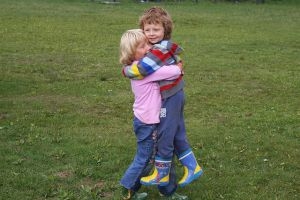 At this point preschoolers begin to interact effectively with others. Play becomes more innovative and organized and “boyfriend” or “girlfriend” begins to emerge. Preschoolers have… Read More
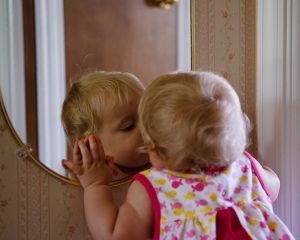 From now, babies begin to identify and respond to their own feelings, understanding other's feelings & needs and interact positively with others. A baby's social and… Read More
Toddler advance and gains new skills in Gross Motor Development milestones achieved throughout earlier years...
See more...
Here’s a breakdown of developmental milestones for children aged 2 to 3 years, along with...
See more...
As part of your child's development it is normal for your child to have anxiety...
See more...