


The following Biting Policy Example tailored for early childhood education and care (ECEC) services in Australia, drawing on best practice from ACECQA, Child Australia, and service-level procedures.
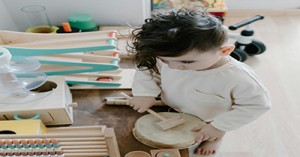
In early childhood education, the quality of a play space isn’t defined by how polished it looks—it’s defined by how deeply it invites children to imagine, explore, and belong. Research consistently shows that the most powerful play environments are those that center children’s agency, emotional safety, and social connection. Here are five foundational features that elevate play from passive activity to transformative experiences.
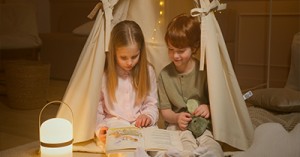
In a busy early learning room, nestled between a soft rug and a basket of sensory tools, something quietly revolutionary was unfolding. It wasn’t a new curriculum or a flashy resource—it was a space. A space designed not for punishment, but for peace. Not for isolation, but for connection. It was the Calm Corner, and it changed everything.

In early childhood education, our relationships with families are foundational but they’re not always easy to navigate. When a child’s behaviour begins to impact the safety or wellbeing of others, educators often find themselves caught between professional responsibility and fear of offending parents. Over time, many have grown hesitant to speak up, even as biting, pushing, and dysregulation become more frequent in toddler rooms.
Below are practical, emotionally intelligent ways to initiate these conversations with families—rooted in respect, partnership, and a shared commitment to every child’s wellbeing.

In early childhood education, our relationships with families are foundational—but they’re not always easy to navigate. When a child’s behaviour begins to impact the safety or wellbeing of others, educators often find themselves caught between professional responsibility and fear of offending parents. Over time, many have grown hesitant to speak up, even as biting, pushing, and dysregulation become more frequent in toddler rooms.
Below are practical, emotionally intelligent ways to initiate these conversations with families—rooted in respect, partnership, and a shared commitment to every child’s wellbeing.

Over the past decade, many educators have observed a troubling trend: biting, pushing, and other aggressive behaviours among toddlers are increasingly normalized as developmental inevitabilities. While it’s true that young children often lack the verbal tools to express frustration or overwhelm, the sector’s growing tolerance for these behaviours—without deeper investigation or family collaboration—raises serious concerns about safety, equity, and emotional wellbeing.
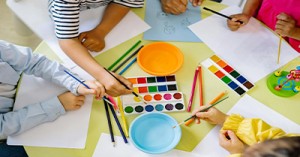
In early childhood settings, educators often face a subtle but powerful choice: should learning focus on the process or the product? While both approaches have their place, understanding the distinction can transform how we nurture creativity, independence, and critical thinking in young children.
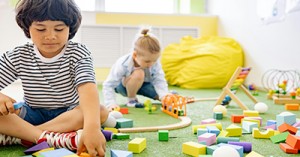
A: It depends on children's engagement and developmental needs. Many educators recommend keeping setups for 2–4 weeks, or even up to 6 weeks, especially if children are still exploring and learning from them. The key is to observe whether the setup continues to spark interest and growth.

As early childhood education centres periodically review their guiding philosophies, many educators are seeking innovative ways to make the process more inclusive, reflective, and engaging for staff, families, and the broader community.

Music is a universal language—and in Aboriginal and Torres Strait Islander cultures, it’s also a powerful vessel for storytelling, ceremony, and connection. Introducing Aboriginal music into early learning environments not only enriches children’s understanding of Australia’s First Nations peoples but also fosters respect, curiosity, and cultural awareness from a young age.
 Toddlers have a greater understanding of the world around them by this stage. Their cognitive development (also known as intellectual development and thinking skills) continues… Read More
 Infants begin to develop trust when parents begin to fulfil their needs. Such as changing an infant's nappy when needed, feeding on request and holding… Read More
 Beginning at birth the construction of thought processes, such as memory, problem solving, exploration of objects etc, is an important part of an infant’s cognitive… Read More
 Toddlers want to do more on their own and do not like it when you begin to establish limits on their behaviour. Tantrums can become… Read More
 Your preschooler is now able to focus their attention more accurately and is less influenced by distractions. The intensity of questions increase as your child… Read More
 John Dewey is often seen as the proponent of learning by doing – rather than learning by passively receiving. He believed that each child was active,… Read More
 Erik Erikson developed a psychosocial theory to understand how we each develop our identities through eight stages of psychosocial development from infancy to adulthood. The… Read More
 Toddler advance and gains new skills in Gross Motor Development milestones achieved throughout earlier years. Co-ordination and challenges that could not be performed before such… Read More
 At this point preschoolers begin to interact effectively with others. Play becomes more innovative and organized and “boyfriend” or “girlfriend” begins to emerge. Preschoolers have… Read More
 From now, babies begin to identify and respond to their own feelings, understanding other's feelings & needs and interact positively with others. A baby's social and… Read More

Attachment theory is a key concept in developmental psychology that examines the importance of early...
See more...
It is fairly common for your child to behave inappropriately as they begin to grow...
See more...
Preschoolers continued progress with fine motor skills depends on the stimulation and encouragement they receive...
See more...