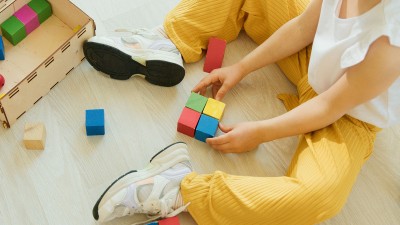
Piaget's cognitive development stages: senses, play, logic, and abstract thinking explained simply.
Jean Piaget’s theory of cognitive development explains how children’s thinking evolves through active exploration and interaction with their world. He believed that children are not passive learners; they construct knowledge step by step, building on what they already know. Each stage reflects a new way of understanding, reasoning, and problem‑solving.
Educators can use Piaget’s ideas to design experiences that match a child’s developmental stage, from sensory play in infancy to abstract reasoning in adolescence. This helps ensure learning is meaningful, hands‑on, and connected to real‑life experiences.
Core Idea
- Children’s thinking grows step by step. First they learn with their senses, then through imagination, then with logic, and finally with abstract ideas.
Key Concepts
- Learning with senses – babies explore by touching, tasting, and moving.
- Imagination play – toddlers pretend (like cooking or being a doctor).
- Logical thinking – school‑age kids sort, count, and understand rules.
- Abstract thinking – older children and teens think about “what if” and big ideas.
10 Everyday Practice Examples
- Peek‑a‑boo – a baby learns things still exist when hidden.
- Stacking blocks – testing balance and cause‑and‑effect.
- Pretend cooking – imagination shows symbolic play.
- Sorting shapes – grouping by colour or size.
- Counting toys – beginning number sense.
- Water play – pouring teaches conservation.
- Simple puzzles – problem‑solving practice.
- Story retelling – sequencing and memory.
- Science experiments – mixing colours, planting seeds.
- Group games – learning rules and fairness.
EYLF Links
- Outcome 1: Children develop knowledgeable and confident self‑identities → Pretend cooking, role play.
- Outcome 2: Children develop a sense of fairness and respect for others → Group games.
- Outcome 4: Children are confident and involved learners → Peek‑a‑boo, stacking blocks, puzzles, science experiments, water play.
- Outcome 5: Children use symbols and engage with texts → Sorting shapes, story retelling.
Observation Words
- Exploring
- Pretending
- Sorting
- Counting
- Problem‑solving
- Sequencing
- Investigating
- Testing
- Imagining
- Reasoning
Piaget’s stages remind us that children are active learners, constantly building knowledge through play, exploration, and problem‑solving. By matching experiences to their developmental stage, educators can nurture curiosity, confidence, and deeper thinking.
This cheat sheet is a quick guide to connect everyday practice with Piaget’s theory, helping you observe, plan, and support children’s growth in meaningful ways.
Further Reading
Jean Piaget - Cognitive Development
Piaget's Symbolic Play
Activities That Link To Jean Piaget's Sensorimotor Stage
Linking Theories To The EYLF
Child Theorists and Their Theories in Practice




 Toddlers have a greater understanding of the world around them by this stage. Their cognitive development (also known as intellectual development and thinking skills) continues
 Infants begin to develop trust when parents begin to fulfil their needs. Such as changing an infant's nappy when needed, feeding on request and holding
 Beginning at birth the construction of thought processes, such as memory, problem solving, exploration of objects etc, is an important part of an infant’s cognitive
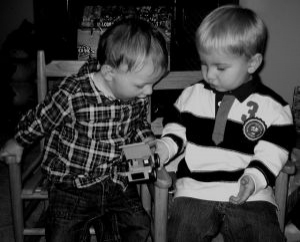 Toddlers want to do more on their own and do not like it when you begin to establish limits on their behaviour. Tantrums can become
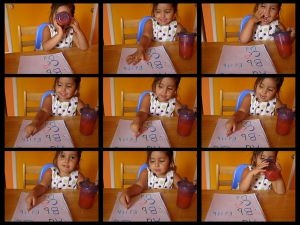 Your preschooler is now able to focus their attention more accurately and is less influenced by distractions. The intensity of questions increase as your child
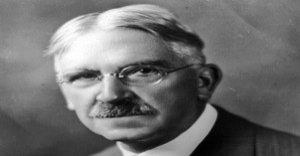 John Dewey is often seen as the proponent of learning by doing – rather than learning by passively receiving. He believed that each child was active,
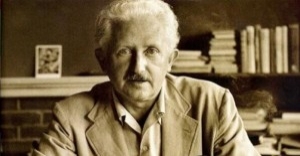 Erik Erikson developed a psychosocial theory to understand how we each develop our identities through eight stages of psychosocial development from infancy to adulthood. The
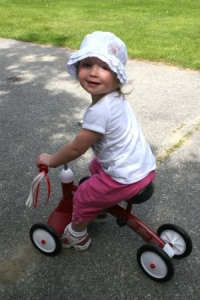 Toddler advance and gains new skills in Gross Motor Development milestones achieved throughout earlier years. Co-ordination and challenges that could not be performed before such
 At this point preschoolers begin to interact effectively with others. Play becomes more innovative and organized and “boyfriend” or “girlfriend” begins to emerge. Preschoolers have
 From now, babies begin to identify and respond to their own feelings, understanding other's feelings & needs and interact positively with others. A baby's social and