


A writing area in a preschool room is more than a corner with pencils and paper—it’s a space where children begin to see themselves as authors, communicators, and creators. By offering diverse tools and meaningful prompts, educators can nurture early literacy skills while celebrating children’s voices and identities. This area encourages mark-making, storytelling, and playful exploration, laying the foundation for confident communication.

Children are naturally drawn to bright, vivid colours, which makes rainbow-themed science experiments instantly engaging and relatable. Because colours are part of their everyday world—seen in toys, clothes, art, and nature—rainbow experiments provide a familiar entry point into scientific exploration.
These activities spark curiosity and wonder by showing how ordinary materials can transform into extraordinary displays of colour. Whether it’s watching water “walk” across paper towels, seeing milk swirl into rainbow patterns, or layering liquids into a colourful tower, children experience science as something magical yet understandable.

Outdoor sandpit setups in early childhood are best designed as open-ended, sensory-rich environments that encourage creativity, social interaction, and physical development. The most effective setups combine natural materials, loose parts, and flexible structures to allow children to dig, build, and imagine freely.

When we talk about art areas in learning environments, we’re really looking at how spaces can be intentionally designed to foster creativity, self-expression, and developmental growth. In early childhood, art areas aren’t just about painting or drawing—they’re hubs for exploration, identity-building, and skill development.

Storybook baskets (sometimes called book buckets) are a powerful way to transform a simple read-aloud into an interactive, multi-sensory experience. By pairing books with props, toys, and open-ended materials, educators can help children connect more deeply with stories, practice language skills, and extend their learning through play.
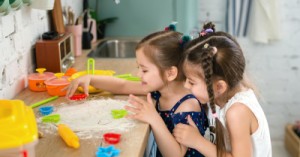
Playdough is more than a fun activity; it’s a versatile tool for creativity, fine motor development, sensory exploration, and imaginative play. A thoughtfully designed playdough area can inspire children to explore textures, shapes, and storytelling while supporting key developmental outcomes.
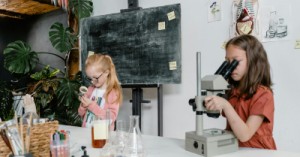
Children are natural scientists. They observe, question, and experiment every day—whether it’s watching ants march across the playground or noticing how shadows change with the sun. A thoughtfully designed science and nature area in an early childhood environment nurtures this curiosity, offering a space where exploration becomes intentional and learning is scaffolded. Such an area not only supports STEM skills but also fosters respect for the environment, cultural knowledge, and sustainable practices.

Designing a nursery room for infants and toddlers (0–2 years) requires more than just arranging furniture; it’s about creating a safe, nurturing, and developmentally rich environment that aligns with the NQS and the EYLF. At this age, children are forming their earliest attachments, exploring the world through their senses, and developing foundational skills for movement, communication, and social interaction.

In early childhood services, spaces dedicated to books and storytelling are often referred to as reading areas. Educators may also call them book corners or reading nooks, depending on the size, design, and atmosphere of the space. While the terminology varies, the purpose remains the same: to provide children with safe, inspiring environments where they can explore language, imagination, and connection. This article uses “reading areas” as the umbrella term while acknowledging the warmth and familiarity of book corners and reading nooks in everyday practice.

Supporting children in OSHC with regulation techniques means creating safe, predictable environments and teaching strategies that help them manage emotions, behaviour, and social interactions. The most effective approaches combine self-regulation, co-regulation, and environmental adjustments tailored to children’s needs.
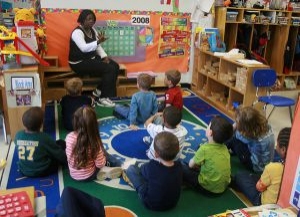 Working as a childcare professional can be a challenge especially when dealing with behavioural problems which may arise. The techniques we use when dealing with… Read More
 There are different types of behaviour that children can display and sometimes it can be hard to manage, especially if a child is having behavioural… Read More
 As Educators, there will be many instances where you will need to write about a child's behaviour. For a behaviour management plan, assessments, half-yearly or… Read More
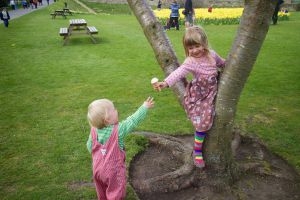 As a parent, your behavioural expectations of your child can be higher than what is actually developmentally appropriate for your child's age.
Read More
As a parent, your behavioural expectations of your child can be higher than what is actually developmentally appropriate for your child's age.
Read More
 As Educators when communicating with Parents (through verbal or non-verbal communication), there will be times where we need to discuss issues or concerns that may… Read More
 Challenging Behaviour is when a child does something that hurts themselves and/or other people.
Read More
Challenging Behaviour is when a child does something that hurts themselves and/or other people.
Read More
 It's always difficult to bring up behavioural issues with parents, it can be nerve wrecking to tell a parent that their child misbehaves but that… Read More
 As part of your child's development it is normal for your child to have anxiety and fears. A baby commonly shows a fearful sign to… Read More
 All children deal with anger on a daily basis. Thinking about it as a child, there is a lot to be angry about. Elder people… Read More
 It is important to understand that your child behaviour problems could not just be from attention seeking. There are many factors to take into consideration… Read More
Biting is typical behaviour of infants and toddlers that we often notice. As the children...
See more...
Fine Motor involves the development of the small muscles of the body. The development of...
See more...
Working as a childcare professional can be a challenge especially when dealing with behavioural problems...
See more...