



The Department of Education has introduced partial assessment and rating as a streamlined way to keep service ratings current under the NQS. This approach reduces preparation burden, allows quicker recognition of improvements, and ensures families have confidence in the quality of education and care services.

ACECQA has launched a new Introduction to Inclusive Practice e-learning module in 2026, designed to strengthen educators’ confidence and skills in creating inclusive environments across early childhood education and care services. This free, self-paced course is a practical professional development opportunity aligned with the National Quality Framework.

In early childhood education, timing shapes interpretation. A message that would normally pass quietly through the sector can suddenly feel loaded when educators are already carrying frustration, fatigue, and a sense of being unheard. That’s exactly what happened when ACECQA published a routine #funfactfriday post. The post itself was simple and familiar. ACECQA shared a link to one of their infographics, saying, "Did You Know... ACECQA Does Not Conduct Assessment and Rating Visits?

ACECQA has developed National Quality Framework (NQF) professional development eLearning modules. The program consists of a series of four elearning modules, each of which cover a different aspect of the NQF which include: Introduction to the children's education and care sector, Overview of the NQF, Law and Regulations, National Quality Standards, Approved learning frameworks V2.0.

Education Ministers have agreed to extend workforce transitional arrangements in the National Regulations. This decision aims to assist the sector to address workforce challenges by continuing to provide flexibility for services and providers.

The Recognition As An ‘Equivalent Early Childhood Teacher’ transitional measure was reviewed by the ACECQA Board, which has decided to extend this measure until the end of 2027.

In collaboration with all governments, ACECQA has developed a National Model Code of child safe practices that outlines the suggested practices for using electronic devices to take, share, and store pictures and videos of children in early childhood education and care (ECEC) services.

The National Law and the National Regulations illustrate the legal responsibilities of the approved provider, nominated super and Educators. The following article provides a reference point for Chapter 4 - Operational Requirements including a summary of each Regulation. This chapter outlines the specific requirements and expectations for the operation and management of an education and care service. This is crucial in ensuring that all education and care services and Educators provide a safe, healthy, and high-quality environment for children to learn and grow.

Establishing early learning environments that are both safe and mindful of the needs of every child requires active supervision. ACECQA has published new guidance information to guide services for the approved regulatory changes that started on 1 October 2023.
 Working as a childcare professional can be a challenge especially when dealing with behavioural problems which may arise. The techniques we use when dealing with… Read More
 There are different types of behaviour that children can display and sometimes it can be hard to manage, especially if a child is having behavioural… Read More
 As Educators, there will be many instances where you will need to write about a child's behaviour. For a behaviour management plan, assessments, half-yearly or… Read More
 As a parent, your behavioural expectations of your child can be higher than what is actually developmentally appropriate for your child's age.
Read More
As a parent, your behavioural expectations of your child can be higher than what is actually developmentally appropriate for your child's age.
Read More
 As Educators when communicating with Parents (through verbal or non-verbal communication), there will be times where we need to discuss issues or concerns that may… Read More
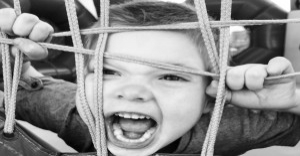 Challenging Behaviour is when a child does something that hurts themselves and/or other people.
Read More
Challenging Behaviour is when a child does something that hurts themselves and/or other people.
Read More
 It's always difficult to bring up behavioural issues with parents, it can be nerve wrecking to tell a parent that their child misbehaves but that… Read More
 As part of your child's development it is normal for your child to have anxiety and fears. A baby commonly shows a fearful sign to… Read More
 All children deal with anger on a daily basis. Thinking about it as a child, there is a lot to be angry about. Elder people… Read More
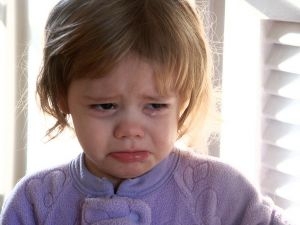 It is important to understand that your child behaviour problems could not just be from attention seeking. There are many factors to take into consideration… Read More

Caring for babies in their gross motor development stage involves encouraging activities that promote strength...
See more...
Art enjoys a highly significant space in early childhood learning programmes for the way it...
See more...
It is important to understand that your child behaviour problems could not just be from...
See more...