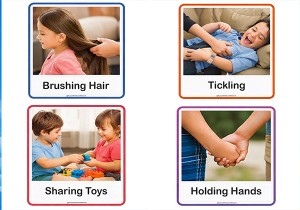
Yes/No/Maybe Consent Game for preschoolers: real‑life photo cards teaching body safety, consent, and respect through fun, interactive play.
Materials
- Real‑life photos of everyday actions (hugging, high‑five, brushing hair, sharing toys, tickling, holding hands, helping with shoes, etc.)
- Card stock or laminated sheets for durability
- Three baskets/boxes labelled Yes, No, and Maybe
- Optional: Velcro dots or magnets to make cards interactive on a board
What To Do
- Prepare Cards: Print real‑life images of common preschool scenarios. Each card should show one clear action.
- Introduce the Game: Explain the three choices—Yes (I like it), No (I don’t like it), and Maybe (I’m not sure).
- Play Together: Show a card (e.g., hugging). Children place it in the basket that matches their feeling.
- Discuss Choices: Ask children why they chose Yes, No, or Maybe. Reinforce that all answers are valid.
Hints and Tips
- Use diverse images: Include children of different ages, genders, and cultural backgrounds.
- Keep language simple: Use clear words like “safe,” “stop,” "like," and “don’t like.”
- Model respect: Always ask before touching or involving children in role play.
- Positive framing: Focus on empowerment, not fear.
Extension Ideas
- Feelings Chart: Children create a chart of actions they like, don’t like, or are unsure about.
- Trusted Adults Link: Connect the game to identifying who they can talk to if they feel uncomfortable.
- Daily Routine Consent: Embed asking permission into transitions (e.g., “May I help you with your shoes?”).
- Storytime Sorting: Read a book about boundaries and sort story actions into Yes/No/Maybe.