



Rediscover your spark in early childhood education—reset mindset, protect energy, and reignite passion for teaching.

Micro Resets posters give educators quick wellbeing rituals — simple daily practices to pause, restore energy, and support staffroom culture.


Discover strategies for educators to stay positive and resilient when workplace recognition feels absent or uneven.


The wellbeing of educators is not peripheral to quality practice—it is central. The health of those leading early childhood programs directly influences the emotional climate of classrooms, the strength of family partnerships, and the resilience of sector teams. When educators begin the year with a clear commitment to their own wellbeing, they establish a tone of stability, professionalism, and care that reverberates across the service.

Educator well-being has been one of the most urgent conversations in early childhood this year. For too long, wellbeing was treated as a “personal responsibility,” something educators were expected to manage on their own, often in the margins of already overloaded days. But 2025 revealed something different: wellbeing is not an individual add‑on. It is a systemic, cultural, and professional issue that requires collective attention.

For years, burnout has been treated as an unavoidable part of early childhood education, a by product of caring deeply, working long hours, and navigating a system that often demands more than it gives. But this year, something changed. Educators began naming burnout for what it is: a systemic issue, not a personal failure. And in doing so, they opened the door to something far more powerful: boundaries.
Boundaries are not walls. They are not selfish. They are not a lack of commitment. Boundaries are the quiet, steady practices that protect educators’ capacity to care, think, create, and connect. They are the antidote to burnout, and they are reshaping the culture of early childhood in ways that matter.

A practical, sector‑savvy guide for early childhood educators on understanding, navigating, and reducing workplace gossip (“bitching”). Includes examples, reflection prompts, and strategies to protect your energy and rebuild respectful team culture.
Gossip. Side comments. Whisper networks. The “Did you hear what she said?” moments that ripple through a service and drain the joy out of the day.
Every educator has felt it: the shift in the room when the bitching gets loud.
This isn’t about blaming individuals or shaming the workforce. It’s about understanding why gossip shows up, how it affects us, and what educators can do to protect their energy while still contributing to a respectful, professional culture.
This is a systemic issue, not a personal flaw, and when we name it honestly, we can finally start to shift it.
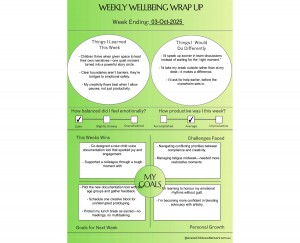
This template is a reflection tool is designed to gently support educators in processing their week—emotionally, professionally, and personally.
 Open ended questions cannot be responded to with one word answers such as yes or no. These types of questions enables a child to provide… Read More
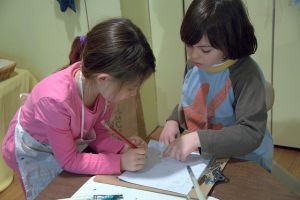 During your child’s preschool years, an important milestone begins to emerge. This is the development of pre-writing skills. Pre-writing skills are used to encourage, develop… Read More
 An Acknowledgment of the Country is a way of showing respect for the Traditional Owners and can be given by both non-Indigenous people and Aboriginal… Read More
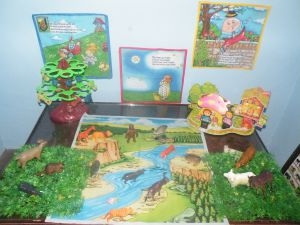 Open ended materials enables children to play freely. They are objects that have no rules to follow, use or function. Raw materials that can be… Read More
 Language plays an important role in a child’s development. It enables a child to communicate effectively with their family, learn at school, socialize with friends,… Read More
 Like adults, children have to deal with their own stress in life. Moving house, starting a new school, preparing for a new sibling - these are… Read More
 Playdough is such a versatile material. It provides numerous benefits to children as they manipulate it, it is safe and soothing and provides children with… Read More
 Teaching children about sustainability enables them to appreciate and respect the natural environment. Early childhood services can provide meaningful hand on learning experiences in order… Read More
 Recycling is an important concept that teaches children to care for the environment. It encourages children to be responsible and show a growing appreciating for… Read More
 Incursions provide children with the opportunity to explore meaningful learning experiences in the comfort of their early childhood service. The following provides a directory of… Read More

Outdoor play is vital for children’s well-being, offering opportunities for physical activity, exploration, and connection...
See more...
Children begin to learn that music and movement communicate messages and represents actions. Music naturally delights...
See more...
The following lists the sub outcomes, examples of evidence when children can achieve each sub...
See more...