


A co-listening podcast for preschoolers is called Little Yarns. Little Yarns is all about the various languages, tales, and countries of Indigenous Australia and is a great listening resource in early learning services.
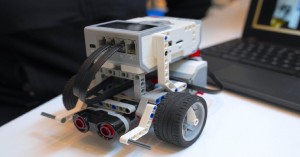
STEM, the word stands for Science, Technology, Engineering, and Mathematics. It is a way of education where the subjects that are mentioned above are taught in coherence with each other instead of in isolation. It focuses to make a bridge between the learning gap and experience through child-centric materials with the aim of making children active learners. The following article provides information on STEM Education, Incorporating STEM Education In Different Ways, Learning Environment and STEM and more!
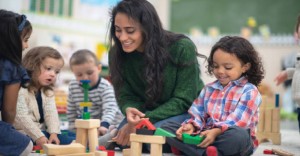
A Montessori method is an educational approach characterised by learner choice, an enriching environment and educators who facilitate the learner’s natural bent for learning. It was devised during the 1900s by Dr Maria Montessori, a physician, anthropologist and pedagogue over a professional career that spanned over fifty years. Here are some characteristics of an activity that makes it Montessori.
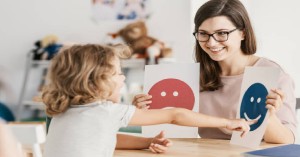
Zones of Regulation help children build emotional literacy, self‑regulation, and resilience through colour‑coded strategies for well‑being.
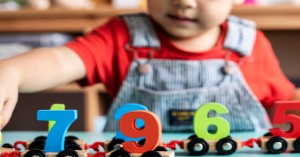
School readiness has traditionally understood children’s numeracy skills as their ability to count, order and measure before they go on to perform calculations. However, numeracy encompasses a much wider notion than numbers – it can be understood as the suite of knowledge, skills, behaviours and dispositions that students need in order to use mathematics in a wide range of situations. For the early education context, the EYLF defines numeracy as, “the capacity, confidence and disposition to use mathematics in daily life”. Based on this definition, here are some significant takeaways.
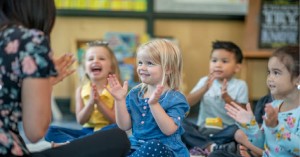
Time was when preschool literacy was understood as young children’s ability to read and write in simple ways – like knowing and reading the alphabet and perhaps writing a few However according to recent early education pedagogy, literacy is understood in much broader terms that include children learning to express themselves and communicate through a range of forms and symbols. In keeping with this, the EYLF has defined literacy as the “capacity, confidence and disposition to use language in all its forms. Here are some significant takeaways from the definition.

Writing ability is one of the more complex literacy skills as it depends on a host of physiological, cognitive and communication developments. The following article provides information on the role of drawing and talking in early writing development.
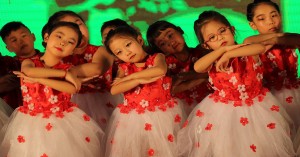
Creative arts offer children - through dance, crafts, music, art or drama – some of the most enjoyable ways to express their ideas and imagination. Along along with providing opportunities for freewheeling thinking, creative pursuits bring many developmental and learning benefits as well.
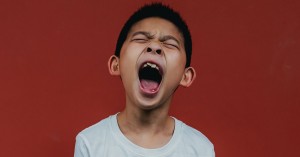
Learning emotional regulation in the early years is not only important to become better-adjusted adults but has been found directly related to higher levels of academic achievement in later life. An integral step in emotional regulation is the identification of unhelpful or negative emotions like anger.

Holi is celebrated on 18 March. It is an Indian Hindu festival of colours. As it celebrates in spring, it is called the “Festival of Spring.” In India, it is a holiday, celebrated wide across the country. Children also celebrate by applying colour to each other.
 Open ended questions cannot be responded to with one word answers such as yes or no. These types of questions enables a child to provide… Read More
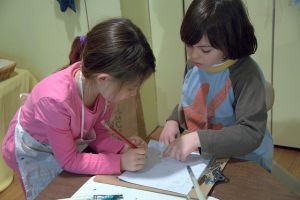 During your child’s preschool years, an important milestone begins to emerge. This is the development of pre-writing skills. Pre-writing skills are used to encourage, develop… Read More
 An Acknowledgment of the Country is a way of showing respect for the Traditional Owners and can be given by both non-Indigenous people and Aboriginal… Read More
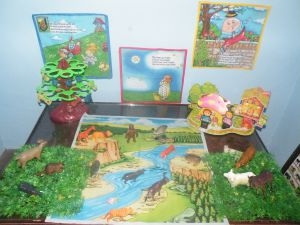 Open ended materials enables children to play freely. They are objects that have no rules to follow, use or function. Raw materials that can be… Read More
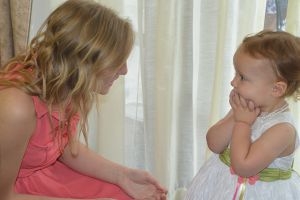 Language plays an important role in a child’s development. It enables a child to communicate effectively with their family, learn at school, socialize with friends,… Read More
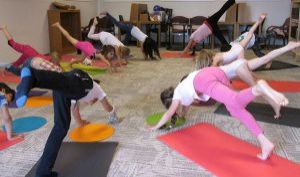 Like adults, children have to deal with their own stress in life. Moving house, starting a new school, preparing for a new sibling - these are… Read More
 Playdough is such a versatile material. It provides numerous benefits to children as they manipulate it, it is safe and soothing and provides children with… Read More
 Teaching children about sustainability enables them to appreciate and respect the natural environment. Early childhood services can provide meaningful hand on learning experiences in order… Read More
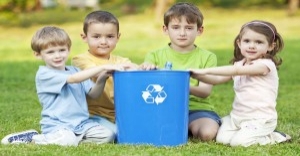 Recycling is an important concept that teaches children to care for the environment. It encourages children to be responsible and show a growing appreciating for… Read More
 Incursions provide children with the opportunity to explore meaningful learning experiences in the comfort of their early childhood service. The following provides a directory of… Read More
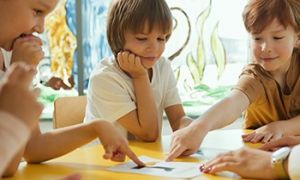
Children’s agency is all about empowering children to make choices, express their ideas, and influence...
See more...
The following lists the sub outcomes, examples of evidence when children can achieve each sub...
See more...
Quality Area 6 has two standards that support building collaborative partnerships with families and communities...
See more...