


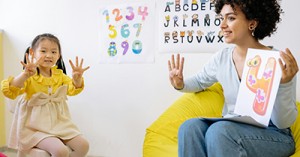
Preparing children for the leap into formal schooling involves more than academic knowledge—it means supporting their holistic development across cognitive, social, emotional, and physical domains. This checklist supports educators and families in identifying foundational skills and strengths, in alignment with the Early Years Learning Framework (EYLF) outcomes and contributing toward Quality Improvement Plan (QIP) goals such as practice refinement, documentation, and improved transition planning.
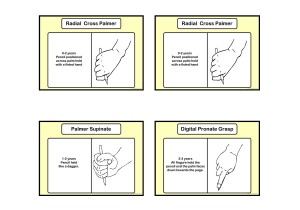
The Pencil Grasp Posters show the ages and stages and different ways that children hold their pencil that is most common among children. It is fairly common for young children to still be learning how to correctly hold their pencil. These will be great to add to the learning environment or even used as a reference for Educators when observing a child holding a pencil.

Among all the changes that impact a child’s early life, one of the most significant is the move from early education and care setting to a full-time school. The following article provides Educators with a guide on planning supportive transition practices for preschoolers going to primary school the following year including practical ideas to involve children, partnering with families, collaborating with other professionals, planning transition programs and more.
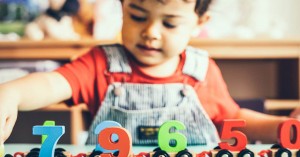
The Early Years Learning Framework identifies that positive attitudes and competencies in literacy and numeracy are important aspects
of communication and are vital for children’s successful learning. The indicators have been developed to support teachers to extend and enrich every preschool child’s numeracy and literacy learning. The following article provides information on What Are The Indicators, the Importance of The Indicators, Learning Processes, Numeracy and Literacy Indicators and more.

Let's celebrate with these spectacular colourful shaving cream fireworks! Easy to make and it's messy and fun!
It is essential that all children growing up in Australia have access to opportunities to become proficient speakers of English.
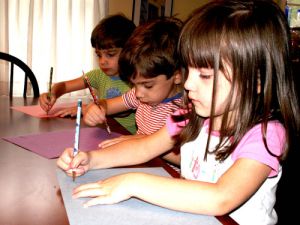
Discover how school readiness programs support children’s independence, confidence, and skills for a successful transition into primary school.
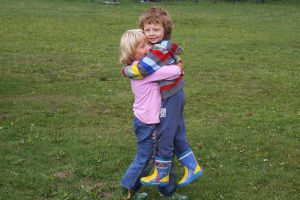
At this point preschoolers begin to interact effectively with others. Play becomes more innovative and organized and “boyfriend” or “girlfriend” begins to emerge. Preschoolers have developed an understanding for other’s feelings and become more sensitive. They will also want to be given more responsibility and enjoys helping out with chores... basically at this stage a preschooler is a mini adult.

Preschoolers enjoy talking and are happy to tell their ideas or what they're thinking. They combine words with gestures and facial expressions to make their stories more believable and interesting. Words begin to flow easily and with little effort. During this age, preschoolers will have an endless amount of questions and seeks more detailed information about events or topics that interest them.
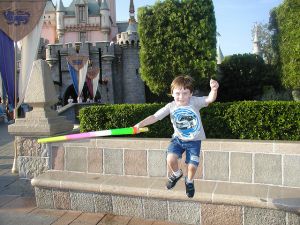
At this age, preschoolers make big progress in gross motor skills such as running, jumping, balancing and climbing. Their movement becomes agile and more controlled and learning ability also begins to increase. This enables preschoolers to take part in a variety of activities.
 Open ended questions cannot be responded to with one word answers such as yes or no. These types of questions enables a child to provide… Read More
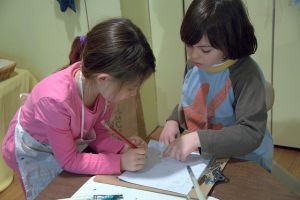 During your child’s preschool years, an important milestone begins to emerge. This is the development of pre-writing skills. Pre-writing skills are used to encourage, develop… Read More
 An Acknowledgment of the Country is a way of showing respect for the Traditional Owners and can be given by both non-Indigenous people and Aboriginal… Read More
 Open ended materials enables children to play freely. They are objects that have no rules to follow, use or function. Raw materials that can be… Read More
 Language plays an important role in a child’s development. It enables a child to communicate effectively with their family, learn at school, socialize with friends,… Read More
 Like adults, children have to deal with their own stress in life. Moving house, starting a new school, preparing for a new sibling - these are… Read More
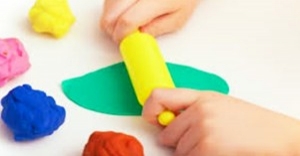 Playdough is such a versatile material. It provides numerous benefits to children as they manipulate it, it is safe and soothing and provides children with… Read More
 Teaching children about sustainability enables them to appreciate and respect the natural environment. Early childhood services can provide meaningful hand on learning experiences in order… Read More
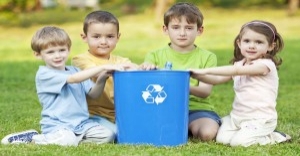 Recycling is an important concept that teaches children to care for the environment. It encourages children to be responsible and show a growing appreciating for… Read More
 Incursions provide children with the opportunity to explore meaningful learning experiences in the comfort of their early childhood service. The following provides a directory of… Read More
Documenting infant and toddler learning is a vital practice that captures the essence of their...
See more...
The Early Years Learning Framework outlines a set of eight pedagogical practices for educators to...
See more...
Interactions with children and families lie at the heart of ECEC practices. Early educators as...
See more...