



Self-regulation can be understood as a suite of skills needed to control and manage one’s own emotions and behaviours in a wide range of setting. Learning self-regulation in the early years has been consistently linked to not just better adjusted adults but also higher levels of academic achievement in later life. The following provides strategies to support children’s self-regulation in the learning environment.

In early childhood, positive relationships with teachers are extremely important for intellectual, social and emotional development. Indeed research shows that secure attachments formed in early years do not just prepare the foundations for positive relationships in adulthood but predict positive life outcomes as well. The following article provides strategies on how Educators can build relationships with children.

Confidence is crucial for setting and achieving goals in all stages and areas of life. However, confidence is not something that one child is born with more than others; rather confidence grows as a result of positive experiences and adult guidance. The following provides strategies to boost confidence in children.

The assessment and rating process for early childhood education and care services involves several key steps to ensure quality and compliance with standards. The following article provides information on Steps In The Assessment and Rating Process, Steps In Self Assessment, Assessment Visit, Follow Up and Continuous Improvement and more.

Learning styles, according to Howard Gardner, are the ways in which an individual approaches a range of tasks. The following provides information on Gardner's learning styles.
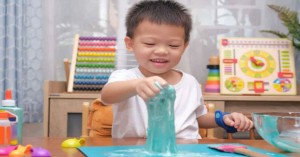
Sensory Play is an early childhood educational approach that allows children to use all their senses when exploring their learning environment. The following article provides the benefits of sensory play and how you can incorporate it into the learning environment.
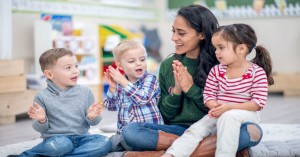
Routines and rituals are an integral aspect of growing up. They not only teach young children the skills needed to function in the adult world but impart a measure of control over their immediate environment. The following article provides strategies for using rituals and routines in an early childhood setting.
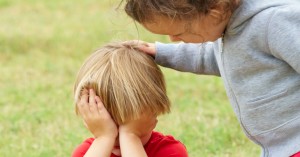
Empathy can be understood as the experience of understanding another person's condition from their perspective. The trait is considered one of the most important life skills that children can learn since it not only nurtures interpersonal relationships, thereby making for a strong support network in adulthood but has been linked to positive life outcomes too. The following article provides strategies for promoting empathy in children.
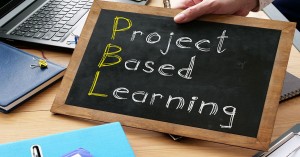
Project-based learning is an educational approach in which students acquire knowledge and skills by working for an extended time on a project or task. The following article provides information on What Is Project Based Learning, the Key Elements of Project Based Learning and the fundamentals of project-based learning and how you can use it in the learning environment.
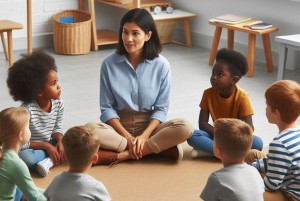
While the function of a learning curriculum is to lay out what is going to be taught to children, pedagogical approaches covers all the ways how such a curriculum can be taught. In the early childhood context, the most effective pedagogical approaches are learner centered, active and permit a scaffolding of learning. The following article provides information on EYLF and Pedagogical Approaches, Examples Of Pedagogical Approaches, How To Implement Pedagogical Approaches In Early Childhood, and more.
 Open ended questions cannot be responded to with one word answers such as yes or no. These types of questions enables a child to provide… Read More
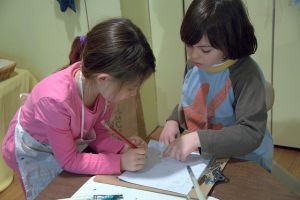 During your child’s preschool years, an important milestone begins to emerge. This is the development of pre-writing skills. Pre-writing skills are used to encourage, develop… Read More
 An Acknowledgment of the Country is a way of showing respect for the Traditional Owners and can be given by both non-Indigenous people and Aboriginal… Read More
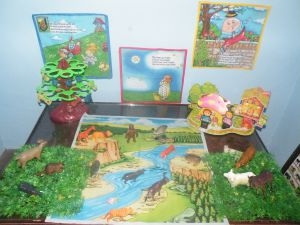 Open ended materials enables children to play freely. They are objects that have no rules to follow, use or function. Raw materials that can be… Read More
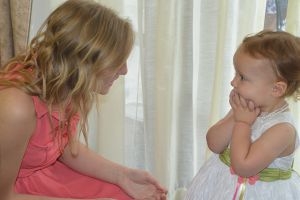 Language plays an important role in a child’s development. It enables a child to communicate effectively with their family, learn at school, socialize with friends,… Read More
 Like adults, children have to deal with their own stress in life. Moving house, starting a new school, preparing for a new sibling - these are… Read More
 Playdough is such a versatile material. It provides numerous benefits to children as they manipulate it, it is safe and soothing and provides children with… Read More
 Teaching children about sustainability enables them to appreciate and respect the natural environment. Early childhood services can provide meaningful hand on learning experiences in order… Read More
 Recycling is an important concept that teaches children to care for the environment. It encourages children to be responsible and show a growing appreciating for… Read More
 Incursions provide children with the opportunity to explore meaningful learning experiences in the comfort of their early childhood service. The following provides a directory of… Read More
World Pizza Day is celebrated on the 9th of February. It is essentially a celebration...
See more...
Support toddler identity development through choices, routines, relationships, and play. Explore practical examples that build...
See more...
Sensory bottles are simple yet powerful tools for children’s play, regulation, and learning. They are...
See more...