



Age-appropriate cooking is one of the most effective ways to instil healthy eating in children. They will be more open to eating nutritious foods and practise positive mealtime habits if they are involved in the making of such foods themselves. The following article provides strategies for engaging children in cooking in the early childcare setting.
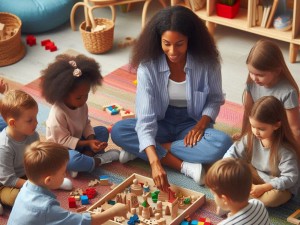
Kinaesthetic learners, also known as tactile learners, thrive on physical movement and hands-on experiences. They learn best through activities that involve touch, movement, and manipulation of objects. The following information provides information on How To Identify Kinaesthetic Learners, Characteristics of Kinaesthetic Learners, Strategies to Support Kinaesthetic Learners and more.

Involving children in documentation in early childhood education can be a powerful way to engage them in their own learning process. The following article provides information on Strategies Involving Children In Documentation and Multimodal Representations.

Improving parental engagement in early childhood education is crucial for enhancing children's learning and development.

Storytelling is a powerful tool in early childhood education, offering numerous benefits for children's development. The following article provides information on the Benefits Of Storytelling, Best Ways To Read To Children, Best Books For Babies, Toddlers, Preschoolers and more.
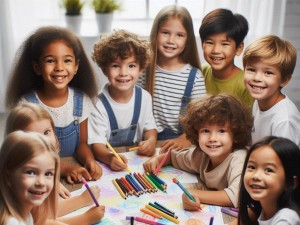
Drawing is a vital activity for children's development. It helps build the foundation for writing by improving fine motor skills and hand-eye coordination and enhances planning, memory, attention span, visual perception, problem-solving, and attention to detail. The following article provides information on the Benefits Of Drawing, Why Children Draw, Encouraging Children To Draw, Linking To The EYLF and more.
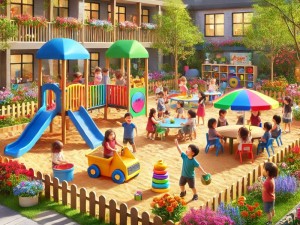
Designing engaging outdoor learning spaces offers stimulating resources and rich play-based learning opportunities that cater to all children’s interests, capabilities, cultures, and communities. The following article provides information on Physical Features Of Outdoor Spaces, Characteristics Of Outdoor Learning Spaces, Consideration For The Design Of Outdoor Spaces, Roles Of Adults In The Outdoor Learning Spaces and more.

Excursions and regular outings are valuable components of early childhood education, offering children opportunities to explore the wider community and enhance their learning experiences. The following article provides information on the Differences Between Excursions and Regular Outings, Benefits Of Excursions and Regular Outings, Planning Excursions, National Regulations On Excursions and Regular Outings and more.

Environmental print refers to the print that children see in their everyday environment, such as signs, logos, labels, and symbols. The following article provides information on Benefits Of Environmental Print, Incorporating Environmental Print in Early Childhood Settings, Examples Of Environmental Print, Activities Related To Environmental Print, Linking To The EYLF and more.

Phonological awareness covers the child’s ability to recognize and use the spoken parts of sentences and words. The following article provides information on the main stages of the development of phonological skills in children.
 Open ended questions cannot be responded to with one word answers such as yes or no. These types of questions enables a child to provide… Read More
 During your child’s preschool years, an important milestone begins to emerge. This is the development of pre-writing skills. Pre-writing skills are used to encourage, develop… Read More
 An Acknowledgment of the Country is a way of showing respect for the Traditional Owners and can be given by both non-Indigenous people and Aboriginal… Read More
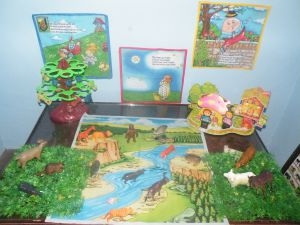 Open ended materials enables children to play freely. They are objects that have no rules to follow, use or function. Raw materials that can be… Read More
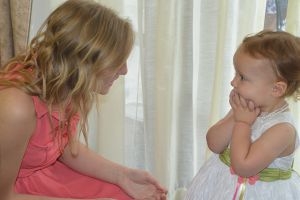 Language plays an important role in a child’s development. It enables a child to communicate effectively with their family, learn at school, socialize with friends,… Read More
 Like adults, children have to deal with their own stress in life. Moving house, starting a new school, preparing for a new sibling - these are… Read More
 Playdough is such a versatile material. It provides numerous benefits to children as they manipulate it, it is safe and soothing and provides children with… Read More
 Teaching children about sustainability enables them to appreciate and respect the natural environment. Early childhood services can provide meaningful hand on learning experiences in order… Read More
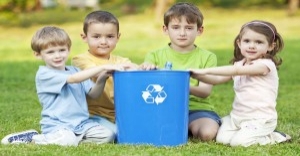 Recycling is an important concept that teaches children to care for the environment. It encourages children to be responsible and show a growing appreciating for… Read More
 Incursions provide children with the opportunity to explore meaningful learning experiences in the comfort of their early childhood service. The following provides a directory of… Read More

Here’s a curated set of critical reflection questions designed to provoke deep thinking around educator-to-child...
See more...
The following provides practical examples of critical reflections in early childhood education, drawn from real-world...
See more...
A Montessori method is an educational approach characterised by learner choice, an enriching environment and...
See more...