


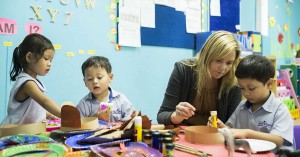
The Start Strong 2023 program for long day care provides funding to deliver affordable quality preschool education to children aged 4 and above who are enrolled in eligible long day care services in NSW.

Among all the changes that impact a child’s early life, one of the most significant is the move from early education and care setting to a full-time school. The following article provides Educators with a guide on planning supportive transition practices for preschoolers going to primary school the following year including practical ideas to involve children, partnering with families, collaborating with other professionals, planning transition programs and more.

The Early Years Learning Framework identifies that positive attitudes and competencies in literacy and numeracy are important aspects
of communication and are vital for children’s successful learning. The indicators have been developed to support teachers to extend and enrich every preschool child’s numeracy and literacy learning. The following article provides information on What Are The Indicators, the Importance of The Indicators, Learning Processes, Numeracy and Literacy Indicators and more.

Yes, it is necessary to teach children about ANZAC Day. Doing so helps them understand Australia’s history, values of sacrifice and service, and the importance of peace and community. By introducing children to ANZAC traditions, educators and families foster respect, remembrance, and a sense of national identity that grows deeper each year.
In Victoria, children from 3 years old will learn about gender equality in a state-funded playgroup program.

It is reported that Teachers and Early Childhood Educators are finding that children are struggling with basic literacy.

You have a new child starting in your room, their excited, their parents are happy and the family seems to be settling in well with the centre environment. The first day has come for the child to start, parents say goodbye and then the child starts - screaming, crying, pulling, begging their parent not to leave.
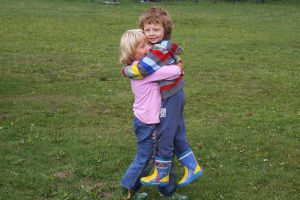
At this point preschoolers begin to interact effectively with others. Play becomes more innovative and organized and “boyfriend” or “girlfriend” begins to emerge. Preschoolers have developed an understanding for other’s feelings and become more sensitive. They will also want to be given more responsibility and enjoys helping out with chores... basically at this stage a preschooler is a mini adult.

Preschoolers enjoy talking and are happy to tell their ideas or what they're thinking. They combine words with gestures and facial expressions to make their stories more believable and interesting. Words begin to flow easily and with little effort. During this age, preschoolers will have an endless amount of questions and seeks more detailed information about events or topics that interest them.
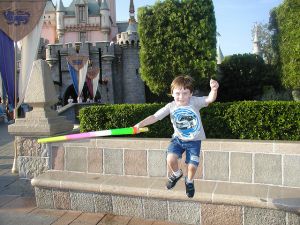
At this age, preschoolers make big progress in gross motor skills such as running, jumping, balancing and climbing. Their movement becomes agile and more controlled and learning ability also begins to increase. This enables preschoolers to take part in a variety of activities.
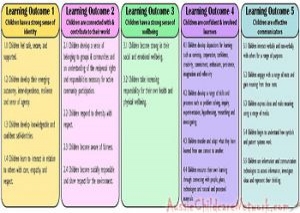 Here is the list of the EYLF Learning Outcomes that you can use as a guide or reference for your documentation and planning. The EYLF… Read More
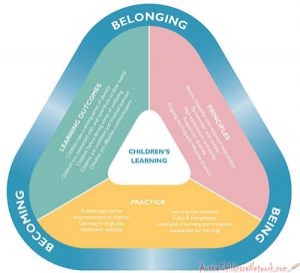 The EYLF is a guide which consists of Principles, Practices and 5 main Learning Outcomes along with each of their sub outcomes, based on identity,… Read More
 This is a guide on How to Write a Learning Story. It provides information on What Is A Learning Story, Writing A Learning Story, Sample… Read More
 One of the most important types of documentation methods that educators needs to be familiar with are “observations”. Observations are crucial for all early childhood… Read More
 To support children achieve learning outcomes from the EYLF Framework, the following list gives educators examples of how to promote children's learning in each individual… Read More
 Reflective practice is learning from everyday situations and issues and concerns that arise which form part of our daily routine while working in an early… Read More
 When observing children, it's important that we use a range of different observation methods from running records, learning stories to photographs and work samples. Using… Read More
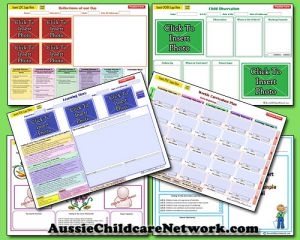 Within Australia, Programming and Planning is reflected and supported by the Early Years Learning Framework. Educators within early childhood settings, use the EYLF to guide… Read More
 This is a guide for educators on what to observe under each sub learning outcome from the EYLF Framework, when a child is engaged in… Read More
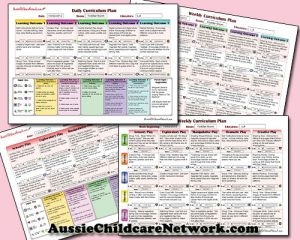 The Early Years Learning Framework describes the curriculum as “all the interactions, experiences, activities, routines and events, planned and unplanned, that occur in an environment… Read More
Here’s a clear and practical guide for ECEC Services in NSW based on the compliance...
See more...
For babies and toddlers, diversity and inclusion play can be nurtured through simple, sensory-rich experiences...
See more...
Thousands of educators entered the field armed with certificates but short on competence. Driven by...
See more...