



Guidance for supporting children experiencing family separation. Focuses on emotional wellbeing.

All children deal with anger on a daily basis. Thinking about it as a child, there is a lot to be angry about. Elder people telling them what to do, not being allowed to get what they want, they fail at many things they try…it’s frustrating at times. As an adult we are able to deal with these setbacks in a social acceptable way, however a child doesn't have the ability or the understanding to deal with their actions when they become angry, in an acceptable way.
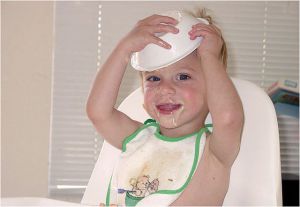
“No, no, no”…How many times have you heard your child say that at the dinner table? All of a sudden your child has become picky about what they eat. Every meal you offer them, they simply refuse, especially when you have tried everything to encourage them to eat. As a parent it’s only natural that you would want your child to eat but instead of forcing, you should try to find out why your child is refusing their meal.
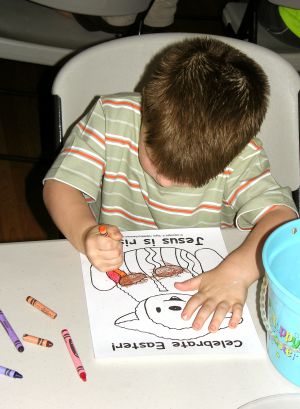
Your child is about to enter one of the most important parts of their lives... "School"! All children from the age of 5 (depending on your state and school requirements throughout Australia) begin school. It's an exciting time for both you and your child as you enter a new phase in life. For most parents the transition to school can be a little difficult and sad as they watch their little child enter a whole new world.
Television is not all bad. Sometimes it could be an excellent resource for education as well as entertainment. For instance, there are a lot of fun educational DVDs and TV programmes for children that could help develop their language development. Including, learning the alphabet, singing rhymes, music and movement and more. While school age kids can also learn about geography and culture, nature, wild-life, technology and heaps more. However, too much Television starts to become a habit and could get in the way of other important activities like physical activities, reading and writing, doing homework and spending time with family and friends.

You and your family are all sitting down at the table, enjoying a delicious meal. You look over at your child and instead of eating their food, they are playing with it. Not only that, they are chewing their food with their mouth open and burping loudly. Definitely not the table manners you were taught, when you were a child. Nevertheless, as your child begins to enjoy meals with the rest of the family, its time to start teaching your child table manners.

You just arrived home with your new baby and now you can begin the new chapter in your life as a two-child family. However, things aren't the same as before: your older child isn't used to sharing their attention from you with the new baby. All you have to do is help connect your older child with their new sibling with some thought, sensitivity and planning.

Internet is an important resource in today’s society for everyone and it has become a part of life just like mobile phones, Television, etc. There are also so many gadgets and devices you can use to surf the internet like laptops, mobile phones and even refrigerators! Internet is so useful now since there are so many things we can do. In fact it’s a lot faster and efficient, without even needing to go out. For instance -banking, shopping, pay bills, communicating with friends and families, make phone calls, search for information, directions & maps, research school reports, play interactive games and much more. The possibilities and the usage are limitless.

At times your child would not want to sleep at night. This can cause chaos as you try and get your child to go to bed and they just simply refuse. Your child can also start to get out of bed as soon as you leave the room or begin to wake up two or three times during the night. This is quite a common problem among children. It's important to deal with it as soon as it happens so your child understands that nights are for sleeping.

A consistent and stable routine is helpful for your baby, toddler or child's development. Having meals at regular times and fixed bedtimes each night, enables your child to structure their day and this contributes to your child's overall sense of security and well being.
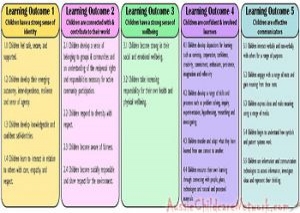 Here is the list of the EYLF Learning Outcomes that you can use as a guide or reference for your documentation and planning. The EYLF… Read More
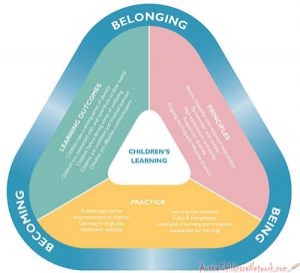 The EYLF is a guide which consists of Principles, Practices and 5 main Learning Outcomes along with each of their sub outcomes, based on identity,… Read More
 This is a guide on How to Write a Learning Story. It provides information on What Is A Learning Story, Writing A Learning Story, Sample… Read More
 One of the most important types of documentation methods that educators needs to be familiar with are “observations”. Observations are crucial for all early childhood… Read More
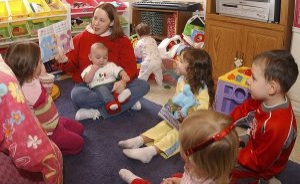 To support children achieve learning outcomes from the EYLF Framework, the following list gives educators examples of how to promote children's learning in each individual… Read More
 Reflective practice is learning from everyday situations and issues and concerns that arise which form part of our daily routine while working in an early… Read More
 When observing children, it's important that we use a range of different observation methods from running records, learning stories to photographs and work samples. Using… Read More
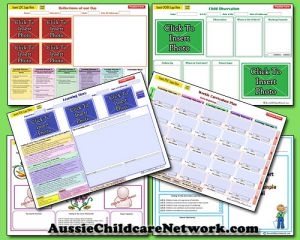 Within Australia, Programming and Planning is reflected and supported by the Early Years Learning Framework. Educators within early childhood settings, use the EYLF to guide… Read More
 This is a guide for educators on what to observe under each sub learning outcome from the EYLF Framework, when a child is engaged in… Read More
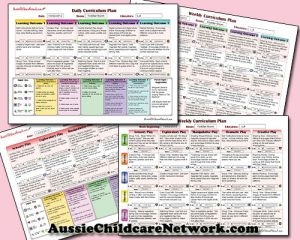 The Early Years Learning Framework describes the curriculum as “all the interactions, experiences, activities, routines and events, planned and unplanned, that occur in an environment… Read More

Quality Area 4 of the National Quality Standard focuses on Staffing Arrangements, ensuring that educators...
See more...
Changing ratios is vital to protect children first, ensuring safety, quality care, and stronger educator‑child...
See more...
It is the duty of adult caregivers to ensure that young children are exposed to...
See more...