



A: While photos can enrich documentation by capturing moments visually, many observations are just as powerful when conveyed through thoughtful narrative, voice transcripts, symbolic sketches, or emotionally intelligent reflection.

Observation starter prompts invite educators to notice deeply, listen generously, and document with emotional intelligence. This article offers themed prompts across routines and play contexts, enabling educators to write about children's experiences without assumptions or judgment.

Creating open-ended observations in early childhood settings is all about capturing the richness of a child’s experience without judgment, assumptions, or leading interpretations. These observations invite reflection, celebrate authentic voice, and support responsive planning. The following article is a guide to help you craft them effectively.

A: There’s no fixed number of observations required from educators across all early childhood services in Australia—it depends on your service’s philosophy, policies, and the needs of the children.
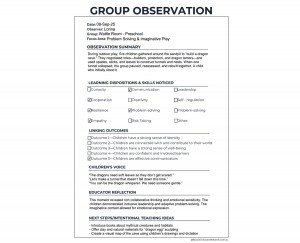
This template is used as a group observation.

Writing a group observation in early childhood education is both an art and a strategic tool—it captures collective learning while honoring individual voices. Here's a guide to help you craft meaningful, pedagogically sound group observations that align with the planning cycle and resonate with families and educators alike.
In early childhood education, observation and planning cycles are meant to illuminate learning—not drown educators in endless paperwork. Yet for many services, these cycles have become overwhelming, rigid, and detached from everyday practice. The solution isn’t to lower standards but to design systems that reflect real moments, empower educator voice, and prioritize children's growth without burning out the people guiding it.
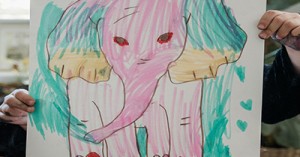
A work sample observation in early childhood education is a method used by educators to document and assess a child's learning and development through collected samples of their work. These samples can include drawings, paintings, writing, collages, and photographs of projects.

A: Not necessarily! While follow-ups can be valuable, they aren't always required. Observations and learning stories serve different purposes, and whether a follow-up is needed depends on the context.
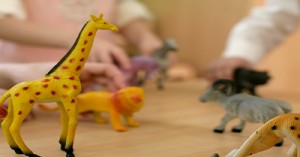
A: Observing a child's interest is key to understanding their passions and learning preferences.
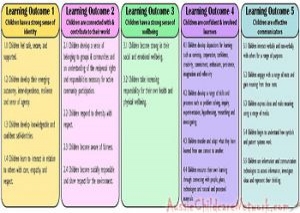 Here is the list of the EYLF Learning Outcomes that you can use as a guide or reference for your documentation and planning. The EYLF… Read More
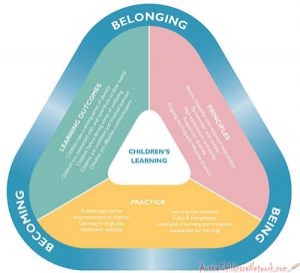 The EYLF is a guide which consists of Principles, Practices and 5 main Learning Outcomes along with each of their sub outcomes, based on identity,… Read More
 This is a guide on How to Write a Learning Story. It provides information on What Is A Learning Story, Writing A Learning Story, Sample… Read More
 One of the most important types of documentation methods that educators needs to be familiar with are “observations”. Observations are crucial for all early childhood… Read More
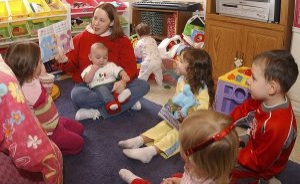 To support children achieve learning outcomes from the EYLF Framework, the following list gives educators examples of how to promote children's learning in each individual… Read More
 Reflective practice is learning from everyday situations and issues and concerns that arise which form part of our daily routine while working in an early… Read More
 When observing children, it's important that we use a range of different observation methods from running records, learning stories to photographs and work samples. Using… Read More
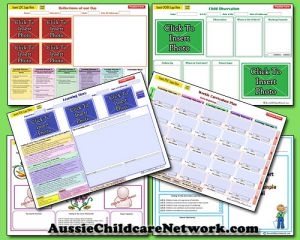 Within Australia, Programming and Planning is reflected and supported by the Early Years Learning Framework. Educators within early childhood settings, use the EYLF to guide… Read More
 This is a guide for educators on what to observe under each sub learning outcome from the EYLF Framework, when a child is engaged in… Read More
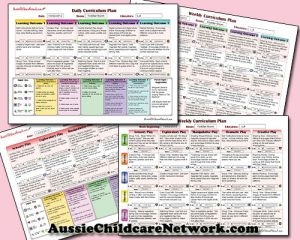 The Early Years Learning Framework describes the curriculum as “all the interactions, experiences, activities, routines and events, planned and unplanned, that occur in an environment… Read More

Reflective practice is essential for continuous growth in early childhood education. As a leader, fostering...
See more...
For Educators continuing to work, it's important that you look after your health and wellbeing...
See more...
The Sea of Fish Challenge, by Connecting The Dots Through Culture, is a national initiative...
See more...