



Shapes are everywhere, in the food we eat, the toys we play with, and the stories we tell. For young children, learning shapes isn’t just about geometry; it’s about noticing patterns, building vocabulary, and connecting with the world around them. These simple, rhythmic rhymes make shape learning fun, memorable, and emotionally engaging.
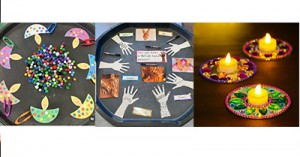
The following setups and experiences are designed to foster fine motor skills, pattern recognition, and joyful engagement with the traditions of the Festival of Lights. Each activity offers opportunities for children to express themselves, explore symbolism, and co-create meaning in inclusive and developmentally appropriate ways.

Celebrating Diwali with toddlers and preschoolers in early childhood settings is a joyful opportunity to foster cultural awareness, sensory exploration, and inclusive belonging. Here are some developmentally appropriate, emotionally intelligent ideas to celebrate Diwali with toddlers and preschoolers.

World Space Week is from 4th - 10th October. To help educators join the global celebration, a variety of free themed activities are available for download. These resources are designed to be engaging, educational, and easy to use across different age groups, making space exploration accessible and fun for all.

World Space Week ideas for babies and toddlers: sensory play, crafts, songs, and gentle learning.

Here’s a curated list of simple, quick, and tasty vegetarian recipes designed with young children in mind—perfect for early learning settings or family meals. These recipes balance nutrition, sensory appeal, and ease of preparation, with options that support cultural inclusion and dietary needs.

By empowering early childhood educators to embrace Auslan and foster inclusive communication from the earliest years. Here's a scaffolded guide to help you begin teaching Auslan in early childhood settings for toddlers and preschoolers.

Here are 5 gentle, emotionally intelligent, story-based resources designed to help young children understand body boundaries, safe adults, and protective behaviors.

Father’s Day is on the 6th of September 2026; it's time to start thinking of gifts from babies that can be meaningful, practical, and developmentally appropriate—without relying on the usual hand or footprints. Here are 50 inspired DIY Father's Day gift ideas for babies.
Children’s Book Week 2025 marks the 80th anniversary of this beloved national celebration, running from Saturday, 16 August, to Saturday, 23 August. Hosted by the Children’s Book Council of Australia (CBCA), this year’s theme—“Book an Adventure!”—explores the magic of storytelling through bold journeys, imaginative quests, and meaningful connections.
 The Children’s Services Award introduces a streamlined classification system and updated pay rates designed to better recognise the skills, qualifications, and responsibilities of early childhood… Read More
 The Children’s Services Award has 8 clear levels. These levels make it easier to understand where you fit, based on your experience, qualifications, and responsibilities.… Read More
 When working as a qualified early childhood teacher (with a university degree) within a service, your rate of pay will come from the Educational Services… Read More
 Diploma-qualified educators play a vital role in early childhood services, taking on responsibilities that range from supporting children’s learning and development to leading rooms and… Read More
 Certificate III qualified educators form the backbone of early childhood services, providing essential care and learning support for children across all settings. Their wages under… Read More
 Early Childhood Teachers (ECTs) play a vital role in leading curriculum and pedagogy in early learning settings. Regulation 272 of the Education and Care Services… Read More
 Discover how school readiness programs support children’s independence, confidence, and skills for a successful transition into primary school.
Read More
Discover how school readiness programs support children’s independence, confidence, and skills for a successful transition into primary school.
Read More
 When an Educator is not performing their tasks or responsibilities at best practice, these issues need to be addressed for the Educator to understand where… Read More
 Educators can maximise tax deductions by claiming classroom supplies, training, union fees, and home office costs this financial year.
Read More
Educators can maximise tax deductions by claiming classroom supplies, training, union fees, and home office costs this financial year.
Read More
 A staff appraisal is a formal, systematic process of determining and reviewing the performance of early childhood educators over a period of time, usually a… Read More

As educators, we need to incorporate cultural celebrations within the setting in a sensitive and...
See more...
Pretend play is very important for children's development and learning. In the house corner, children...
See more...
Art displays in early childhood settings are more than colourful walls, they are living stories...
See more...