



Exceeding Theme 3: Practice is shaped by meaningful engagement with families and/or the community. It focuses on practice being shaped by meaningful engagement with families and the community. It highlights that high-quality services don’t operate in isolation; educators actively collaborate with families, children, and community partners to co-construct learning, well-being, and service identity.

Minecraft has become a powerful tool for engaging children in OOSH. Its open-ended, creative environment allows children to explore, build, and collaborate in ways that naturally align with the MTOP. When thoughtfully facilitated, Minecraft activities can extend children’s interests, foster teamwork, and embed meaningful learning outcomes.

OSHC educators play a vital role in supporting children’s well-being during transitions, play, and rest. With new child safety reforms under the National Quality Framework (NQF) coming into effect from September 2025 and January 2026, services are required to adopt clearer boundaries and transparent practices around physical contact. This article explores how educators can balance emotional support with safeguarding obligations.

In OSHC, children often mirror cultural trends. The rise of “Sephora kids," young people fascinated by skincare and makeup, has sparked curiosity about how educators can channel this interest safely. While applying cosmetics directly to children’s skin isn’t appropriate, there are many playful, imaginative strategies that let them explore beauty culture without risk.

Working in OSHC means being prepared for the unexpected. Children are naturally curious, and sometimes their questions can feel confronting—especially when asked in front of peers. One educator recently shared an experience where a Year 4/5 child interrupted a group discussion to ask, “Are you gay?” This scenario highlights the importance of professional boundaries, inclusivity, and reflective practice.

Children thrive when they can do—exploring, tinkering, and experimenting. Science activities in OSHC settings not only engage curious minds but also build teamwork, problem‑solving, and resilience. Best of all, many experiments can be done with everyday materials, keeping costs low while maximising fun.

In OSHC, language plays a powerful role in shaping the culture of the environment. Inappropriate language and swearing can undermine respect, safety, and inclusivity. Educators often face the challenge of balancing children’s freedom of expression with the need to maintain a positive, professional atmosphere.

Documenting for Out of School Hours (OOSH) services can be quite a task, but it's essential for ensuring quality care and learning experiences for children. The following article provides information on Documenting The Program For OOSh Services, Changes To The Documenting Requirements, Considerations In Developing Documentation, Appropriate and Relevant Documentation, Involving Children In Documentation and more.

The years between five and twelve are a time brimming with activity for children – they are developing close friendships, getting stronger in body and mind as well as widening their circle of hobbies and interests. While all this exploration makes for great learning and excitement, also sets the stage for some challenging behaviour. The following article provides information on strategies that Educators can use to promote positive behaviour in OOSH services.

OOSH Educators Day 2026 will be celebrated on Wednesday, 29th July, recognising the vital role OOSH educators play in supporting children, families, and communities throughout Australia. This year’s theme is “Valuing Every OOSH Educator Every Day”, highlighting their contribution to resilience, wellbeing, and lifelong learning.
 The Children’s Services Award introduces a streamlined classification system and updated pay rates designed to better recognise the skills, qualifications, and responsibilities of early childhood… Read More
 The Children’s Services Award has 8 clear levels. These levels make it easier to understand where you fit, based on your experience, qualifications, and responsibilities.… Read More
 When working as a qualified early childhood teacher (with a university degree) within a service, your rate of pay will come from the Educational Services… Read More
 Diploma-qualified educators play a vital role in early childhood services, taking on responsibilities that range from supporting children’s learning and development to leading rooms and… Read More
 Certificate III qualified educators form the backbone of early childhood services, providing essential care and learning support for children across all settings. Their wages under… Read More
 Early Childhood Teachers (ECTs) play a vital role in leading curriculum and pedagogy in early learning settings. Regulation 272 of the Education and Care Services… Read More
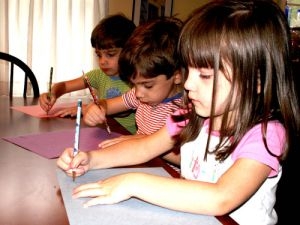 Discover how school readiness programs support children’s independence, confidence, and skills for a successful transition into primary school.
Read More
 When an Educator is not performing their tasks or responsibilities at best practice, these issues need to be addressed for the Educator to understand where… Read More
 Educators can maximise tax deductions by claiming classroom supplies, training, union fees, and home office costs this financial year.
Read More
 A staff appraisal is a formal, systematic process of determining and reviewing the performance of early childhood educators over a period of time, usually a… Read More

Auslan is the sign language of the Australian Deaf community. The following article provides a...
See more...
Engaging babies in the right activities can make a significant difference in a baby's development...
See more...
Children’s agency is all about empowering children to make choices, express their ideas, and influence...
See more...