



This cheat sheet condenses the principles, practices, and learning outcomes into a quick reference, with real OOSH examples to show how theory translates into everyday practice.

In OSHC, “child agency” means recognising children as capable decision‑makers who actively shape their experiences, rather than simply following adult‑led routines. It’s about giving them voice, choice, and ownership in the program and showing this through practical, everyday practices.

The My Time, Our Place (MTOP) Framework is designed for school-age care, with five outcomes that guide planning and reflection. Embedding it means linking everyday activities to these outcomes in ways that are intentional, inclusive, and meaningful. Here’s a clear breakdown with activity examples mapped to each outcome.

The MTOP Outcomes Meanings and Examples Posters provide detailed meanings for each of the 5 learning outcomes as well as examples of how each learning outcome can be implemented into practice. This is great to support educators to understand the meaning of each of the individual learning outcomes and also assist educators in knowing how to demonstrate the learning outcomes in the environment.

The following provides a list of activity ideas for each sub-outcome of MTOP Outcome 1: Children Have a Strong Sense of Identity.

MTOP (My Time, Our Place) Outcome 1 focuses on children having a strong sense of identity. This means that in school-age care settings, children develop a sense of belonging when they feel accepted and can build relationships with peers and educators. Their confidence, motivation, and self-identity are shaped by their interactions with others.
From today, 01 February 2024, both EYLF 2.0 and MTOP 2.0 will now come into effect and services will have to implement the new updated frameworks.
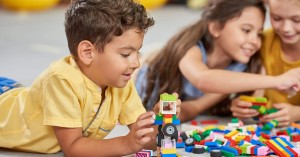
To support children achieve learning outcomes from the MTOP Framework Version 2.0, the following list gives educators examples of how to promote children's learning in each individual learning outcome. These can be used when assessing children's learning, critically reflecting on the experiences planned, strategies to implement for each learning outcome and more. It also encourages and promotes each individual outcome throughout the early childhood setting.

This is a guide for educators on what to observe under each sub-learning outcome from the MTOP Framework when a child is engaged in play and learning. Educators can plan experiences for the curriculum and gain an understanding of how children can achieve each individual outcome.
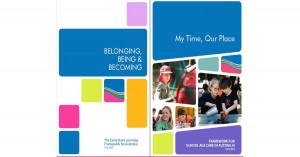
ACECQA has released new resources explaining the updates to the nationally approved learning frameworks EYLF, and MTOP and clarification and expanded explanation across parts of the original learning frameworks. The following provides the EYLF and MTOP Version 2 Booklets as well as other information resources.
 The Children’s Services Award introduces a streamlined classification system and updated pay rates designed to better recognise the skills, qualifications, and responsibilities of early childhood… Read More
 The Children’s Services Award has 8 clear levels. These levels make it easier to understand where you fit, based on your experience, qualifications, and responsibilities.… Read More
 When working as a qualified early childhood teacher (with a university degree) within a service, your rate of pay will come from the Educational Services… Read More
 Diploma-qualified educators play a vital role in early childhood services, taking on responsibilities that range from supporting children’s learning and development to leading rooms and… Read More
 Certificate III qualified educators form the backbone of early childhood services, providing essential care and learning support for children across all settings. Their wages under… Read More
 Early Childhood Teachers (ECTs) play a vital role in leading curriculum and pedagogy in early learning settings. Regulation 272 of the Education and Care Services… Read More
 Discover how school readiness programs support children’s independence, confidence, and skills for a successful transition into primary school.
Read More
Discover how school readiness programs support children’s independence, confidence, and skills for a successful transition into primary school.
Read More
 Floorbook is a documentation approach that uses a large book with blank pages for children to record different aspects of their learning in small groups… Read More
 When an Educator is not performing their tasks or responsibilities at best practice, these issues need to be addressed for the Educator to understand where… Read More
 Educators can maximise tax deductions by claiming classroom supplies, training, union fees, and home office costs this financial year.
Read More
Educators can maximise tax deductions by claiming classroom supplies, training, union fees, and home office costs this financial year.
Read More

Program boards are more than just wall displays—they’re a window into the learning journey of...
See more...
As Educators all over the world find out every day, there are certain life skills...
See more...
Lego and Building Blocks are a favourite activity for young children. From toddlers, they start...
See more...