



A: In early childhood education and care (ECEC) settings across Australia, mobile phone use by educators is now subject to strict national reforms aimed at safeguarding children’s well-being and ensuring professional presence.

In a landmark move to strengthen child safety and regulatory oversight, the Australian government is preparing to roll out five major reforms across early childhood education centres. These changes, expected to take effect within months, aim to address longstanding gaps in compliance, transparency, and sector accountability.
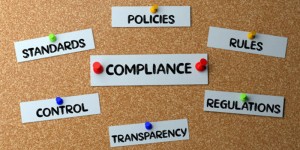
Australia’s Department of Education has issued compliance notices to 30 early childhood education centres, exercising new regulatory powers granted by the federal government. This marks a significant escalation in national oversight following a wave of child safety concerns and public scrutiny across the sector.

An NSW parliamentary inquiry has revealed that Little Zak's Academy, a prominent childcare provider, received over $2.9 million in state funding despite multiple breaches of child safety regulations across its centres.

Parliament has passed legislation enabling the federal government to suspend or revoke Child Care Subsidy (CCS) funding for early childhood education providers that fail to meet prescribed safety standards.

Under a new bill, centres that seriously breach standards will have one month to rectify issues before losing taxpayer-funded subsidies. While framed as a grace period to avoid sudden shutdowns, critics worry that such leniency could prolong children’s exposure to risk.

The recent announcement that three Melbourne families are launching legal proceedings against G8 Education marks a pivotal moment in Australia’s childcare crisis. With over 250 families now engaged with legal representatives and one educator charged with 70 offenses against infants and toddlers, this case isn’t just about individual accountability—it’s about exposing the fault lines in our safeguarding systems.

A: This typically refers to opening a room or service with two educators holding Certificate III qualifications. The assumption is that the third staff member (when added) would be diploma-qualified, allowing the team to meet the 50/50 ratio requirement—which mandates that at least half of the educators must hold or be working towards a diploma-level qualification.

In a landmark move towards safeguarding vulnerable children, the Queensland Government has unveiled mandatory annual safety training for all childcare workers—a first-of-its-kind initiative in Australia.

In the heart of every early learning center, educators hold a uniquely powerful role—not just as teachers, but as advocates for children's safety and well-being. When unsafe, inappropriate, or unethical practices arise, educators are often the first to witness them. But too often, they feel powerless to act. It's time to shift that narrative.
 The Children’s Services Award introduces a streamlined classification system and updated pay rates designed to better recognise the skills, qualifications, and responsibilities of early childhood… Read More
 The Children’s Services Award has 8 clear levels. These levels make it easier to understand where you fit, based on your experience, qualifications, and responsibilities.… Read More
 When working as a qualified early childhood teacher (with a university degree) within a service, your rate of pay will come from the Educational Services… Read More
 Diploma-qualified educators play a vital role in early childhood services, taking on responsibilities that range from supporting children’s learning and development to leading rooms and… Read More
 Certificate III qualified educators form the backbone of early childhood services, providing essential care and learning support for children across all settings. Their wages under… Read More
 Early Childhood Teachers (ECTs) play a vital role in leading curriculum and pedagogy in early learning settings. Regulation 272 of the Education and Care Services… Read More
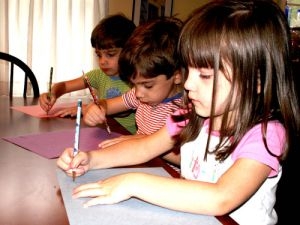 Discover how school readiness programs support children’s independence, confidence, and skills for a successful transition into primary school.
Read More
Discover how school readiness programs support children’s independence, confidence, and skills for a successful transition into primary school.
Read More
 Floorbook is a documentation approach that uses a large book with blank pages for children to record different aspects of their learning in small groups… Read More
 When an Educator is not performing their tasks or responsibilities at best practice, these issues need to be addressed for the Educator to understand where… Read More
 Educators can maximise tax deductions by claiming classroom supplies, training, union fees, and home office costs this financial year.
Read More
Educators can maximise tax deductions by claiming classroom supplies, training, union fees, and home office costs this financial year.
Read More

An Individual Learning Plan (ILP) in early childhood is a tailored document that outlines specific...
See more...
This article focuses on providing actionable strategies and practical techniques for educational leaders to effectively...
See more...
Quality Area 1 of the National Quality Standard focuses on Educational Program and Practice. This...
See more...