


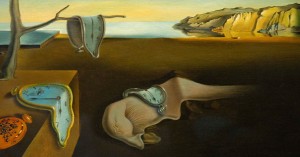
Salvador Dalí was a famous Spanish artist known for his eccentric personality and surrealist artworks. His dreamlike paintings, sculptures, and films often depict impossible landscapes and bizarre imagery. These qualities make his art particularly engaging for children, as it invites imagination, playfulness, and creativity.

Pollock’s action-painting style of dripping, splattering, and flicking paint is perfect for early childhood art experiences. These activities encourage freedom, movement, and sensory exploration while linking to EYLF outcomes.

One of the greatest French artists of the 20th century, Henri Matisse is known for his fluid use of colours and forms in paintings and sculptures. The following provides information on Henri Matisse's art experiences that can be created by children.

Pablo Picasso, one of the most influential artists of the 20th century, pioneered Cubism—a style that breaks objects into geometric shapes and shows multiple perspectives at once. Introducing Picasso to children helps them explore creativity, abstract thinking, and self‑expression.

Claude Monet, founder of Impressionism, captured light, colour, and atmosphere in everyday scenes. His style encourages children to notice nature, experiment with brushstrokes, and explore how light changes what we see.

Andy Warhol was one of the most famous American artists of the latter half of the 20th century. Born Andrew Warhola in 1928 in Pennsylvania, he originally worked as a commercial artist, designing commercials and window displays for stores. He soon became famous as an artist in the Pop Art movement which uses images from popular cultures like advertising, comic books and other everyday objects. The following provides information on Andy Warhol's art experiences that can be created by children.
Creative arts offer children - through dance, crafts, music, art or drama – some of the most enjoyable ways to express their ideas and imagination. Along along with providing opportunities for freewheeling thinking, creative pursuits bring many developmental and learning benefits as well.
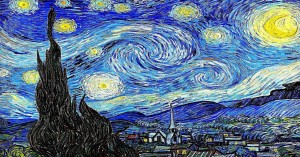
Dutch painter Vincent Van Gogh has been widely acclaimed as one of the greatest figures in the history of art. His works exude intense emotional power with their vivid colours and bold brushstrokes. Described as Post-impressionist, Van Gogh’s paintings paved the way for the modernist movement in art around the world. The following provides information on Vincent Van Gogh's art experiences that can be created by children.
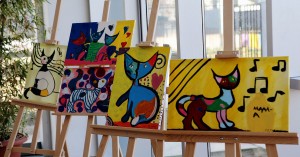
EYLF curriculum, Belonging, Being, Becoming recognises the significance of artistic exploration in the early years. According to Element 5.3 “Children engage with a range of texts and gain meaning from these texts” Educators can bring about this outcome when they teach art as a language and show how artists can use the elements and principles to construct visual texts. An excellent way to work towards this outcome is to incorporate famous artists into toddler and preschool art experiences. Here are a few ideas on how you can do this in your service.

Encourage children’s creativity with painting—practical strategies, engaging activities, and educator tips to inspire confidence and expression.
 The Children’s Services Award introduces a streamlined classification system and updated pay rates designed to better recognise the skills, qualifications, and responsibilities of early childhood… Read More
 The Children’s Services Award has 8 clear levels. These levels make it easier to understand where you fit, based on your experience, qualifications, and responsibilities.… Read More
 When working as a qualified early childhood teacher (with a university degree) within a service, your rate of pay will come from the Educational Services… Read More
 Diploma-qualified educators play a vital role in early childhood services, taking on responsibilities that range from supporting children’s learning and development to leading rooms and… Read More
 Certificate III qualified educators form the backbone of early childhood services, providing essential care and learning support for children across all settings. Their wages under… Read More
 Early Childhood Teachers (ECTs) play a vital role in leading curriculum and pedagogy in early learning settings. Regulation 272 of the Education and Care Services… Read More
 Children need safe and positive environments to learn and grow. To ensure this, services and educators need to ensure effective supervision at all times. The… Read More
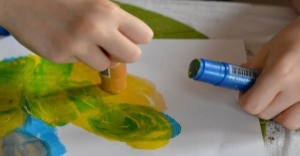 Floorbook is a documentation approach that uses a large book with blank pages for children to record different aspects of their learning in small groups… Read More
 When an Educator is not performing their tasks or responsibilities at best practice, these issues need to be addressed for the Educator to understand where… Read More
 Educators can maximise tax deductions by claiming classroom supplies, training, union fees, and home office costs this financial year.
Read More
Educators can maximise tax deductions by claiming classroom supplies, training, union fees, and home office costs this financial year.
Read More

Quality Area 6 – Collaborative Partnerships With Families and Communities enables services to build respectful...
See more...
Here are 20 engaging activities designed to boost problem-solving skills in preschoolers. Each activity offers...
See more...
For some long-serving staff, the new Award minimum after the 1 July 2026 increase is...
See more...