



For all services, both persons in day-to-day charge and all nominated supervisors must complete an approved child protection course.

As an Educator, you are involved in the day to day running of the service. At times you are also witnessing to the services breach of regulations, staff misconduct or aspects of the service that you believe is unethical. If you feel that the service where you're working is not meeting National Regulations or are implementing bad practices then it is vital that you make a formal complaint.

The following is a guide for Educators who are toilet training children within their room. It will provide you with information and strategies on how to assist young children during toilet training during the day in an early childhood setting.

When an Educator is not performing their tasks or responsibilities at best practice, these issues need to be addressed for the Educator to understand where they need to improve.
Key changes and updates to the National Regulations and Law are now in full swing. These include supporting Family Day Care to achieve better compliance and quality across the whole sector and an introduction of a national educator to child ratio of 1:15 for services providing education and care to school age children.

From the 01 Oct, a new National Regulation will be put in place that will give Educators the right to overrule parents requests for their child's sleep arrangements to reduce the risk of SIDS (Sudden Infant Death Syndrome).

As educators, we need to incorporate cultural celebrations within the setting in a sensitive and respectful manner by avoiding cultural tokenism - which is the act of making a small minimal effort towards something.

When working while pregnant, both parents are entitled to maternity and parental leave and this applies to all employees in Australia. It can be taken when you give birth, spouse/defacto partner gives birth or adopting a child under 16 years of age.

Information on workplace rights and entitlements for pregnant educators. Supports workplace compliance.

Early Childhood Teachers (ECTs) play a vital role in leading curriculum and pedagogy in early learning settings. Regulation 272 of the Education and Care Services National Regulations sets out the minimum number of ECTs required in centre‑based services with 25 or more preschool‑aged children.
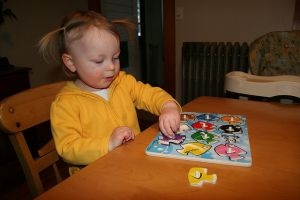 Toddlers have a greater understanding of the world around them by this stage. Their cognitive development (also known as intellectual development and thinking skills) continues… Read More
 Infants begin to develop trust when parents begin to fulfil their needs. Such as changing an infant's nappy when needed, feeding on request and holding… Read More
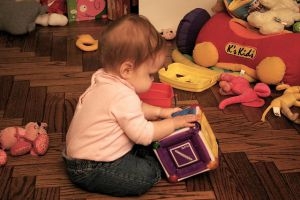 Beginning at birth the construction of thought processes, such as memory, problem solving, exploration of objects etc, is an important part of an infant’s cognitive… Read More
 Toddlers want to do more on their own and do not like it when you begin to establish limits on their behaviour. Tantrums can become… Read More
 Your preschooler is now able to focus their attention more accurately and is less influenced by distractions. The intensity of questions increase as your child… Read More
 John Dewey is often seen as the proponent of learning by doing – rather than learning by passively receiving. He believed that each child was active,… Read More
 Erik Erikson developed a psychosocial theory to understand how we each develop our identities through eight stages of psychosocial development from infancy to adulthood. The… Read More
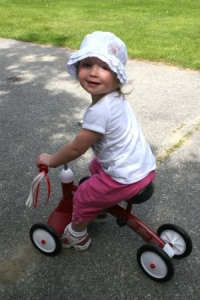 Toddler advance and gains new skills in Gross Motor Development milestones achieved throughout earlier years. Co-ordination and challenges that could not be performed before such… Read More
 At this point preschoolers begin to interact effectively with others. Play becomes more innovative and organized and “boyfriend” or “girlfriend” begins to emerge. Preschoolers have… Read More
 From now, babies begin to identify and respond to their own feelings, understanding other's feelings & needs and interact positively with others. A baby's social and… Read More

As Educators when communicating with Parents (through verbal or non-verbal communication), there will be times...
See more...
Stimming refers to repetitive movements, sounds, or actions that people use to regulate emotions, manage...
See more...
Luckily not all toddlers have "temper tantrums" but if you are reading this article, well...
See more...