


In early childhood education, the practice of moving educators to new rooms each year is common. Some services see it as a way to keep things fresh, while others worry it disrupts continuity for children. So, are yearly room changes supporting children’s well-being or unsettling the very relationships they rely on?

Building positive relationships with families is essential, and simple, thoughtful greetings go a long way in creating a welcoming environment. The following article provides tips for educators on how they can approach drop-offs and pick-ups effectively.

Positive phrases play a crucial role in children's growth because they help nurture their emotional, social, and cognitive development. The following article lists 30 positive phrases that educators should say to children.
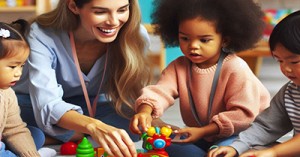

Engaging parents in early childhood activities is a wonderful way to build a strong community and support children's development. The following article provides a list of Activity Ideas For Parents in early childhood settings.

Workplace bullying is a serious issue that can have significant impacts on an individual's mental health, job satisfaction, and overall well-being. The following article provides information on How To Handle A Workplace Bully, What To Do If Someone Is Ignoring You At Work, What To Do If Someone Is Being Disrespecting You At Work, What To Do If Someone Is Gossiping About You At Work, What To Do If Someone Is Yelling At You At Work and more.

The role of an educational leader in early childhood settings in Australia is multifaceted and crucial for the development and implementation of high-quality educational programs. The following articles provides information on Position Description For An Educational Leader, Skills Of An Educational Leader, Educational Leader Allowance, Supporting Educators, Motivating and Inspiring As An Educational Leader and more.

Self-regulation can be understood as a suite of skills needed to control and manage one’s own emotions and behaviours in a wide range of setting. Learning self-regulation in the early years has been consistently linked to not just better adjusted adults but also higher levels of academic achievement in later life. The following provides strategies to support children’s self-regulation in the learning environment.

In early childhood, positive relationships with teachers are extremely important for intellectual, social and emotional development. Indeed research shows that secure attachments formed in early years do not just prepare the foundations for positive relationships in adulthood but predict positive life outcomes as well. The following article provides strategies on how Educators can build relationships with children.
 Toddlers have a greater understanding of the world around them by this stage. Their cognitive development (also known as intellectual development and thinking skills) continues… Read More
 Infants begin to develop trust when parents begin to fulfil their needs. Such as changing an infant's nappy when needed, feeding on request and holding… Read More
 Beginning at birth the construction of thought processes, such as memory, problem solving, exploration of objects etc, is an important part of an infant’s cognitive… Read More
 Toddlers want to do more on their own and do not like it when you begin to establish limits on their behaviour. Tantrums can become… Read More
 Your preschooler is now able to focus their attention more accurately and is less influenced by distractions. The intensity of questions increase as your child… Read More
 John Dewey is often seen as the proponent of learning by doing – rather than learning by passively receiving. He believed that each child was active,… Read More
 Erik Erikson developed a psychosocial theory to understand how we each develop our identities through eight stages of psychosocial development from infancy to adulthood. The… Read More
 Toddler advance and gains new skills in Gross Motor Development milestones achieved throughout earlier years. Co-ordination and challenges that could not be performed before such… Read More
 At this point preschoolers begin to interact effectively with others. Play becomes more innovative and organized and “boyfriend” or “girlfriend” begins to emerge. Preschoolers have… Read More
 From now, babies begin to identify and respond to their own feelings, understanding other's feelings & needs and interact positively with others. A baby's social and… Read More

Supporting children in OSHC with regulation techniques means creating safe, predictable environments and teaching strategies...
See more...
At this point preschoolers begin to interact effectively with others. Play becomes more innovative and...
See more...
Fine motor skills have improved during this point, with increased concentration and patience. These improvements...
See more...