


OSHC educators play a vital role in supporting children’s well-being during transitions, play, and rest. With new child safety reforms under the National Quality Framework (NQF) coming into effect from September 2025 and January 2026, services are required to adopt clearer boundaries and transparent practices around physical contact. This article explores how educators can balance emotional support with safeguarding obligations.

Creating Aboriginal and Torres Strait Islander displays in early childhood education (ECE) settings is about more than decoration—it’s about embedding cultural respect, identity, and belonging into the learning environment. Here are some practical and meaningful approaches.

Indoor sand play is a sensory-rich, imaginative activity where children explore sand in contained environments such as trays, tubs, or sand tables. It offers opportunities for creativity, problem-solving, and emotional regulation while minimizing the mess of outdoor sandpits.

As parents, we know the indescribable joy of seeing our child’s face light up when they connect with a peer, master a new skill, or simply laugh with abandon. For educators, these moments are equally profound—they are the heartbeat of our work, the evidence of growth, and the stories that shape a child’s learning journey.
Yet, in recent years, the sector has faced a dilemma: should we continue to capture and share these images, or should we restrict them in the name of safety?
The law in Australia reflects this balance: images are not banned, but services must obtain consent, use secure platforms, and embed strong privacy safeguards. The National Model Code and upcoming NQF Child Safety Reforms make it clear—responsible image use is possible.
1. Transparent Consent
2. Secure Platforms
3. Purposeful Documentation
4. Dignity First
5. Family Connection
6. Child Voice
|
Strategy |
Example | Outcome |
|---|---|---|
| Consent | Parents choose photo-sharing preferences via digital form. | Families feel respected and in control |
| Secure Sharing | Photos uploaded to encrypted parent portal | Protects privacy, builds trust |
| Learning Links | Tower-building photo linked to Outcome 5 | Shows authentic learning evidence |
| Dignity | Child holding certificate instead of toilet photo | Maintains respect and celebrates achievement |
| Child Choice | Children select photos for portfolios. |
Builds identity and agency |
Safety is essential. But so is joy. In our efforts to protect children, we must not erase their visibility. Families deserve to see their child’s milestones. Children deserve to be recognised for their growth. Educators deserve to celebrate the learning they nurture every day.
Images, when used responsibly, are not a risk; they are a gift. They are the bridge between families and educators, the record of childhood unfolding, and the reminder that every child’s story is worth seeing.
Photo Observations In Childcare
Q: Do All Observations Require A Photo?
Opinion: We Don't Need 200 Photos to Prove We're Educators
Q: What Is A Photo Observation

Motivation doesn’t have to mean extra effort or complicated systems. In an OSHC setting, the best strategies are the ones that fit seamlessly into everyday routines. These quick ideas take seconds, but they build recognition, connection, and positivity—helping educators feel valued and energized while keeping the focus on the children.

Packing up after play or activities is one of the most consistent challenges in OSHC settings. Educators often find themselves repeating reminders, negotiating with children, or stepping in to finish the task themselves. While rewards such as stickers can provide short-term motivation, they rarely sustain engagement, and not all children are interested in them.

ECEC services and policies around technology use are designed to protect children’s safety, privacy, and well-being. One common question is whether educators are permitted to wear smart watches in the workplace. The answer depends on the functions of the device.

Mark-making refers to the earliest forms of visual expression—scribbles, lines, dots, and patterns—that children create to explore ideas, communicate meaning, and experiment with representation. Within the Reggio Emilia approach, these marks are not seen as mere preparation for writing but as a powerful language of childhood, embodying thought, emotion, and identity.

The expectation that three-year-olds should sit at a table and write their names with pencils and stencils is being reconsidered by many educators. While name recognition and writing are important milestones, current pedagogy emphasises that children develop these skills through play, sensory experiences, and creative exploration—not through repetitive table work.

At the end of 2026, the early childhood sector is still waiting for ratio reform. Despite years of advocacy, despite mounting evidence, and despite repeated calls from educators, families, and sector leaders, ratios remain unchanged. Everything else seems to be happening—new frameworks, reporting requirements, compliance checks—but the most fundamental safeguard, the number of adults available to protect and nurture children, is still overlooked.
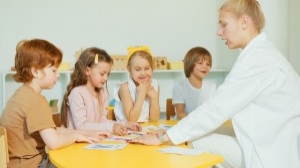 G8 Education introduces Emmy and Friends consent lessons, teaching 30,000 children body autonomy, safe adults, and protective behaviours nationwide.
Read More
G8 Education introduces Emmy and Friends consent lessons, teaching 30,000 children body autonomy, safe adults, and protective behaviours nationwide.
Read More
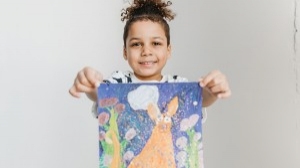 Indigenous preschools play an important role in preserving language, culture, and identity for future generations. A recent story from Australia highlights how early childhood education… Read More
