


January offers a vibrant mix of cultural, playful, and reflective events that can inspire meaningful programming in early childhood settings. By weaving these celebrations into daily practice, educators can foster children’s curiosity, creativity, and sense of belonging. These activities provide opportunities to explore sustainability, inclusion, empathy, and cultural pride, values that align strongly with the EYLF.
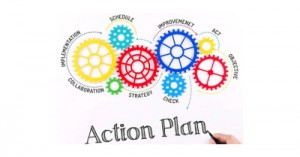
A Quality Improvement Plan (QIP) helps early childhood services keep improving. It shows what’s working well and what needs to change. An Action Plan is the step‑by‑step guide inside the QIP. It tells the team:
This makes sure improvements are clear, practical, and linked to the National Quality Standards (NQS).

High-quality early childhood education is built on a cycle of self-assessment, critical reflection, and quality improvement planning. These three elements work together to ensure services not only meet the National Quality Standard (NQS) but also continuously evolve to provide meaningful, responsive learning environments.
Self-assessment helps educators evaluate their practices against the NQS and identify strengths and areas for growth.
Critical reflection deepens this process by asking why practices matter, exploring multiple perspectives, and considering the impact on children, families, and educators.
The QIP then transforms these insights into a documented plan with clear goals, strategies, and timelines for improvement.
Together, they create a cycle of continuous improvement that strengthens compliance, promotes professional growth, and ensures children thrive in environments that are thoughtful, inclusive, and engaging.

Learn how to write engaging learning stories in early childhood with this step‑by‑step guide, designed to support educators in documenting children’s growth.

If observations aren’t meant to be long, complicated, and constant, the next logical question is, why does the rest of the planning cycle feel so heavy?
Just like observations, the planning cycle itself is not the workload. The National Quality Framework gives us a simple, elegant loop: notice, plan, implement, and reflect.
What’s blown out of proportion are the performance tasks we’ve layered on top—multiple formats, duplicated evidence, tick‑box extensions, and reflections written to impress assessors rather than support children.
The problem isn’t Observe → Plan → Implement → Reflect.
The problem is everything we’ve added on top.
The observation cycle doesn’t need to be complicated. At its heart, it’s simply a way of noticing, understanding, and responding to children’s learning. These prompts are designed to support educators at every stage—keeping documentation meaningful, manageable, and connected to children’s identities.

EYLF Outcome 1 Floorbook prompts for identity, belonging, autonomy, emotional well-being, and empathy. Includes child‑voice questions, educator reflections, group prompts, and page starters.
Outcome 1 of the EYLF focuses on identity: a child’s sense of belonging, autonomy, emotional safety, and connection to others. Floorbooks are a powerful way to capture this learning because they centre children’s voices, make thinking visible, and document identity as it unfolds in real time.

A clear, practical EYLF Outcome 1 cheat sheet for educators, with examples, observation wording, and strategies to document children’s identity, belonging, autonomy, emotional well-being, and respectful relationships across daily routines.
Outcome 1 is the foundation of early childhood learning; everything else grows from here. It focuses on children’s identity: how they see themselves, how safe and supported they feel, and how they relate to others. When children experience belonging, security, autonomy, emotional well-being, and respectful relationships, they develop the confidence and resilience needed for all future learning.
This cheat sheet gives educators a practical, easy‑to‑use guide to understanding, observing, and documenting Outcome 1 across everyday routines. With clear indicators, real-world examples, and ready‑to‑use documentation prompts, educators can capture meaningful learning without unnecessary paperwork.

Building secure, trusting relationships is the heart of early childhood education, and EYLF Outcome 1.1 places this at the centre of children’s learning and well-being. Before children can explore, communicate, or engage confidently with others, they must first feel safe, supported, and emotionally held within their environment.
Learn how to understand, support, and document EYLF Outcome 1.1 with clear examples, practical strategies, and observation wording that help educators build secure, trusting relationships in early childhood settings.

Daily experience Journals are a cornerstone of communication between educators and families. They provide parents with a snapshot of what their children explored, learned, and enjoyed during the day. Yet, when working with a whole group, efficiency and clarity become essential.
