



This reflection guide is designed to support educators in rethinking school readiness through a holistic, child-centered lens. It encourages dialogue, challenges assumptions, and strengthens programming that honours each child’s unique journey.
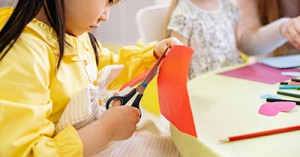
Here’s a comprehensive guide on How to Approach School Readiness Planning for Preschoolers, grounded in evidence from ACECQA, the National Quality Standard (NQS), and the Early Years Learning Framework (EYLF V2.0).
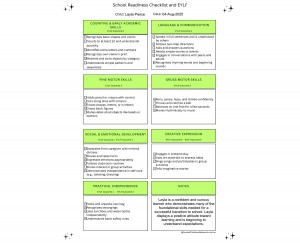
This checklist can be used as a school readiness checklist.
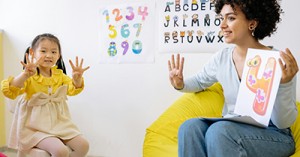
Preparing children for the leap into formal schooling involves more than academic knowledge—it means supporting their holistic development across cognitive, social, emotional, and physical domains. This checklist supports educators and families in identifying foundational skills and strengths, in alignment with the Early Years Learning Framework (EYLF) outcomes and contributing toward Quality Improvement Plan (QIP) goals such as practice refinement, documentation, and improved transition planning.
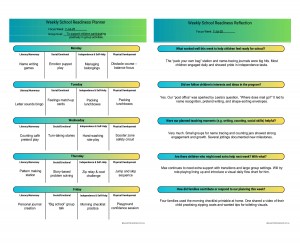
This template is used as a school readiness program plan.
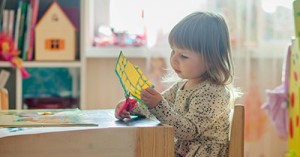
Setting children up for a confident and joyful start to school begins long before the first bell. This guide brings together evidence-informed strategies, play-based activities, and partnership ideas to help preschoolers develop the skills, independence, and emotional resilience they need for their big leap into school.
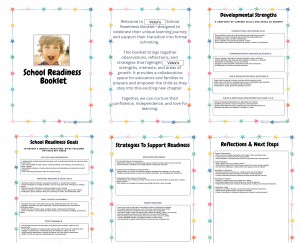
This template can be used for children transitioning to school.

School readiness in early childhood refers to the cognitive, social, emotional, and physical skills that prepare children for formal schooling. High-quality early childhood education programs play a crucial role in enhancing school readiness by fostering language, literacy, numeracy, and social-emotional development.
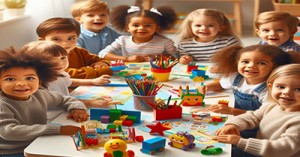
Play‑based learning builds social, emotional, and academic skills, preparing children with confidence and resilience for school readiness.
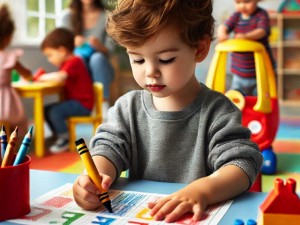
Pre-writing skills are crucial for young children as they lay the foundation for future writing success. The following article provides information on What Are Pre-writing Skills, Importance Of Pre-Writing Skill Activities To Promote Pre-Writing Skills and more.
 Open ended questions cannot be responded to with one word answers such as yes or no. These types of questions enables a child to provide… Read More
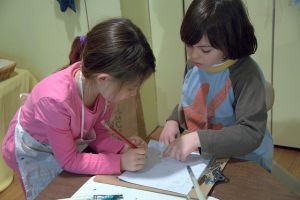 During your child’s preschool years, an important milestone begins to emerge. This is the development of pre-writing skills. Pre-writing skills are used to encourage, develop… Read More
 An Acknowledgment of the Country is a way of showing respect for the Traditional Owners and can be given by both non-Indigenous people and Aboriginal… Read More
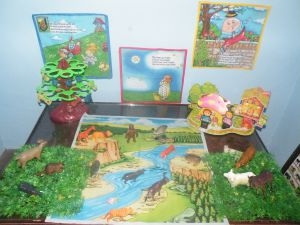 Open ended materials enables children to play freely. They are objects that have no rules to follow, use or function. Raw materials that can be… Read More
 Language plays an important role in a child’s development. It enables a child to communicate effectively with their family, learn at school, socialize with friends,… Read More
 Like adults, children have to deal with their own stress in life. Moving house, starting a new school, preparing for a new sibling - these are… Read More
 Playdough is such a versatile material. It provides numerous benefits to children as they manipulate it, it is safe and soothing and provides children with… Read More
 Teaching children about sustainability enables them to appreciate and respect the natural environment. Early childhood services can provide meaningful hand on learning experiences in order… Read More
 Recycling is an important concept that teaches children to care for the environment. It encourages children to be responsible and show a growing appreciating for… Read More
 Incursions provide children with the opportunity to explore meaningful learning experiences in the comfort of their early childhood service. The following provides a directory of… Read More
Time was when preschool literacy was understood as young children’s ability to read and write...
See more...
Across community forums and parent groups, a familiar debate resurfaces: are stand‑alone preschools “superior” to...
See more...
Incorporating STEAM displays within early learning environments offers children rich, open-ended opportunities for discovery, creativity...
See more...