


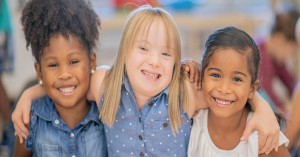
As an Early Childhood Educator, it enables you to acknowledge and embrace conversations around disability and inclusion with children. The following article provides strategies to discuss inclusion and disability with children.

As the words indicate, Open-ended questions have no right or wrong answers and thus cannot be answered with a simple, ‘yes’ or ‘no’. Open-ended questions figure in several of the pedagogical practices outlined in the EYLF, like ‘being responsive to children, ‘learning through play and most of all, ‘intentional teaching’. The following article provides the major benefits of using open-ended questions in the early childhood education context.

Inquiry-based learning is an experiential educational approach in which learners are encouraged to explore, question and arrive at their own conclusions. Asking questions is an important aspect of an inquiry-based approach but toddlers and very young children may not have the language to frame and ask such questions. Here are then a few tips on planning inquiry-based experiences for toddlers.

Tremendous advances in brain imaging technology over the last ten years have led to a quantum leap in brain research. Among the research areas most studied by scientists is the effect of musical experiences on the brain development of children. The following article provides information on How Music Enriches Brain Development In Children, Playing Music Vs Listening To Music, Benefits Of Music and more.

Among the important guiding principles of the National Quality Framework is ‘Australia’s Aboriginal and Torres Strait Islander cultures are valued. The following article provides information on recognising and valuing Aboriginal and Torres Strait Islander cultures through early childhood services through the display of the flags.

“Agency” this word is very familiar to the parents and in early childhood care. Agency in childhood indicates the organisation is able to have decisions that will affect and influences the child and also the child has the right to take a decision and is also capable of initiating learning of their own choice and for the betterment of them. The following article provides information on the Question and Strategies To Show If Agency Is Promoted Within The Service and more.

Among the two most important resources for services to build partnerships with new families are enrolment and orientation. The following article shows guidelines on using Enrolment and Orientation processes to collaborate with families so that children’s well-being and learning have the best chances of thriving.

Unstructured play materials refer to those play materials whose uses are not predetermined by educators. Also known as of heuristic play materials, the scope for play with unstructured materials is thus unlimited, allowing children to develop agency, skills and imagination. The following article provides information on what types of unstructured play materials can be included, how to store play materials and how to facilitate children's play.

Belonging, Being and Becoming: The EYLF lists ‘High Expectations’ as one of five Principles that underpin practice. This is based on the premise that all children come with the potential to learn and unique sets of abilities which can be best realized when educators consistently have high expectations for them. The following article provides strategies on how Educators achieve best practices so that each child can realise their potential.
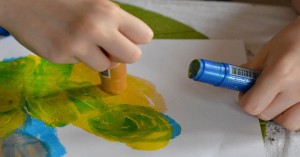
Floorbook is a documentation approach that uses a large book with blank pages for children to record different aspects of their learning in small groups or as a whole group. The following article provides information on the Features Of A Floorbook, Child Centred Approach, How Educators Can Use Floorbooks and more.
 Open ended questions cannot be responded to with one word answers such as yes or no. These types of questions enables a child to provide… Read More
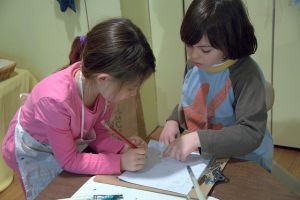 During your child’s preschool years, an important milestone begins to emerge. This is the development of pre-writing skills. Pre-writing skills are used to encourage, develop… Read More
 An Acknowledgment of the Country is a way of showing respect for the Traditional Owners and can be given by both non-Indigenous people and Aboriginal… Read More
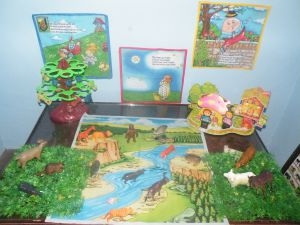 Open ended materials enables children to play freely. They are objects that have no rules to follow, use or function. Raw materials that can be… Read More
 Language plays an important role in a child’s development. It enables a child to communicate effectively with their family, learn at school, socialize with friends,… Read More
 Like adults, children have to deal with their own stress in life. Moving house, starting a new school, preparing for a new sibling - these are… Read More
 Playdough is such a versatile material. It provides numerous benefits to children as they manipulate it, it is safe and soothing and provides children with… Read More
 Teaching children about sustainability enables them to appreciate and respect the natural environment. Early childhood services can provide meaningful hand on learning experiences in order… Read More
 Recycling is an important concept that teaches children to care for the environment. It encourages children to be responsible and show a growing appreciating for… Read More
 Incursions provide children with the opportunity to explore meaningful learning experiences in the comfort of their early childhood service. The following provides a directory of… Read More
The following lists the sub-outcomes, examples of evidence that children can achieve each sub-outcome and...
See more...
For Educators continuing to work, it's important that you look after your health and wellbeing...
See more...
When children move into early childhood settings they broaden their experiences as participants in different...
See more...