



We know many of you are feeling unsure about what will happen to your pay once the Wage Increase Grant ends. This message is here to give you a clear, honest explanation so you know exactly what to expect.

Early childhood work is fast‑paced, relational, and constantly shifting. Good time management isn’t about squeezing more tasks into your day; it’s about creating space to be present with children, reducing overwhelm, and protecting your well-being.
This guide offers simple, educator‑friendly strategies that work in real rooms, with real children, and real staffing realities.

A: Roster changes can feel unsettling, especially when you’ve built routines around a regular day off. Here’s a simple breakdown to help you understand your rights and what usually happens in early childhood settings.

From 2026, every educator covered by the Children’s Services Award will move into a new, simplified classification structure. Instead of navigating 30 different levels, educators will transition into one of eight new Children's Services Employee (CSE) levels based on their qualifications, experience, and role responsibilities.

Provocations are not displays. They are not Pinterest‑perfect tableaus or aesthetic arrangements designed to impress adults. At their core, provocations are intentional invitations, carefully curated materials that nudge children toward exploration, questioning, and meaning‑making.
When we design with purpose, we shift from “setting up activities” to co-constructing possibilities. A well‑designed provocation whispers:
“I wonder what you’ll do with this…”
“What might you discover today…”
This shift honours children as thinkers, researchers, and capable contributors to their learning community.

When children dig, pour, smear, splash, squeeze, and explore, they’re not “making a mess.” They’re building the neural architecture that supports language, self-regulation, creativity, and problem‑solving. Sensory experiences are one of the most powerful, developmentally aligned ways children make sense of their world.

In early childhood education, we talk endlessly about teamwork, collaboration, and shared responsibility. But when the pressure hits, when a child is dysregulated, when an educator is overwhelmed, when the room feels like it’s tipping, the real test of teamwork appears.
And too often, what happens is this: People stand back. They watch. They wait. Sometimes out of uncertainty. Sometimes out of habit. Sometimes because they assume the educator “has it.”
But here’s the truth we need to say out loud: If you see a fellow educator is struggling, step in. Not later. Not when it escalates. Not when someone gets hurt. Now. We are human. We have limits. And we need each other.

Somewhere along the way, our sector slipped into a strange belief: if we don’t take hundreds of photos a week, we’re not doing our job.
But here’s the truth that many educators whisper quietly, often only to each other: We don’t need 200 photos to prove we’re educators.
We never did.
The heart of early childhood education has always been relationships, presence, and professional decision-making, not the size of a digital gallery.
An opinion article for early childhood educators exploring why excessive photo-taking doesn’t define quality practice. Highlights the importance of presence, intentional documentation, and sector-savvy approaches to capturing photos for families, observations, and learning documentation.

A practical, sector‑savvy guide for early childhood educators on understanding, navigating, and reducing workplace gossip (“bitching”). Includes examples, reflection prompts, and strategies to protect your energy and rebuild respectful team culture.
Gossip. Side comments. Whisper networks. The “Did you hear what she said?” moments that ripple through a service and drain the joy out of the day.
Every educator has felt it: the shift in the room when the bitching gets loud.
This isn’t about blaming individuals or shaming the workforce. It’s about understanding why gossip shows up, how it affects us, and what educators can do to protect their energy while still contributing to a respectful, professional culture.
This is a systemic issue, not a personal flaw, and when we name it honestly, we can finally start to shift it.

A practical guide filled with creative, meaningful sustainability ideas for early childhood services. Explore simple, engaging ways to embed environmental responsibility into daily practice, play, and curriculum.
Sustainability in early childhood isn’t just about recycling bins and worm farms—it’s about nurturing a culture of care, curiosity, and responsibility. When children experience sustainable practices woven naturally into their day, they learn that their choices matter and that they are active contributors to their world. Early childhood services are uniquely placed to model these habits through playful, creative, and meaningful experiences that build lifelong environmental awareness. From reimagining loose parts to embedding First Nations perspectives, sustainability becomes a living, breathing part of the curriculum—not an add‑on, but a way of being together.
 Open ended questions cannot be responded to with one word answers such as yes or no. These types of questions enables a child to provide… Read More
 During your child’s preschool years, an important milestone begins to emerge. This is the development of pre-writing skills. Pre-writing skills are used to encourage, develop… Read More
 An Acknowledgment of the Country is a way of showing respect for the Traditional Owners and can be given by both non-Indigenous people and Aboriginal… Read More
 Open ended materials enables children to play freely. They are objects that have no rules to follow, use or function. Raw materials that can be… Read More
 Language plays an important role in a child’s development. It enables a child to communicate effectively with their family, learn at school, socialize with friends,… Read More
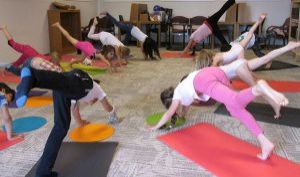 Like adults, children have to deal with their own stress in life. Moving house, starting a new school, preparing for a new sibling - these are… Read More
 Playdough is such a versatile material. It provides numerous benefits to children as they manipulate it, it is safe and soothing and provides children with… Read More
 Teaching children about sustainability enables them to appreciate and respect the natural environment. Early childhood services can provide meaningful hand on learning experiences in order… Read More
 Recycling is an important concept that teaches children to care for the environment. It encourages children to be responsible and show a growing appreciating for… Read More
 Incursions provide children with the opportunity to explore meaningful learning experiences in the comfort of their early childhood service. The following provides a directory of… Read More

Connecting with local Aboriginal and Torres Strait Islander (ATSI) communities can be a rewarding and...
See more...
Experiencing a panic attack at work can be overwhelming, but there are steps you can...
See more...
Since the first few years are when the brain is developing most rapidly, it makes...
See more...