When you’re running OSHC programs, it’s easy to feel like you’re recycling the same handful of activities. Children thrive on variety, and having a big bank of creative options can help you break out of that slump. Below is a list of 50 diverse art and craft ideas, ranging from quick, low-prep projects to collaborative, cultural, and recycled-material activities. They’re designed to spark imagination, foster belonging, and keep sessions fresh and engaging for all ages.

When we talk about art areas in learning environments, we’re really looking at how spaces can be intentionally designed to foster creativity, self-expression, and developmental growth. In early childhood, art areas aren’t just about painting or drawing—they’re hubs for exploration, identity-building, and skill development.

Art displays in early childhood settings are more than colourful walls, they are living stories of children’s growth, identity, and imagination. When thoughtfully curated, displays become powerful pedagogical tools that celebrate children’s voices, document their learning journeys, and invite families into the classroom experience. They reflect the values of inclusion, sustainability, and cultural pride, while offering children a sense of belonging and ownership in their environment.
By combining children’s artwork with photographs, captions, and natural materials, educators can transform displays into interactive narratives that highlight process as much as product. These displays not only showcase creativity but also strengthen emotional literacy, community connections, and curriculum outcomes.
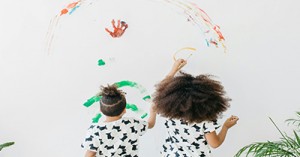
In early childhood settings across the country, you can walk into a room and instantly tell what kind of art culture lives there. Sometimes you see walls lined with identical paper plate animals, each one carefully guided by an adult hand. Other times, you see a riot of colour, texture, and imagination — each piece unmistakably belonging to the child who created it.
The difference between these two environments is more than aesthetic. It speaks to the heart of our pedagogy, our image of the child, and our commitment to fostering creativity, agency, and authentic expression.
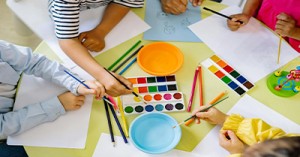
In early childhood settings, educators often face a subtle but powerful choice: should learning focus on the process or the product? While both approaches have their place, understanding the distinction can transform how we nurture creativity, independence, and critical thinking in young children.
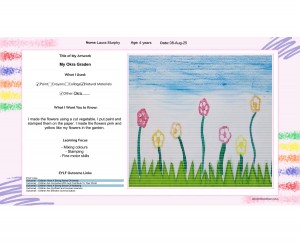
This template can be used to display children's art.
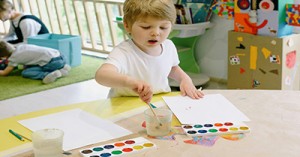
Here’s a curated set of 20 child-centered art activity instructions designed to foster creativity, autonomy, and exploration. Each activity includes setup tips, educator role guidance, and EYLF/NQS links.
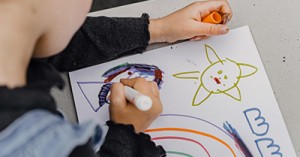
In many early childhood settings, art activities have unintentionally become routine tasks—structured, time-bound, and educator-led. Children are often called one by one to complete pre-set crafts, given step-by-step instructions, and quickly ushered away. This approach can lead to disengagement, low interest, and a missed opportunity to nurture creativity and emotional development.
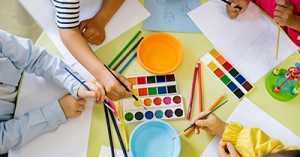
Here are 20 Collaborative Art Projects for Preschoolers that encourage teamwork, creativity, and fun and the Benefits Of Collaborative Art
 Open ended questions cannot be responded to with one word answers such as yes or no. These types of questions enables a child to provide… Read More
 During your child’s preschool years, an important milestone begins to emerge. This is the development of pre-writing skills. Pre-writing skills are used to encourage, develop… Read More
 An Acknowledgment of the Country is a way of showing respect for the Traditional Owners and can be given by both non-Indigenous people and Aboriginal… Read More
 Open ended materials enables children to play freely. They are objects that have no rules to follow, use or function. Raw materials that can be… Read More
 Language plays an important role in a child’s development. It enables a child to communicate effectively with their family, learn at school, socialize with friends,… Read More
 Like adults, children have to deal with their own stress in life. Moving house, starting a new school, preparing for a new sibling - these are… Read More
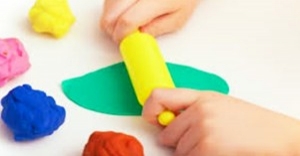 Playdough is such a versatile material. It provides numerous benefits to children as they manipulate it, it is safe and soothing and provides children with… Read More
 Teaching children about sustainability enables them to appreciate and respect the natural environment. Early childhood services can provide meaningful hand on learning experiences in order… Read More
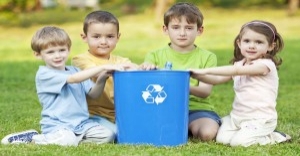 Recycling is an important concept that teaches children to care for the environment. It encourages children to be responsible and show a growing appreciating for… Read More
 Incursions provide children with the opportunity to explore meaningful learning experiences in the comfort of their early childhood service. The following provides a directory of… Read More

The end of the year is a busy and emotional time in early childhood services...
See more...
Create inspiring science and nature areas in childcare with photo ideas, practical setups, and engaging...
See more...
When documenting children’s learning, educators often feel pressured to align every observation with codes, sub‑outcomes...
See more...