



Embedding Aboriginal and Torres Strait Islander perspectives is a core part of high‑quality early childhood education. But occasionally, families may express uncertainty or request that their child not participate in these experiences. This is a practical guide for early childhood educators on addressing family concerns about Aboriginal and Torres Strait Islander perspectives, with culturally safe responses, EYLF‑aligned explanations, and NQS‑based professional guidance.
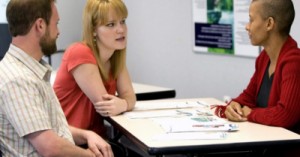
In early childhood education, we work at the intersection of family values, children’s rights, and professional obligations. Most days, these elements align beautifully. But sometimes, they collide, and one of the most challenging situations arises when a family requests that their child not participate in Aboriginal and Torres Strait Islander cultural activities or learning.
This article unpacks how educators can navigate this respectfully, confidently, and in line with the EYLF and NQS with practical examples you can use immediately.
Australia is home to the world’s oldest continuous cultures, with First Nations Peoples holding stories, knowledge, and connections to Country that stretch back more than 65,000 years. Now, educators and students can explore these stories in a new way through Deep Time, a digital resource created by the ABC Education team.

In early childhood education, stories are more than entertainment; they’re vessels of culture, emotion, and connection. Aboriginal children’s books that explore water, wind, and nature offer rich opportunities to embed Indigenous perspectives, foster environmental awareness, and support holistic development. When paired with the 8 Aboriginal Ways of Learning and the EYLF, these stories become powerful tools for relational, symbolic, and experiential learning.

In a landmark move toward equity and empowerment, Aboriginal Community Controlled Organisation (ACCO) services are expanding across New South Wales, offering families more choice, more places, and more opportunities for culturally grounded early childhood education.
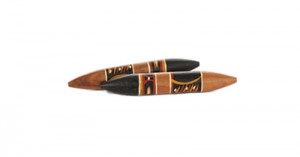
Music is a universal language—and in Aboriginal and Torres Strait Islander cultures, it’s also a powerful vessel for storytelling, ceremony, and connection. Introducing Aboriginal music into early learning environments not only enriches children’s understanding of Australia’s First Nations peoples but also fosters respect, curiosity, and cultural awareness from a young age.
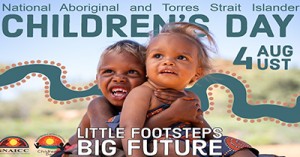
On Monday, 4 August 2025, early childhood communities across Australia will come together to honour the strength, spirit and journeys of Aboriginal and Torres Strait Islander children for National Children’s Day. The 2025 theme—Little Footsteps, Big Future—reflects the profound significance of culture, community, and Country in guiding each child’s path as they grow.

In a heartwarming episode of Playschool titled “Island Life", Uncle Charles Passi, a proud Torres Strait Islander, joins the show and introduces viewers to the sit-down dance “Taba Naba", a traditional Torres Strait Islander song that celebrates island life, the sea, and community connection. This is a great opportunity for educators to learn to dance to teach children.
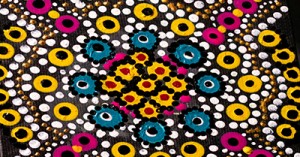
NAIDOC Week is a powerful opportunity to introduce toddlers and preschoolers to Aboriginal and Torres Strait Islander cultures in ways that are respectful, age-appropriate, and deeply meaningful. The following article provides a list of celebration ideas tailored for early childhood settings, blending creativity, sensory exploration, and cultural appreciation.

For babies, the Acknowledgment of Country is often expressed through sensory-rich, rhythmic, and visual experiences that help them connect to the land and its Traditional Custodians in developmentally appropriate ways. The following article provides Acknowledgment Of Country Ideas For The Babies Room.
 Open ended questions cannot be responded to with one word answers such as yes or no. These types of questions enables a child to provide… Read More
 During your child’s preschool years, an important milestone begins to emerge. This is the development of pre-writing skills. Pre-writing skills are used to encourage, develop… Read More
 An Acknowledgment of the Country is a way of showing respect for the Traditional Owners and can be given by both non-Indigenous people and Aboriginal… Read More
 Open ended materials enables children to play freely. They are objects that have no rules to follow, use or function. Raw materials that can be… Read More
 Language plays an important role in a child’s development. It enables a child to communicate effectively with their family, learn at school, socialize with friends,… Read More
 Like adults, children have to deal with their own stress in life. Moving house, starting a new school, preparing for a new sibling - these are… Read More
 Playdough is such a versatile material. It provides numerous benefits to children as they manipulate it, it is safe and soothing and provides children with… Read More
 Teaching children about sustainability enables them to appreciate and respect the natural environment. Early childhood services can provide meaningful hand on learning experiences in order… Read More
 Recycling is an important concept that teaches children to care for the environment. It encourages children to be responsible and show a growing appreciating for… Read More
 Incursions provide children with the opportunity to explore meaningful learning experiences in the comfort of their early childhood service. The following provides a directory of… Read More
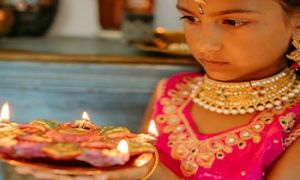
Celebrating Diwali with toddlers and preschoolers in early childhood settings is a joyful opportunity to...
See more...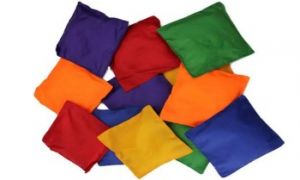
Bean bags are a great way for children to develop skills across all developmental areas...
See more...
Mentoring is one of the most powerful tools we have as leaders. It’s not about...
See more...