Vegetables aren’t just for eating; they can be powerful tools for creativity, sensory exploration, and imaginative play. By incorporating vegetables into art and activity setups, educators can encourage children to experiment, problem‑solve, and express themselves in unique ways. These photo ideas highlight how vegetables can be transformed into engaging experiences that connect children with food, nature, and creativity.
Mr Potato Head Creations
Children design characters using potatoes and vegetables.
Strategies for Educators:
- Encourage children to describe their creations, building language skills.
- Offer mirrors so they can compare facial features with their potato faces.
- Extend by photographing each “character” and creating a class storybook.
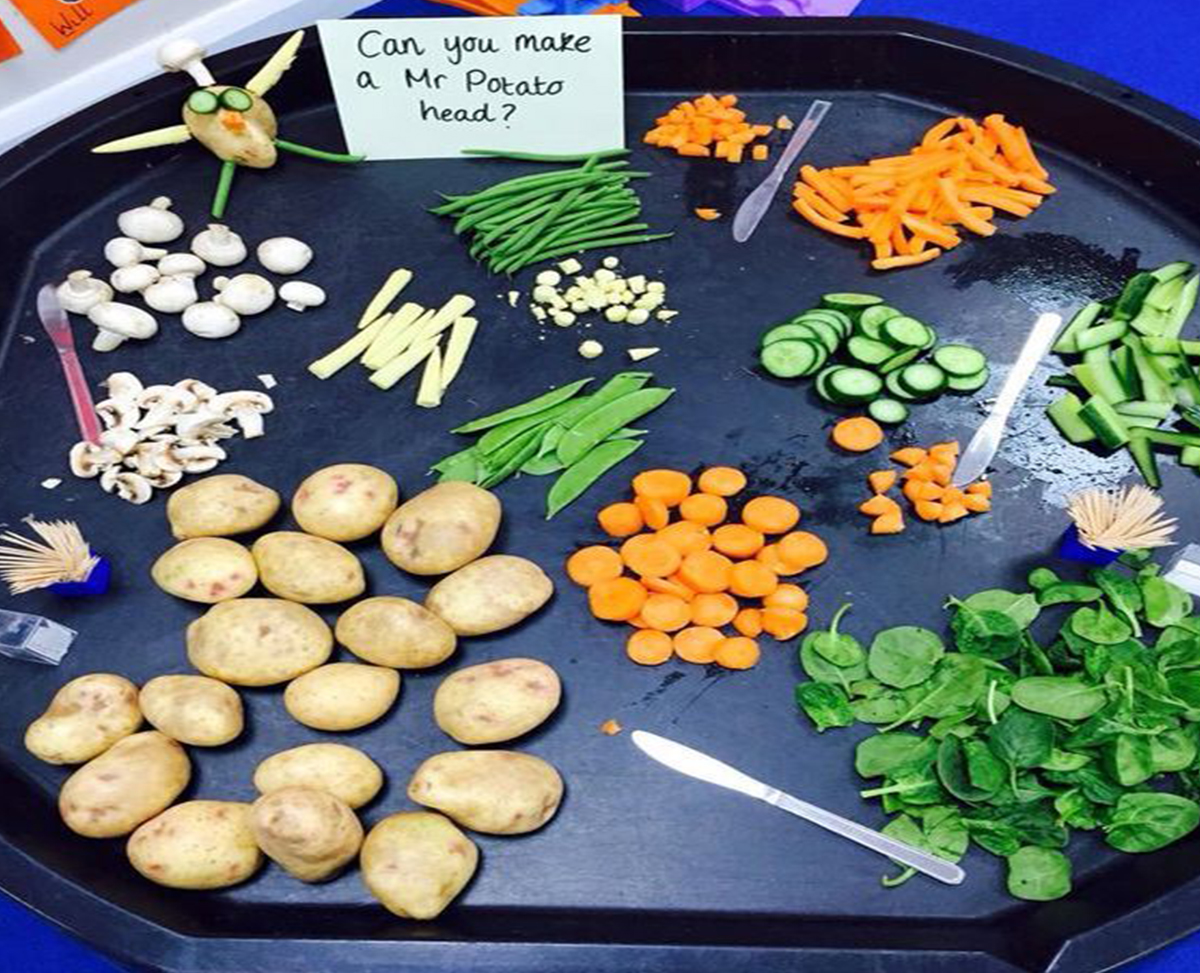
Image Reference: Special Needs For Specific, Pinterest
Evil Pea Rescue
Carrots are “trapped” while the Evil Pea challenges children to free them.
Strategies for Educators:
- Link to literacy by reading Supertato before the activity.
- Scaffold problem‑solving by asking, “What tools could help?”
- Extend into dramatic play — children act out superhero rescues.
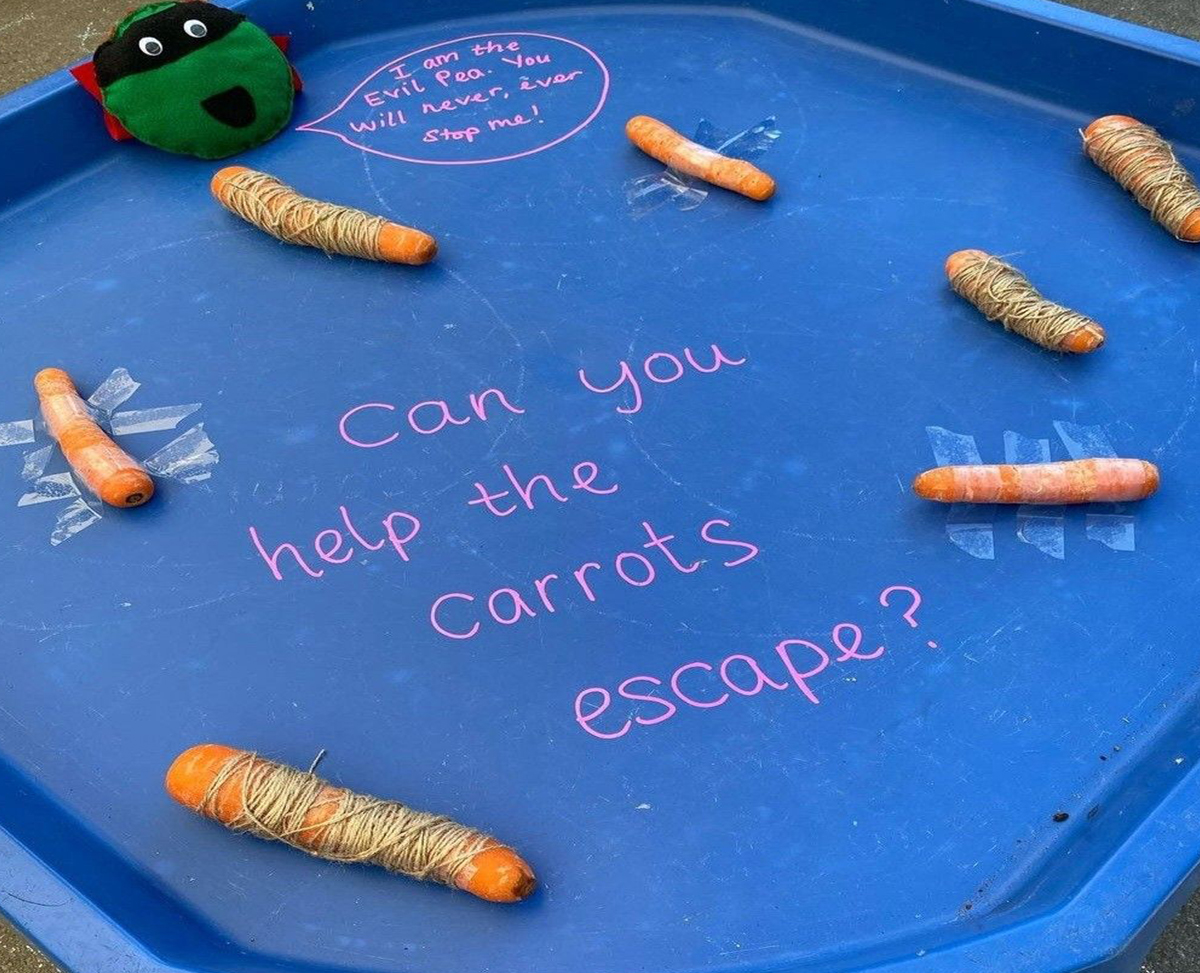
Image Reference: Vicky Matthews, Pinterest
Vegetable Faces
Scraps and peelings become expressive features.
Strategies for Educators:
- Discuss emotions: “What does this face show?”
- Use photos of children’s own expressions to inspire vegetable designs.
- Encourage sustainability conversations about reusing food scraps.
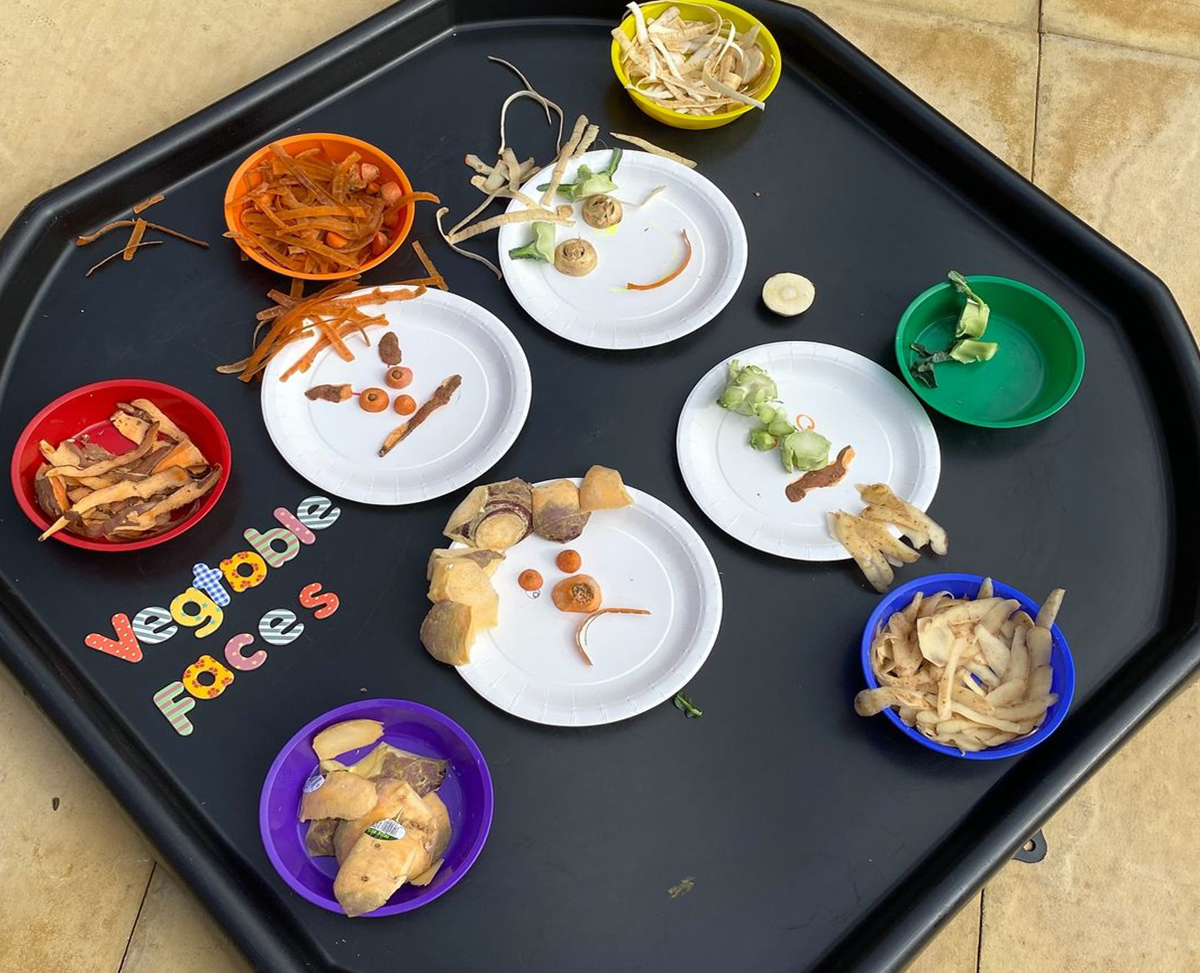
Image Reference: My Little Bright Sparks, Pinterest
Green Leaf Scissors
Children cut and arrange cabbage leaves.
Strategies for Educators:
- Model safe scissor use and support grip development.
- Compare textures: smooth vs crinkly leaves.
- Extend by pressing leaves into clay or paint for imprints.
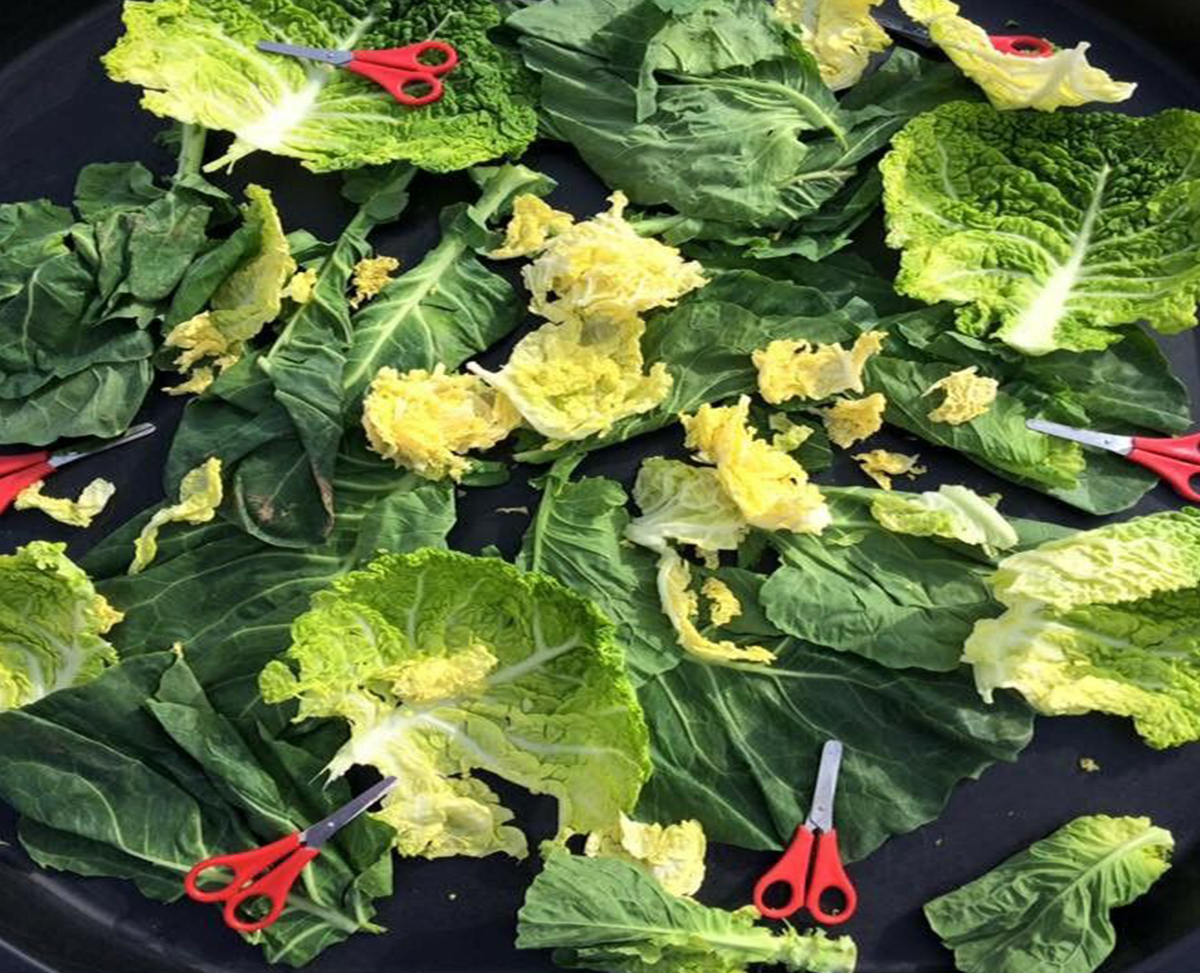
Image Reference: Hala Langan, Pinterest
Vegetable Printing
Vegetables become stamping tools dipped in paint.
Strategies for Educators:
- Encourage experimentation with pressure and angles.
- Introduce colour mixing by combining prints.
- Extend into pattern recognition — children create repeating designs.
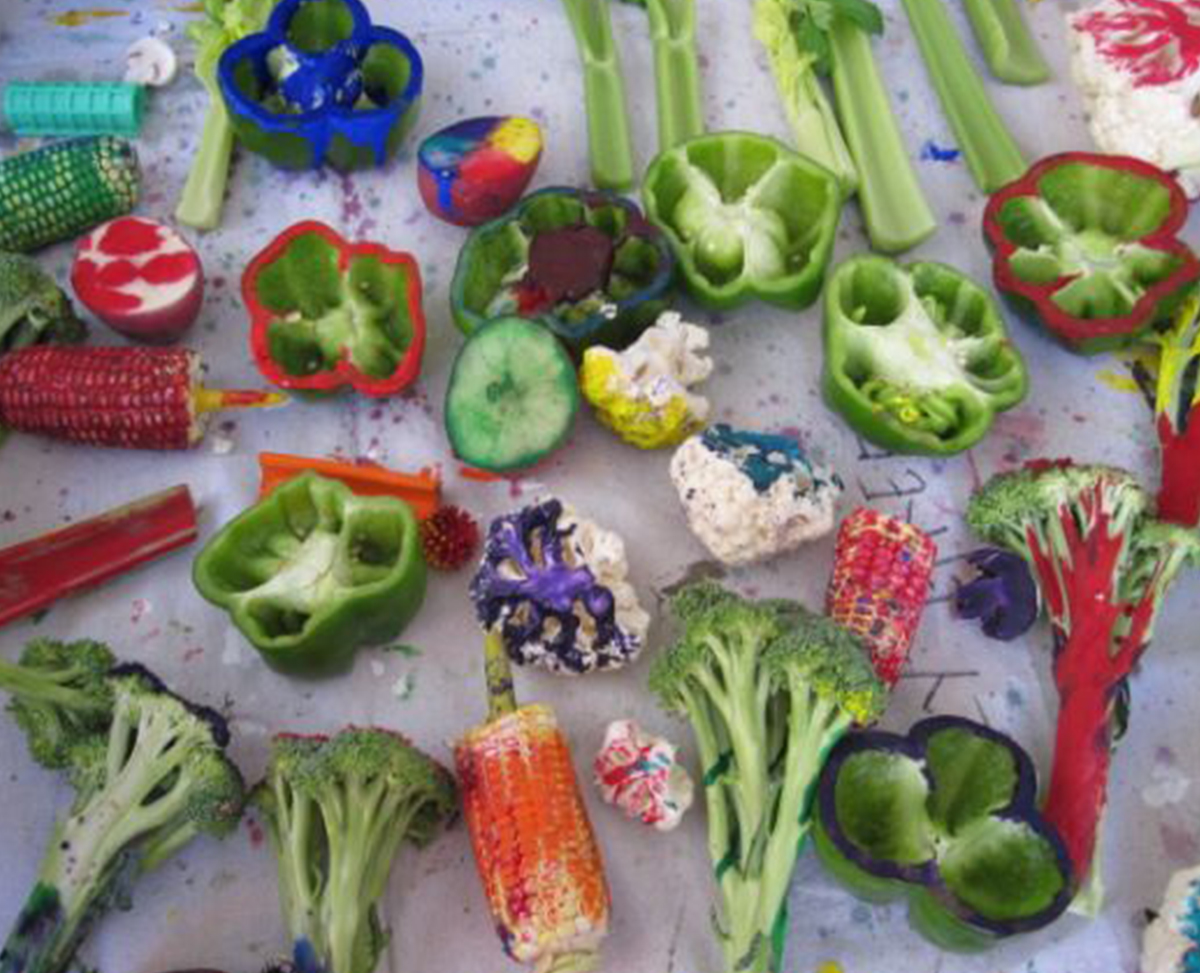
Image Reference: Wordpress, Pinterest
Fruit & Veg Peg Matching
Children match coloured pegs to produce illustrations.
Strategies for Educators:
- Scaffold colour vocabulary: “This is red like a tomato.”
- Introduce counting by asking how many pegs were used.
- Extend into sorting activities — group fruits vs vegetables.
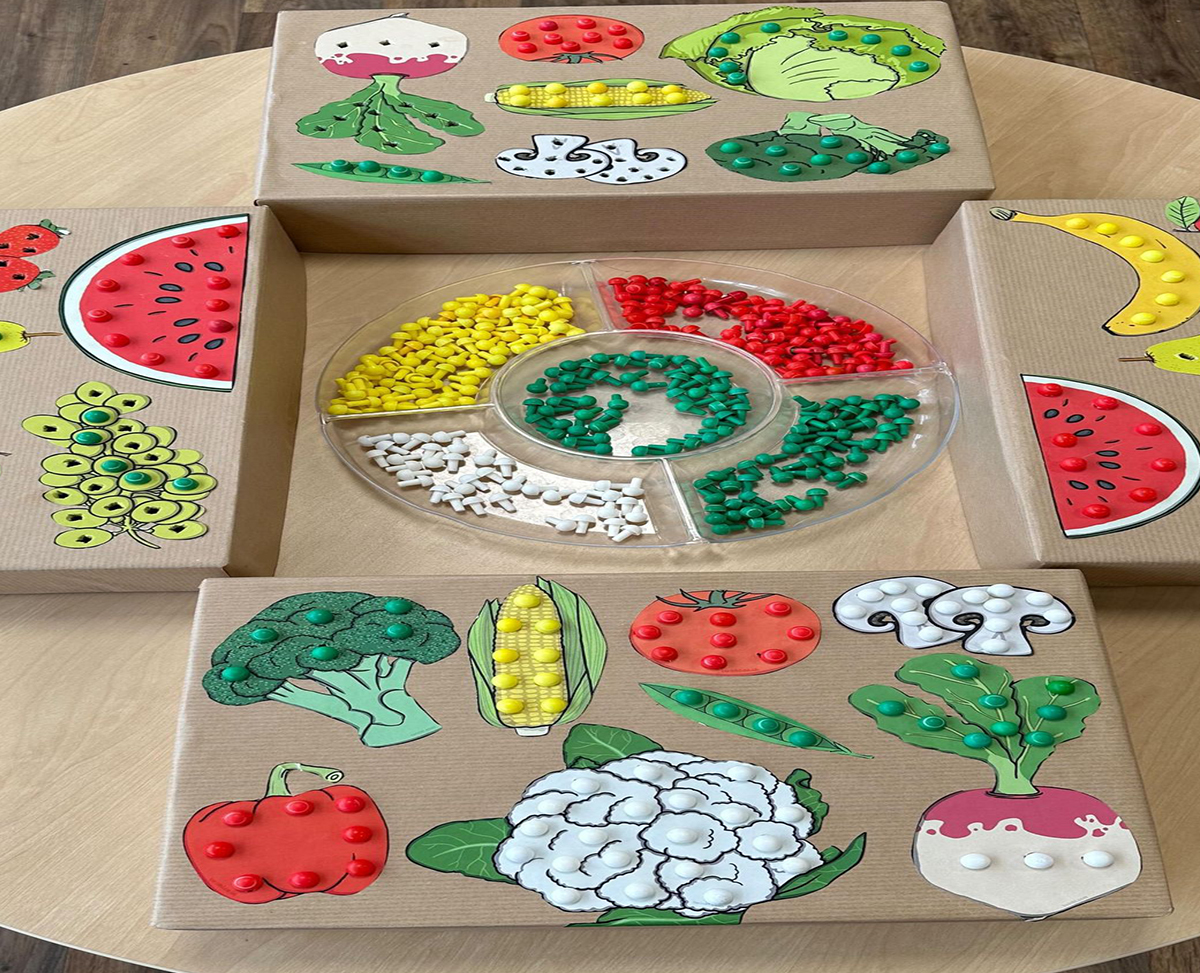
Image Reference: Rhian, Pinterest
Food on the Farm Discovery Centre
A sensory table with toy vegetables and tools.
Strategies for Educators:
- Encourage role play: “You’re the farmer, I’m the shopper.”
- Link to science by discussing plant growth stages.
- Extend into outdoor gardening projects with real seedlings.
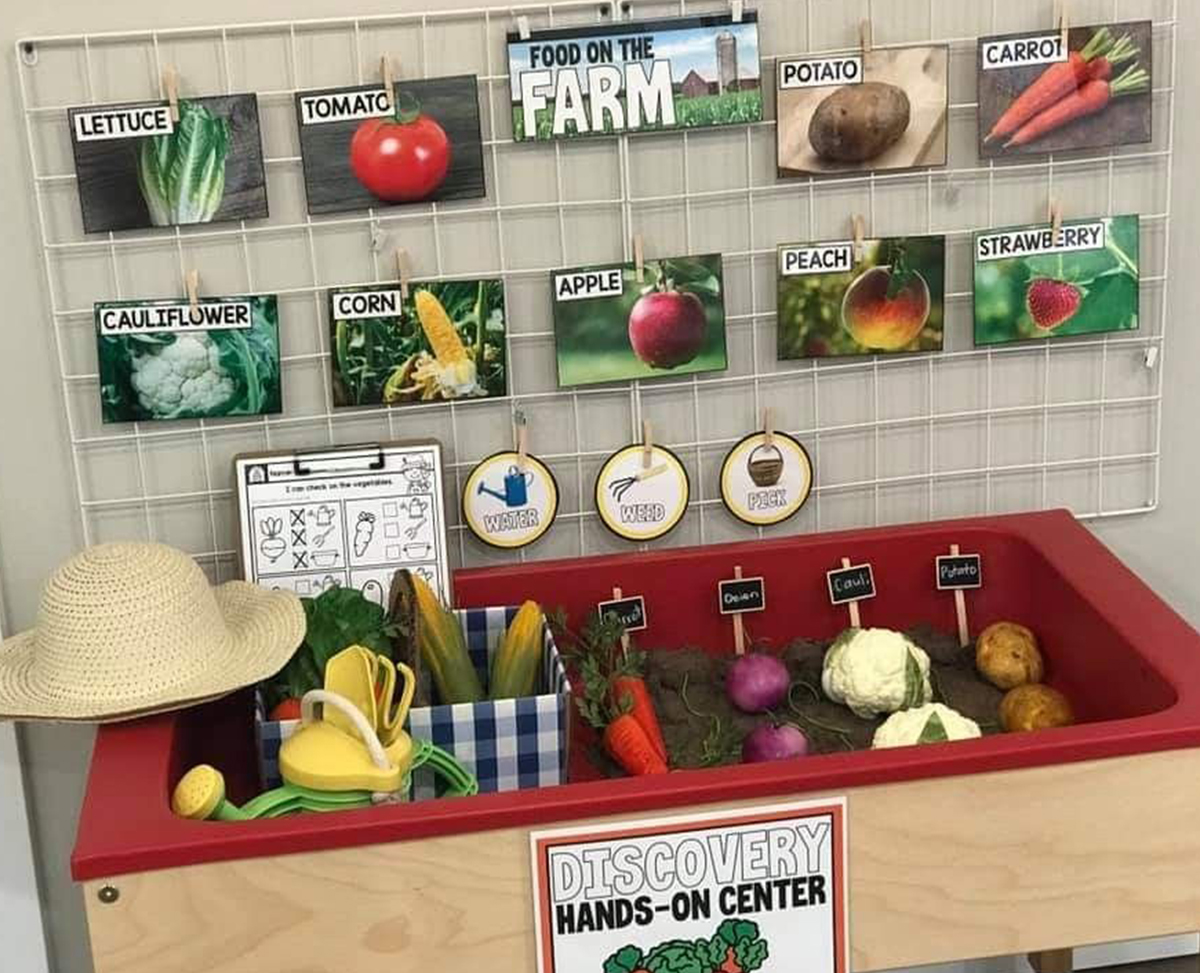
Image Reference: Laura McKeown, Pinterest
Pea Pod Sorting
Children sort and count pea pods.
Strategies for Educators:
- Scaffold maths by grouping pods into sets of 2, 5, or 10.
- Encourage sensory exploration — feeling pods before opening.
- Extend by cooking peas together, linking play to real food.
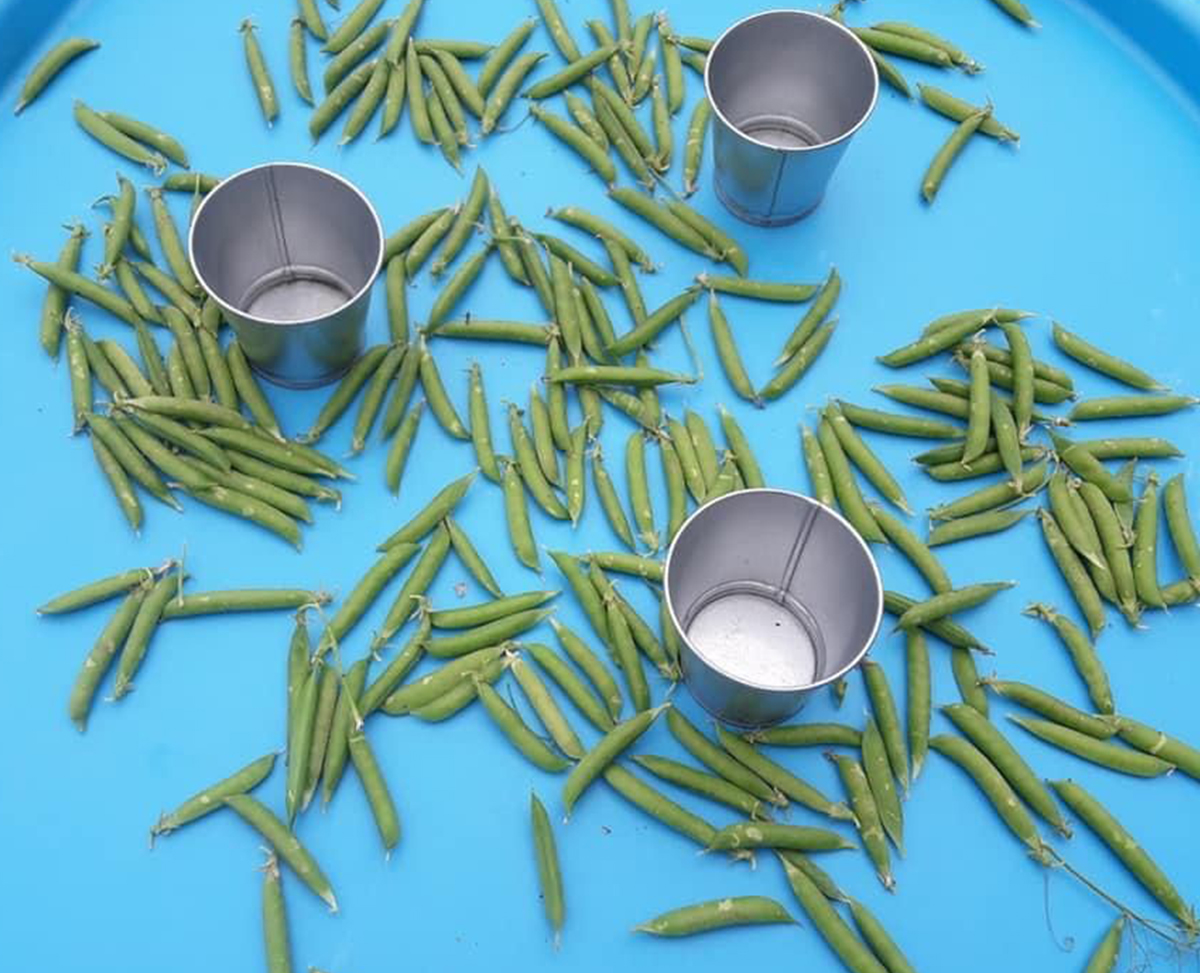
Image Reference: Elle Kealey, Pinterest
Superhero Pea Sensory Play
Mashable pea packs paired with superhero cutouts.
Strategies for Educators:
- Support self‑regulation by using packs for calming sensory play.
- Encourage storytelling: “What powers does your superhero pea have?”
- Extend into art — children design their own superhero vegetable.
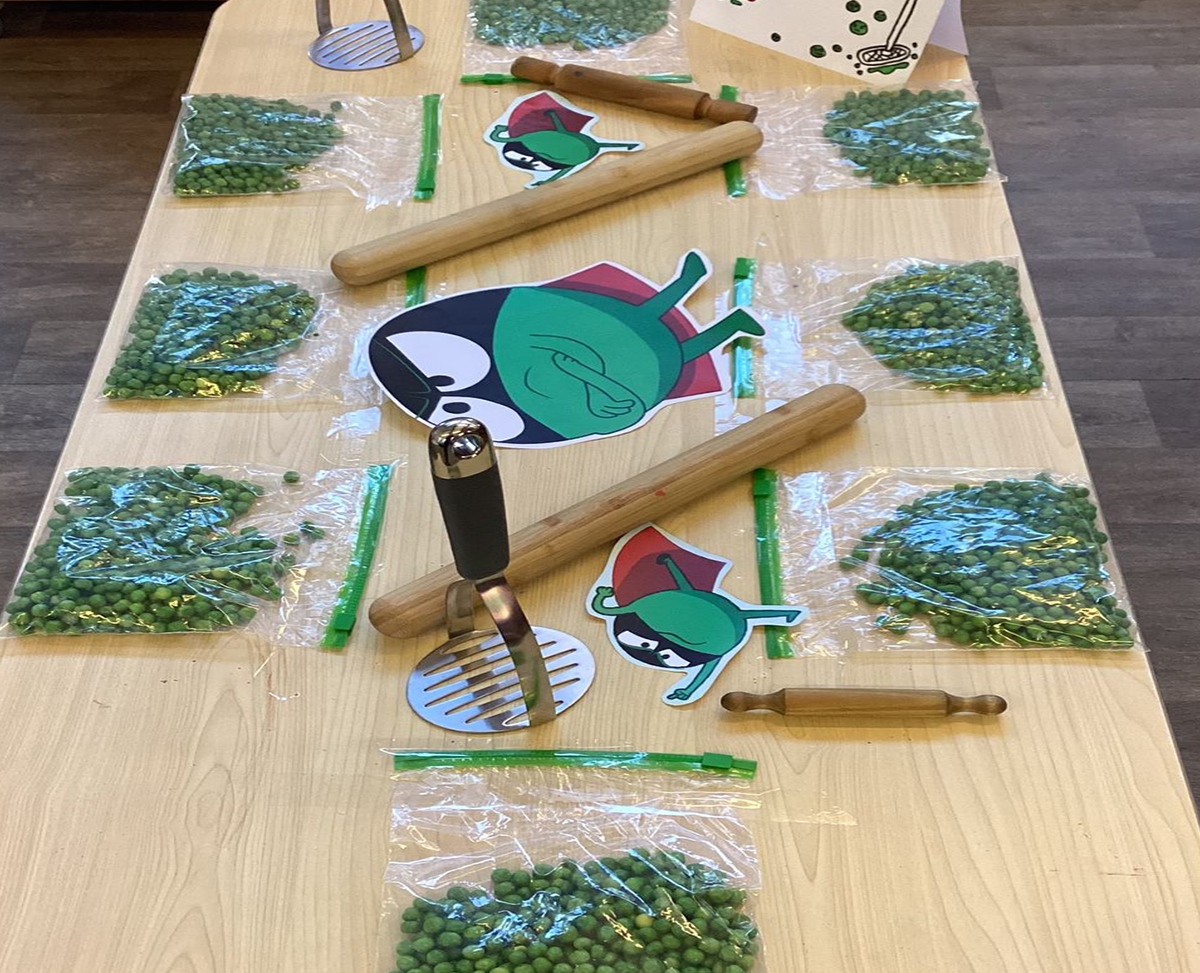
Image Reference: Natasha, Pinterest
Food Portrait Plates
Vegetables decorate cartoon face plates.
Strategies for Educators:
- Scaffold healthy eating discussions: “Which foods are on your plate?”
- Encourage descriptive language — “spiky hair,” “curly glasses.”
- Extend by photographing plates and creating a “Food Faces Gallery.”
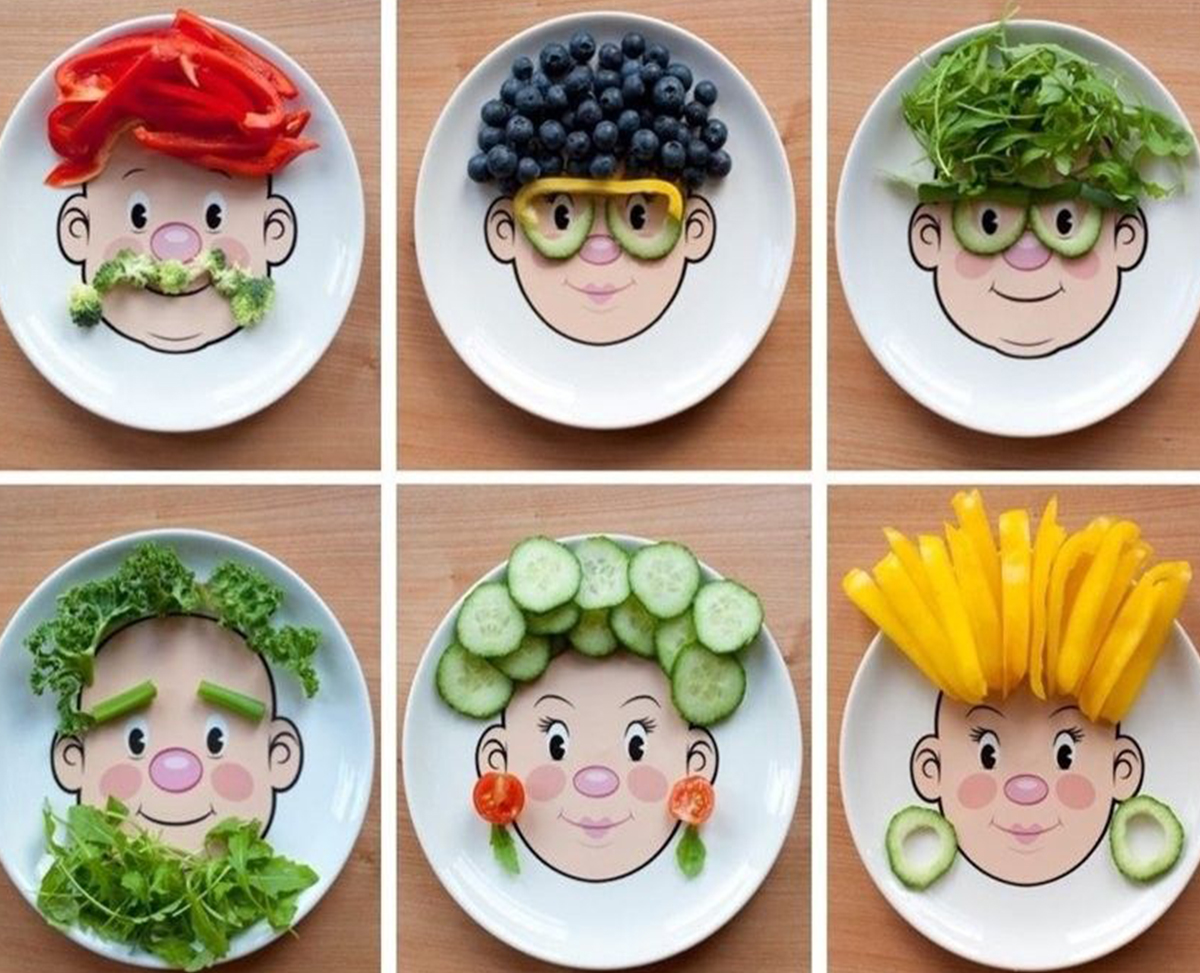
Image Reference: Marina, Pinterest
Practical Strategies
- Reuse scraps and peelings for art instead of discarding.
- Discuss food origins and farming through sensory tables.
- Link activities to familiar books (Supertato, farm stories).
- Encourage respect for natural materials and reduce waste.
Vegetable‑based activities are versatile; they can be adapted for art, sensory play, maths, literacy, and social‑emotional learning.



 Open ended questions cannot be responded to with one word answers such as yes or no. These types of questions enables a child to provide
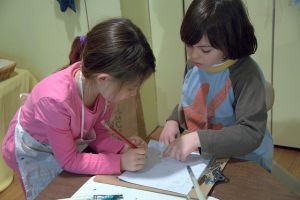 During your child’s preschool years, an important milestone begins to emerge. This is the development of pre-writing skills. Pre-writing skills are used to encourage, develop
 An Acknowledgment of the Country is a way of showing respect for the Traditional Owners and can be given by both non-Indigenous people and Aboriginal
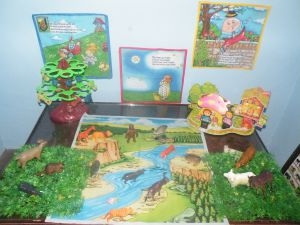 Open ended materials enables children to play freely. They are objects that have no rules to follow, use or function. Raw materials that can be
 Language plays an important role in a child’s development. It enables a child to communicate effectively with their family, learn at school, socialize with friends,
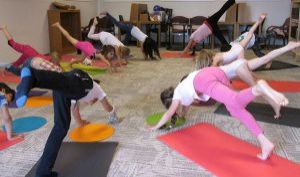 Like adults, children have to deal with their own stress in life. Moving house, starting a new school, preparing for a new sibling - these are
 Playdough is such a versatile material. It provides numerous benefits to children as they manipulate it, it is safe and soothing and provides children with
 Teaching children about sustainability enables them to appreciate and respect the natural environment. Early childhood services can provide meaningful hand on learning experiences in order
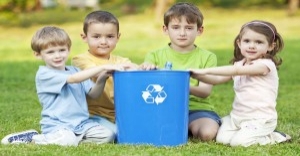 Recycling is an important concept that teaches children to care for the environment. It encourages children to be responsible and show a growing appreciating for
 Incursions provide children with the opportunity to explore meaningful learning experiences in the comfort of their early childhood service. The following provides a directory of