Engaging farm animal activities with photos to spark creativity, learning, and play in ecec services.
Farm animals are a timeless theme in early childhood education, sparking curiosity, laughter, and meaningful learning. Through hands‑on play, children explore the world of cows, sheep, pigs, chickens, and more, building connections between everyday life and the food, sounds, and routines of the farm. These activities not only nurture numeracy and language development but also encourage sensory exploration, creativity, and social skills.
Milking Station
Children “milk” gloves attached to cow cutouts into bowls.
Strategies for Educators:
- Model the milking action slowly before children try.
- Use descriptive language (“squeeze, release”) to build vocabulary.
- Link the activity to food by showing milk cartons or pictures of dairy products.
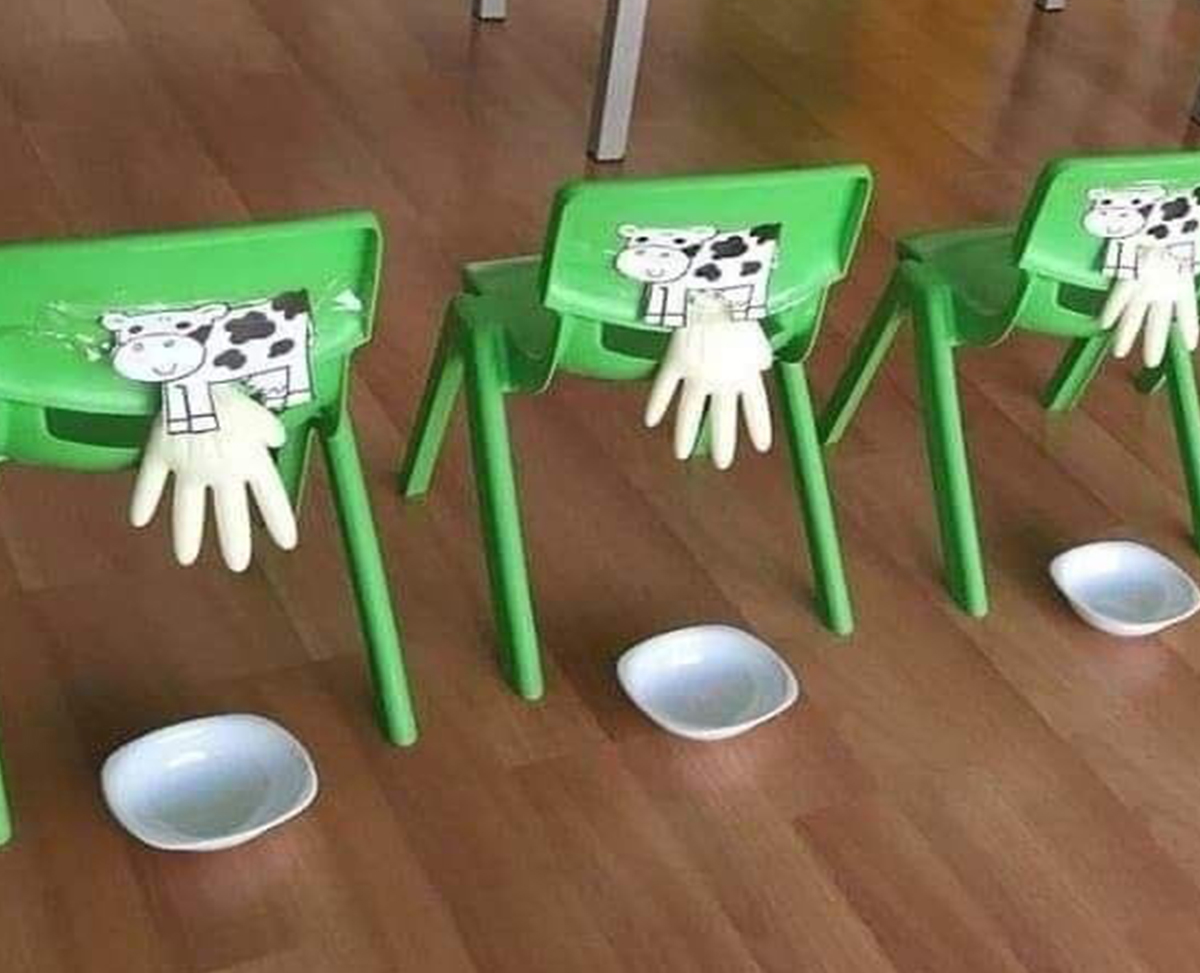
Image Reference: Melissa Koopmans, Pinterest
Counting Eggs
Numbered chicken baskets with eggs for sorting and counting.
Strategies for Educators:
- Encourage one‑to‑one counting aloud.
- Challenge children with “add one more egg” or “take two away.”
- Extend by grouping eggs into tens for early place value awareness.
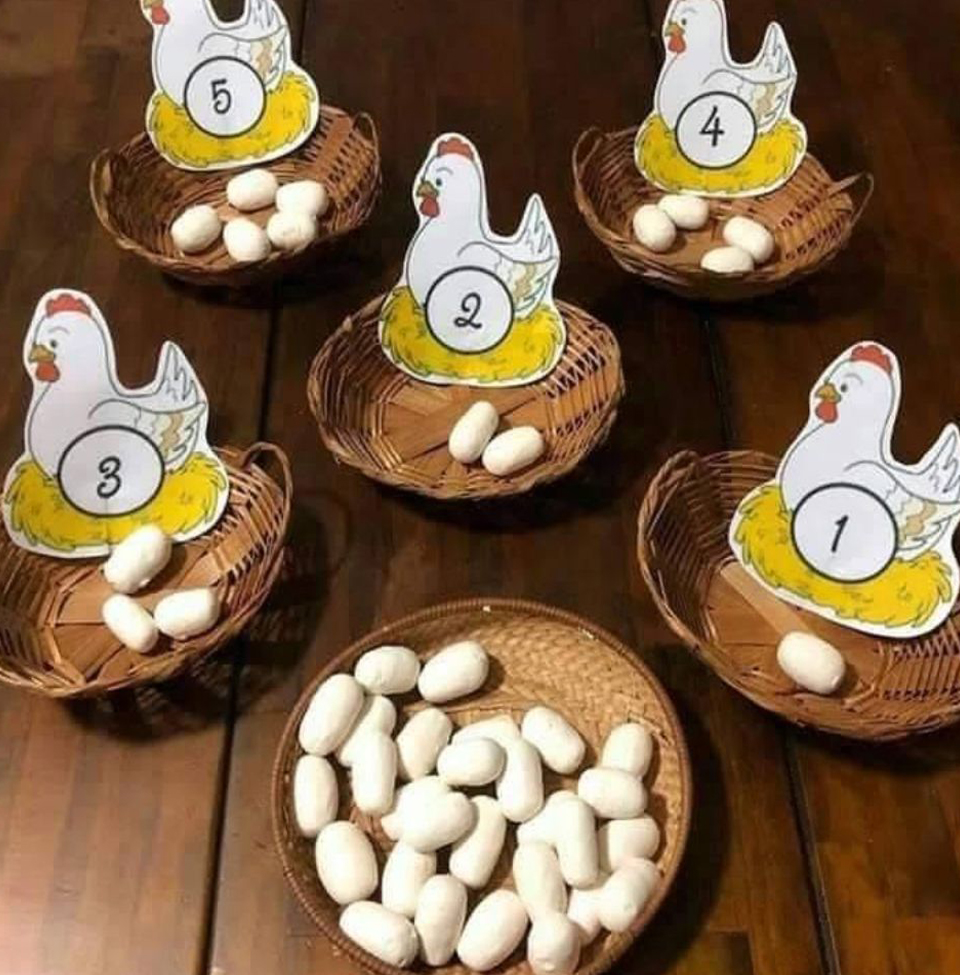
Image Reference: Leah Neubort, Pinterest
Old MacDonald Sensory Tray
Corn kernels with cups decorated as animals for tactile play.
Strategies for Educators:
- Sing the rhyme while children scoop and pour.
- Match animal cups to sound cards (moo, baa).
- Encourage storytelling: “What is the cow doing on the farm today?”
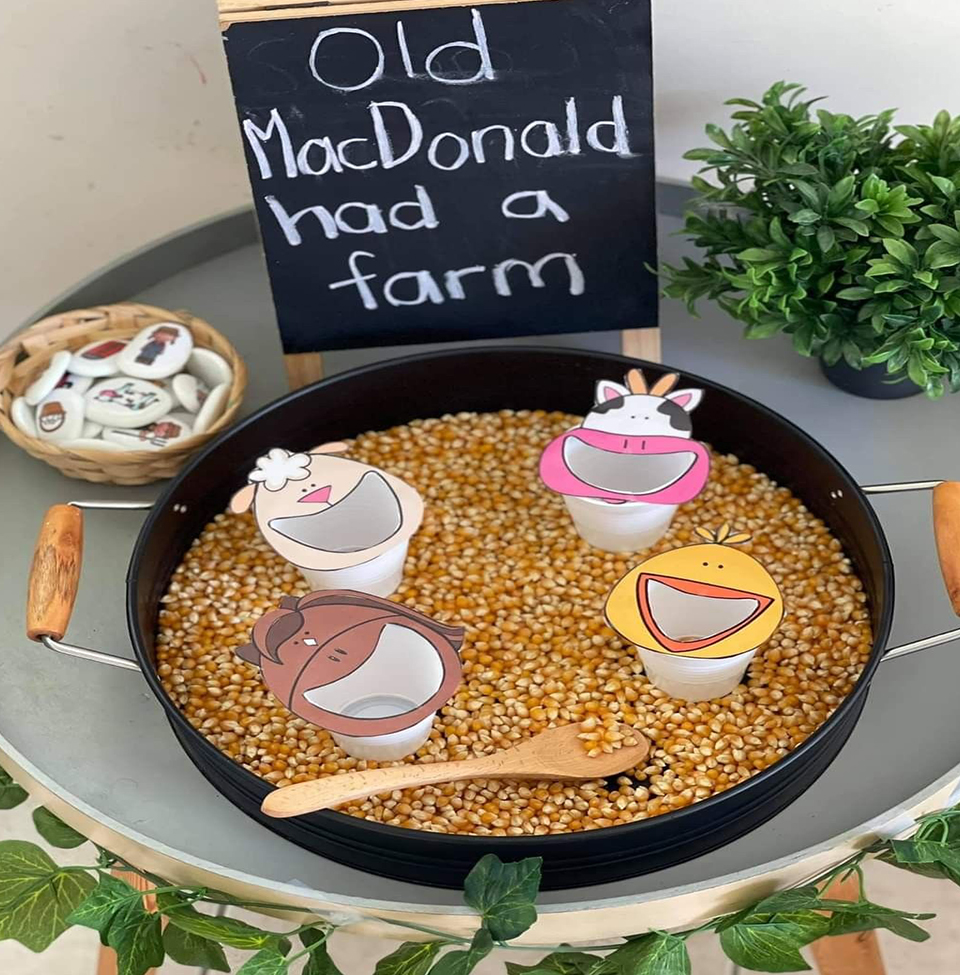
Image Reference: Agniezka Matusz, Pinterest
Barn Number Match Sentence
Barn cards numbered 1–10 with toy animals to match.
Strategies for Educators:
- Ask guiding questions (“Which barn has 5 animals?”).
- Encourage children to line animals in front of barns for visual counting.
- Extend by sorting animals by type as well as number.
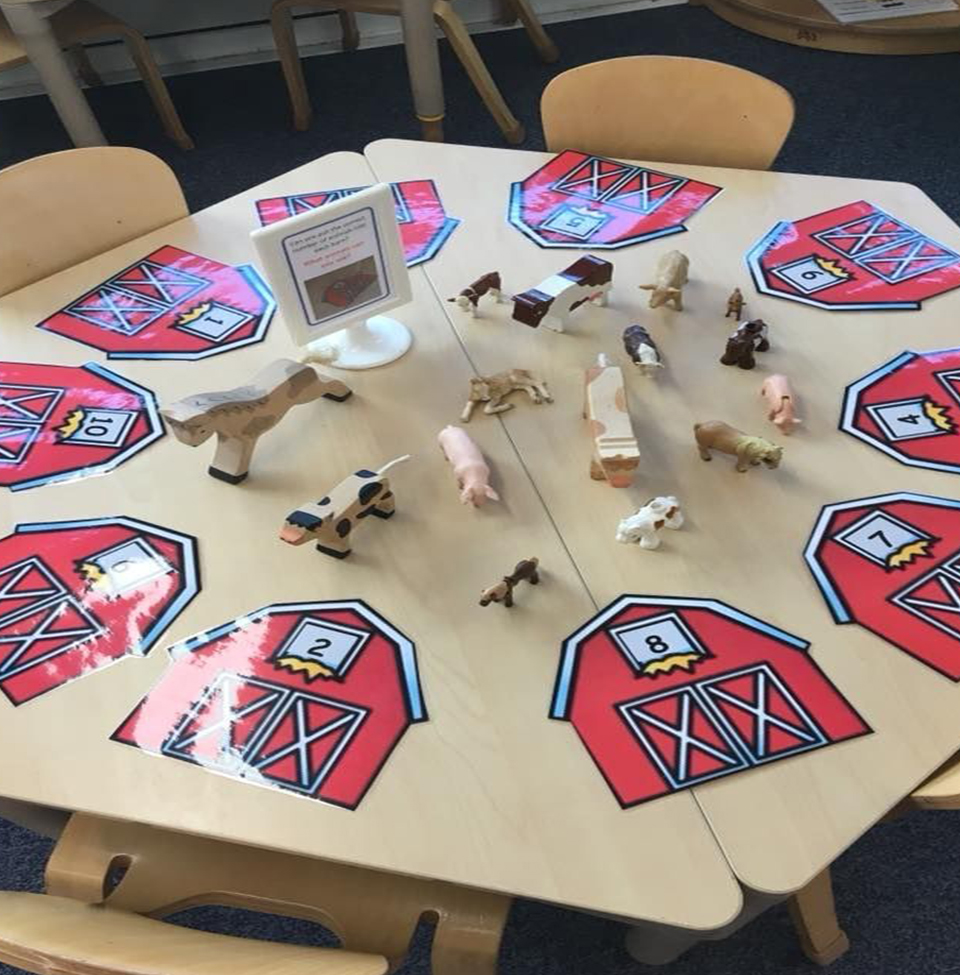
Image Reference: Adrianna Garza, Pinterest
Sheep Shearing Station
Foam on sheep cutouts for children to “shear.”
Strategies for Educators:
- Introduce words like “wool,” “shear,” and “fluffy.”
- Compare textures before and after shearing.
- Link to real‑world products (wool sweaters, blankets).
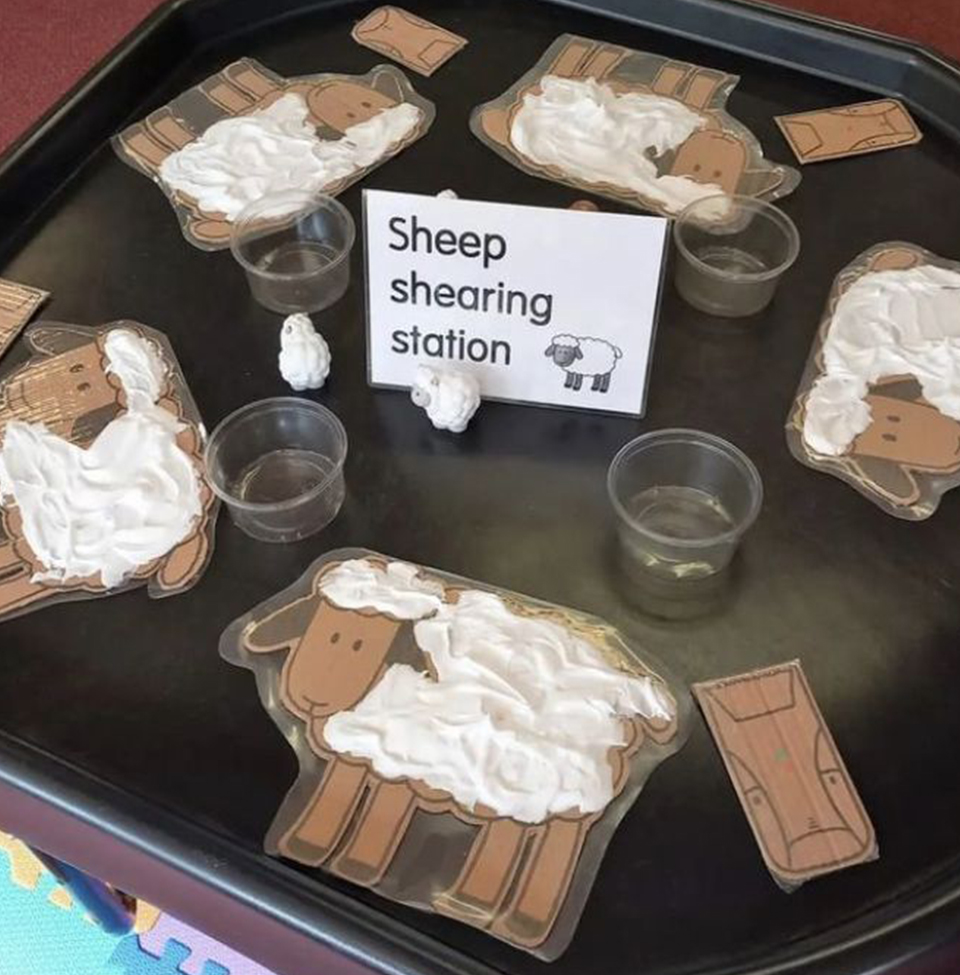
Image Reference: Anna Graham, Pinterest
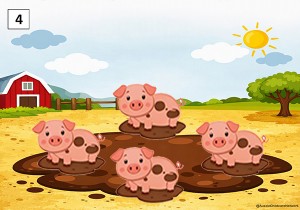
Pigs in the Mud
Pig figurines placed on mud mats matched to number cards.
Strategies for Educators:
- Encourage children to count aloud as pigs are added.
- Retell a pig‑in‑the‑mud story for literacy integration.
- Extend by asking “What happens if more pigs join?” for problem‑solving.
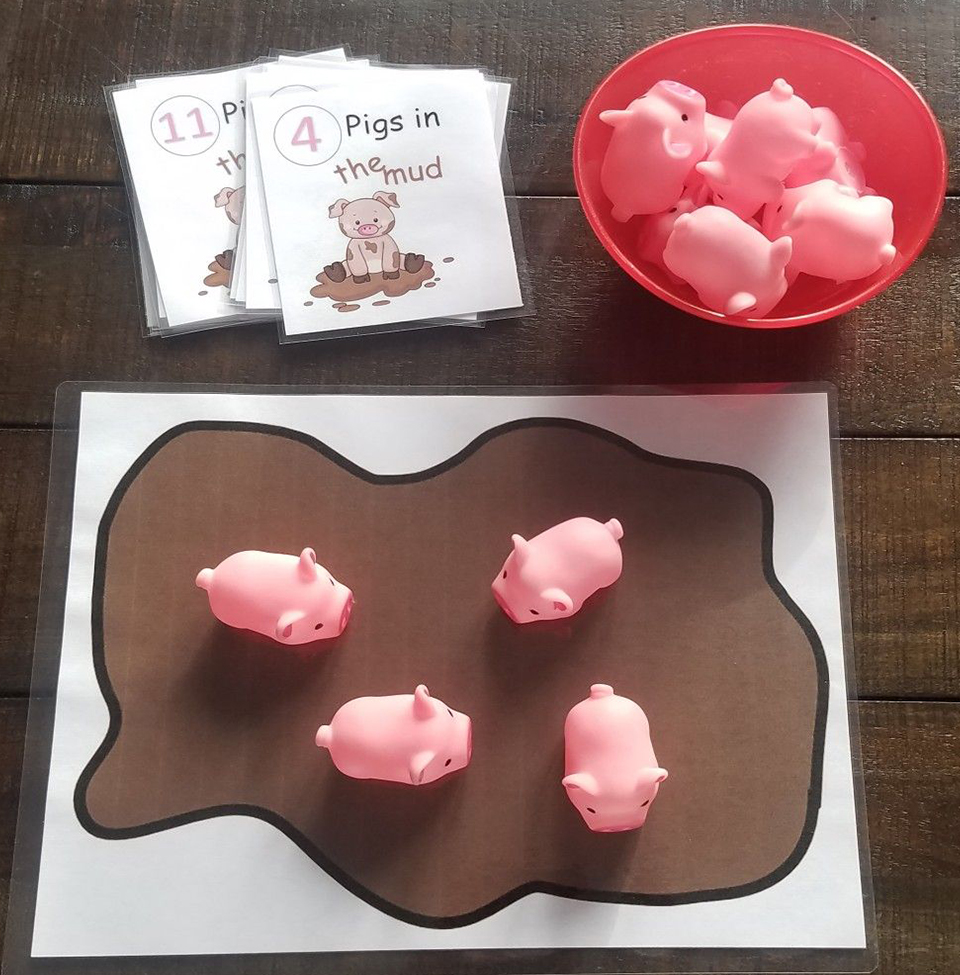
Image Reference: Amber Niemann, Pinterest
Leg Sorting Game
Baskets labeled “2 legs” and “4 legs” for sorting figurines.
Strategies for Educators:
- Prompt children to explain their reasoning (“Why does the chicken go here?”).
- Extend classification by adding insects (6 legs).
- Compare similarities and differences between animals.
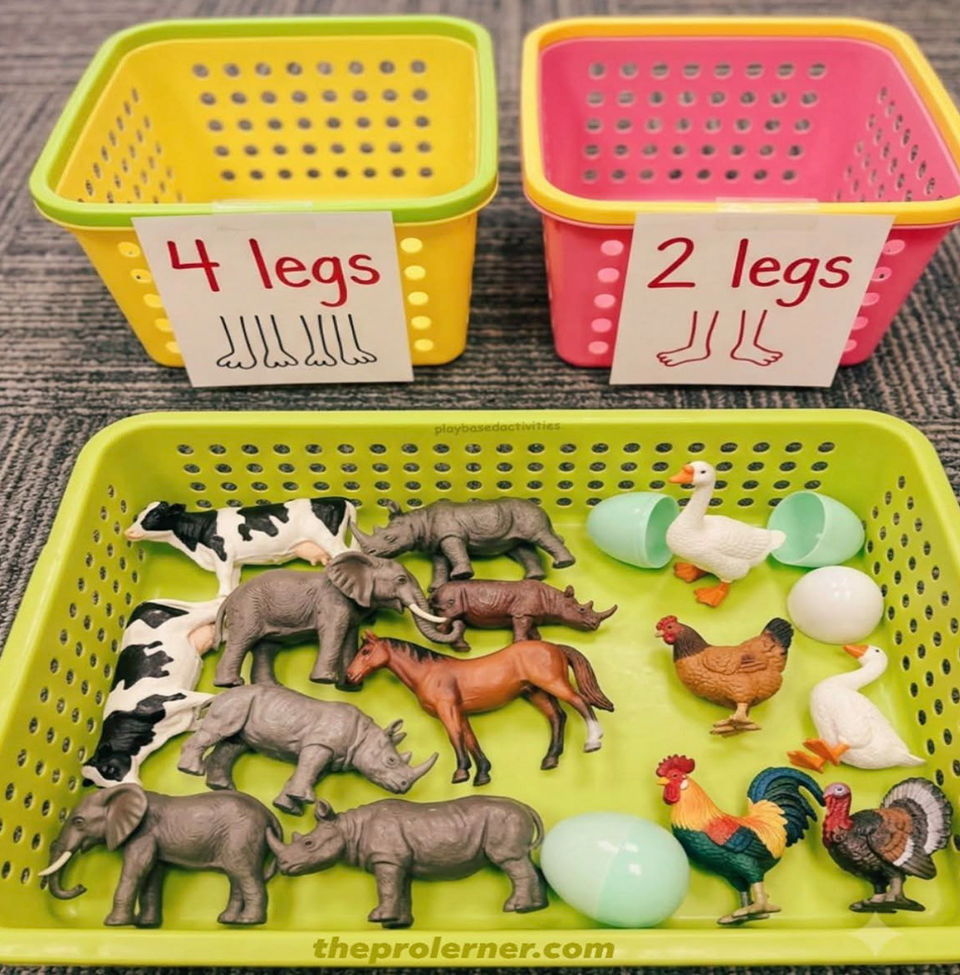
Image Reference: Early Spark Academy & Childcare, Pinterest
Mini Farm World
The tray is divided into grass, mud, water, and sand with toy animals.
Strategies for Educators:
- Encourage imaginative storytelling (“The horse is running to the water”).
- Prompt children to move animals between areas to explore habitats.
- Extend by adding props like fences or tractors for role play.
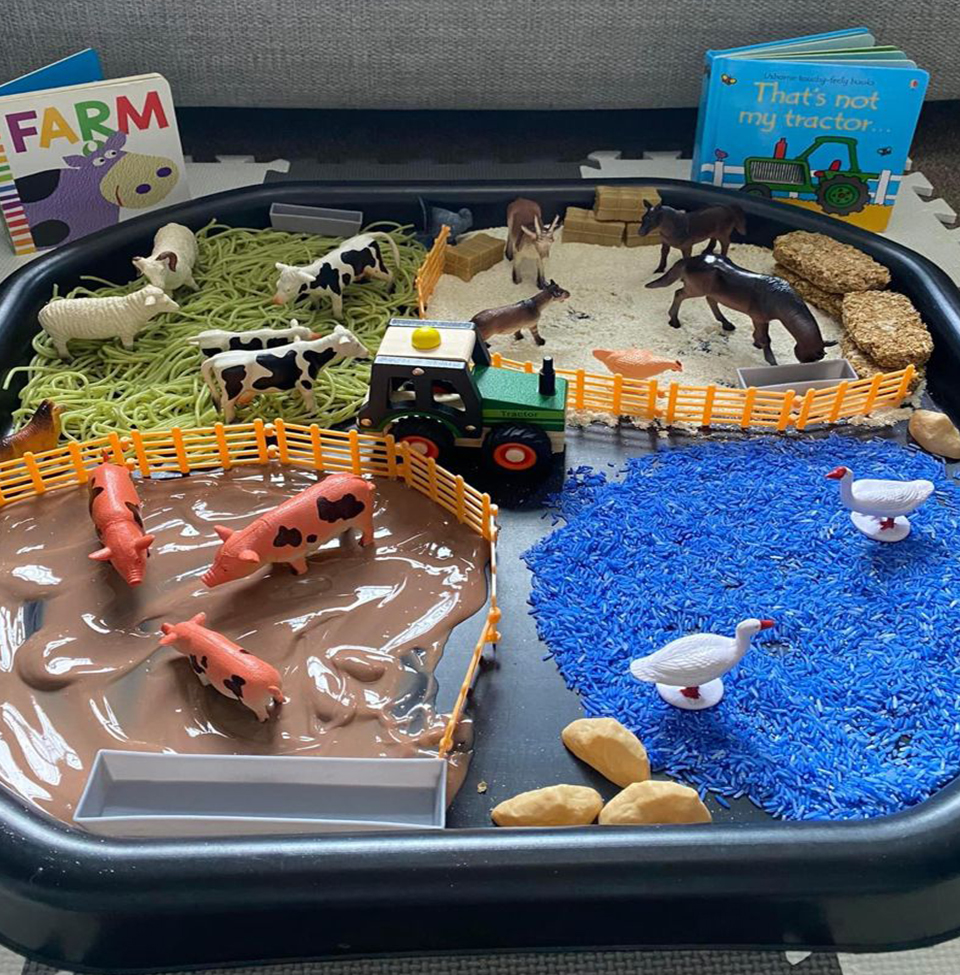
Image Reference: Lois Bradley, Pinterest
Feathered Chicken Craft
Chicken cutouts decorated with colorful feathers.
Strategies for Educators:
- Encourage pattern‑making with feather colors.
- Discuss how feathers keep chickens warm and dry.
- Extend by comparing bird feathers with other coverings (fur, scales).
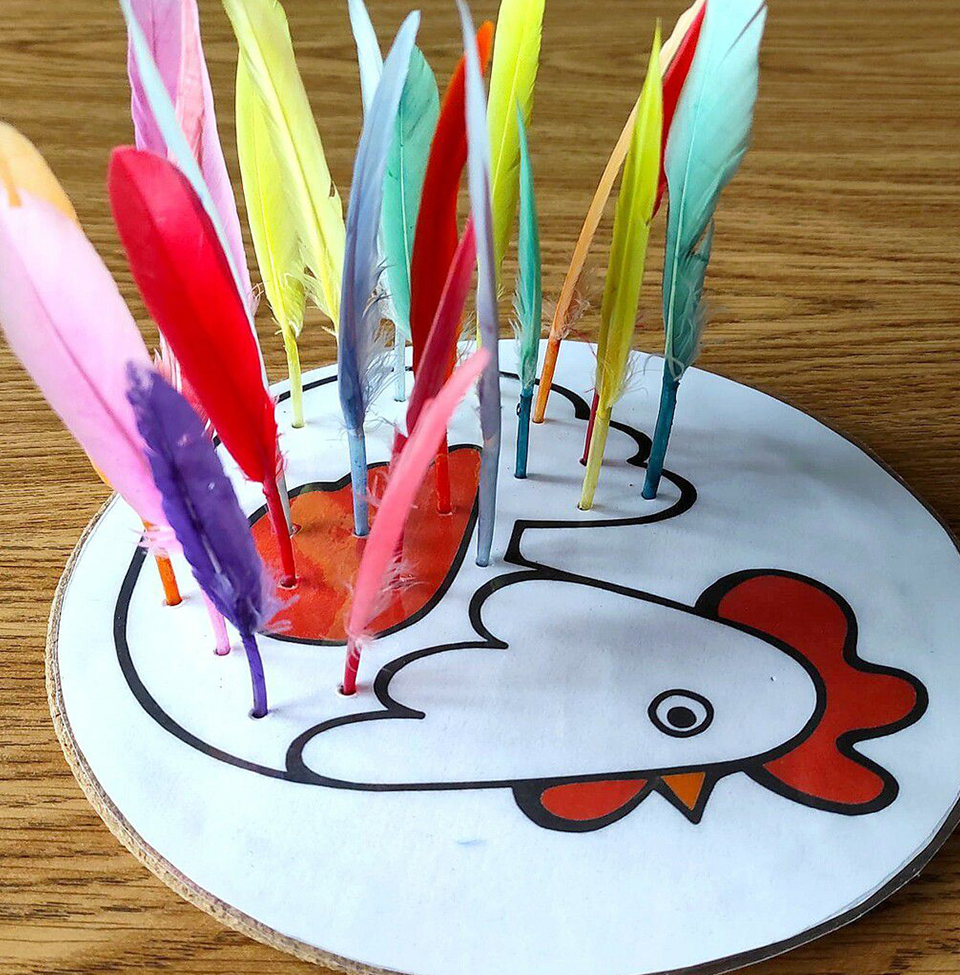
Image Reference: Le Blog de Nounoucoin Despetit, Pinterest
Feed the Animals
Numbered boards with animals and cups, beans used to “feed.”
Strategies for Educators:
- Reinforce counting by feeding the correct number of beans.
- Compare amounts (“Who ate more?”).
- Extend by introducing simple addition/subtraction with beans.
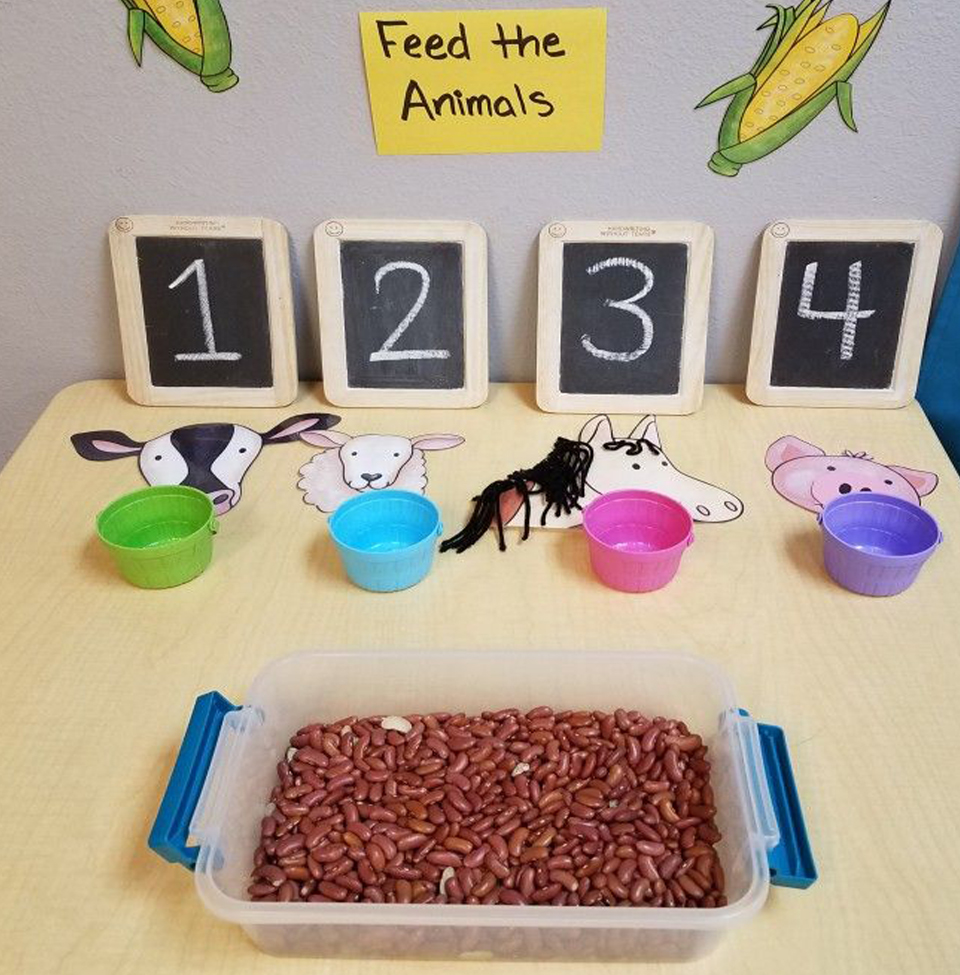
Image Reference: Lexie Spearman, Pinterest
Washing Farm Animals In Mud
Children place farm animals in a mud tray and then wash them clean using water, brushes, or cloths.
Strategies for Educators:
- Introduce words like “dirty,” “clean,” “scrub,” and “rinse,” encouraging children to describe each step.
- Ask children to count how many farm animals are muddy and how many are clean, reinforcing number concepts.
- Discuss why animals (and people) need washing, linking to hygiene and health.

Image Reference: Tired Mom, Supermom, Pinterest
Practical Strategies
- Role Play Corner: Add costumes and props for deeper imaginative play.
- Farm Songs: Use music to strengthen memory and rhythm.
- Storybooks: Pair activities with farm‑themed picture books.
- Food Origins: Connect animals to everyday products like milk, eggs, and wool.

 Open ended questions cannot be responded to with one word answers such as yes or no. These types of questions enables a child to provide
 During your child’s preschool years, an important milestone begins to emerge. This is the development of pre-writing skills. Pre-writing skills are used to encourage, develop
 An Acknowledgment of the Country is a way of showing respect for the Traditional Owners and can be given by both non-Indigenous people and Aboriginal
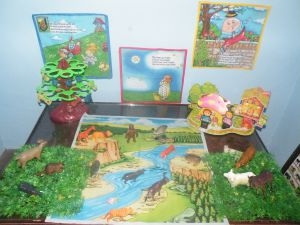 Open ended materials enables children to play freely. They are objects that have no rules to follow, use or function. Raw materials that can be
 Language plays an important role in a child’s development. It enables a child to communicate effectively with their family, learn at school, socialize with friends,
 Like adults, children have to deal with their own stress in life. Moving house, starting a new school, preparing for a new sibling - these are
 Playdough is such a versatile material. It provides numerous benefits to children as they manipulate it, it is safe and soothing and provides children with
 Teaching children about sustainability enables them to appreciate and respect the natural environment. Early childhood services can provide meaningful hand on learning experiences in order
 Recycling is an important concept that teaches children to care for the environment. It encourages children to be responsible and show a growing appreciating for
 Incursions provide children with the opportunity to explore meaningful learning experiences in the comfort of their early childhood service. The following provides a directory of