



The EYLF practices are more than guiding principles; they’re invitations to co-create vibrant, inclusive, and emotionally safe learning environments. Whether you're nurturing infants, engaging toddlers, or scaffolding preschoolers’ agency, these strategies help bring the EYLF to life in ways that feel authentic, responsive, and restorative.
Each practice below includes:

Summative assessments are more than end-point reflections—they’re storytelling tools that honour each child’s journey. They help educators celebrate growth, identify emerging skills, and co-plan intentional next steps. This guide is designed for quick glances during documentation, team huddles, or family meetings, keeping your language strengths-based, specific, and emotionally resonant.
Use it to:

Here’s an educator-friendly EYLF V2.0 Reference Sheet designed for quick use in planning, documentation, and reflection. It’s structured to support intuitive linking between observations and outcomes, with simplified language and examples to spark educator insight.
A: You can show individual learning cycles in a simplified way by using visual templates and structured documentation that align with the EYLF. These tools help educators track each child’s progress without overwhelming complexity. Here are a few effective strategies.
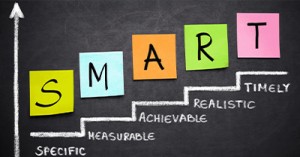
In the fast-paced world of education, professional growth can feel like a moving target. Between compliance demands, curriculum shifts, and the emotional labour of teaching, it’s easy to lose sight of your own development. That’s where SMART goals come in—offering a structured, achievable way to grow with purpose.

Critical reflection is more than a checkbox on a compliance form—it’s a powerful tool for growth, insight, and transformation in educational practice. Yet for many educators, it can feel abstract, time-consuming, or overly complex. This article breaks down critical reflection into accessible steps, offering tools and prompts that make it both meaningful and manageable.

In early childhood education, documentation is often framed as evidence or proof of learning, compliance, or curriculum alignment. But what if we reimagined it as a mirror? A tool that reflects not just cognitive milestones but emotional journeys, identity formation, and the quiet power of self-expression?
Visual documentation drawings, photos, annotated art, and symbolic storytelling can become a language of emotional literacy. It allows children to say what words cannot and invites educators to listen with their eyes, hearts, and intuition.

A Child-Led Inquiry Map is more than a documentation tool; it’s a living framework that honours children’s curiosity, amplifies their voices, and scaffolds meaningful learning journeys. Rooted in emotionally intelligent and trauma-informed practice, it allows educators to capture the spark of wonder and trace how it evolves into deeper exploration, collaboration, and growth.
By mapping inquiries visually, educators make children’s thinking visible, strengthen family partnerships, and demonstrate alignment with the EYLF v2.0 outcomes. Importantly, inquiry maps also serve as advocacy artifacts, showing policymakers and leaders the richness of child voice beyond compliance checklists.

Reflecting on pedagogy is where practice becomes purpose. It’s the moment we pause, zoom out, and ask not just what we’re doing—but why, how, and who it serves. In early childhood education, this reflection is a deeply relational, emotionally intelligent act that transforms routines into revelations.

Documentation walls are more than displays—they are living narratives of children’s learning, identity, and community. When aligned with the Early Years Learning Framework (EYLF), they become powerful tools for reflection, family engagement, and sector advocacy. Below are modular, emotionally intelligent wall concepts for each of the five EYLF Learning Outcomes, adaptable to your centre’s style, cultural symbolism, and children’s voices.
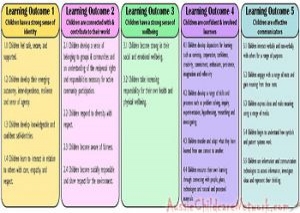 Here is the list of the EYLF Learning Outcomes that you can use as a guide or reference for your documentation and planning. The EYLF… Read More
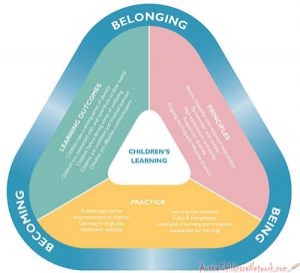 The EYLF is a guide which consists of Principles, Practices and 5 main Learning Outcomes along with each of their sub outcomes, based on identity,… Read More
 This is a guide on How to Write a Learning Story. It provides information on What Is A Learning Story, Writing A Learning Story, Sample… Read More
 One of the most important types of documentation methods that educators needs to be familiar with are “observations”. Observations are crucial for all early childhood… Read More
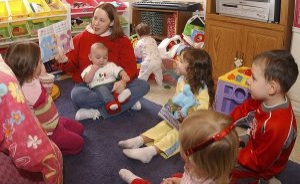 To support children achieve learning outcomes from the EYLF Framework, the following list gives educators examples of how to promote children's learning in each individual… Read More
 Reflective practice is learning from everyday situations and issues and concerns that arise which form part of our daily routine while working in an early… Read More
 When observing children, it's important that we use a range of different observation methods from running records, learning stories to photographs and work samples. Using… Read More
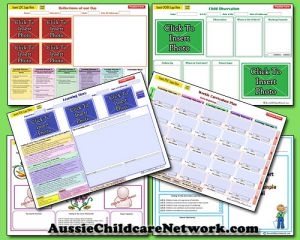 Within Australia, Programming and Planning is reflected and supported by the Early Years Learning Framework. Educators within early childhood settings, use the EYLF to guide… Read More
 This is a guide for educators on what to observe under each sub learning outcome from the EYLF Framework, when a child is engaged in… Read More
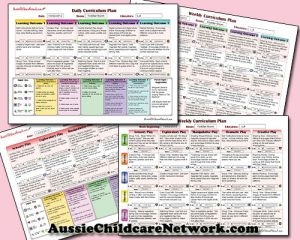 The Early Years Learning Framework describes the curriculum as “all the interactions, experiences, activities, routines and events, planned and unplanned, that occur in an environment… Read More

Children of all ages are fascinated by dinosaurs. Children's imaginations and curiosities are sparked by...
See more...
Exceeding Theme 1 focuses on practice being embedded in service operations and highlights that high-quality approaches...
See more...
Including Aboriginal and Torres Strait Islander (ATSI) perspectives in the learning environment is essential for...
See more...