



Reflections are powerful tools for growth, learning, and connection. Whether used in education, professional practice, or personal journaling, a strong reflection goes beyond recounting events—it captures authentic experiences, explores emotions, and identifies lessons that shape future actions. This checklist is designed to help writers and evaluators ensure that reflections are meaningful, structured, and impactful. It can be used by students, educators, colleagues, or anyone seeking to deepen their reflective practice.
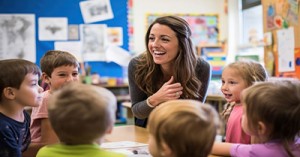
A: Intentional teaching means teaching with a clear purpose. It’s about making thoughtful decisions to help children learn in meaningful ways. At its core, intentional teaching means teaching with a clear purpose. It’s the art of knowing when to step in, when to step back, and how to co-construct learning that is meaningful, inclusive, and connected to each child’s world.

Early childhood education thrives on curiosity, exploration, and authentic engagement. David A. Kolb’s Experiential Learning Theory offers a powerful framework for understanding how young children learn through doing, reflecting, thinking, and trying again. Rather than viewing learning as a linear process, Kolb positions it as a continuous cycle—one that mirrors the natural way children interact with the world.

The EYLF provides a foundation for quality early childhood education in Australia. At its heart are the five learning outcomes, which guide educators in supporting children’s holistic development. These outcomes—Identity, Community, Well-being, Learning, and Communication—are essential, but remembering them in order can sometimes be tricky. To make them easier to recall, educators can use creative strategies such as mnemonics, visual aids, storytelling, and interactive activities. This article explores fun and practical methods to embed the outcomes into everyday practice.

In early childhood education, the words we choose shape how learning is seen, valued, and shared. The EYLF gives us a powerful framework but in the rush of daily practice, it’s easy to lose confidence in linking outcomes or finding the right language to describe children’s learning. That’s where keywords and prompts become transformative.
Using consistent, purposeful language helps educators capture learning clearly and confidently. It supports teams to analyse observations with depth, link meaningfully to outcomes, and plan follow‑ups that honour each child’s identity, culture, and capabilities. Most importantly, it keeps documentation manageable, intentional, and child‑centred.
This article explores how EYLF‑aligned keywords and prompts can streamline your observation cycle, strengthen reflective practice, and bring clarity to everyday planning.

The EYLF practices are more than guiding principles; they’re invitations to co-create vibrant, inclusive, and emotionally safe learning environments. Whether you're nurturing infants, engaging toddlers, or scaffolding preschoolers’ agency, these strategies help bring the EYLF to life in ways that feel authentic, responsive, and restorative.
Each practice below includes:

Summative assessments are more than end-point reflections—they’re storytelling tools that honour each child’s journey. They help educators celebrate growth, identify emerging skills, and co-plan intentional next steps. This guide is designed for quick glances during documentation, team huddles, or family meetings, keeping your language strengths-based, specific, and emotionally resonant.
Use it to:

Here’s an educator-friendly EYLF V2.0 Reference Sheet designed for quick use in planning, documentation, and reflection. It’s structured to support intuitive linking between observations and outcomes, with simplified language and examples to spark educator insight.

A: You can show individual learning cycles in a simplified way by using visual templates and structured documentation that align with the EYLF. These tools help educators track each child’s progress without overwhelming complexity. Here are a few effective strategies.
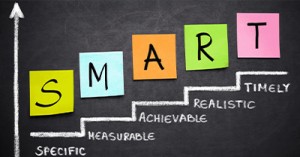
In the fast-paced world of education, professional growth can feel like a moving target. Between compliance demands, curriculum shifts, and the emotional labour of teaching, it’s easy to lose sight of your own development. That’s where SMART goals come in—offering a structured, achievable way to grow with purpose.
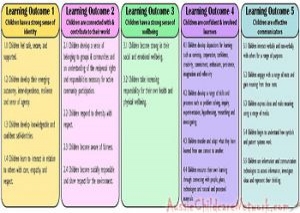 Here is the list of the EYLF Learning Outcomes that you can use as a guide or reference for your documentation and planning. The EYLF… Read More
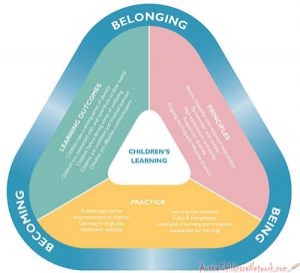 The EYLF is a guide which consists of Principles, Practices and 5 main Learning Outcomes along with each of their sub outcomes, based on identity,… Read More
 This is a guide on How to Write a Learning Story. It provides information on What Is A Learning Story, Writing A Learning Story, Sample… Read More
 One of the most important types of documentation methods that educators needs to be familiar with are “observations”. Observations are crucial for all early childhood… Read More
 To support children achieve learning outcomes from the EYLF Framework, the following list gives educators examples of how to promote children's learning in each individual… Read More
 Reflective practice is learning from everyday situations and issues and concerns that arise which form part of our daily routine while working in an early… Read More
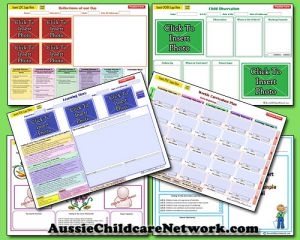 Within Australia, Programming and Planning is reflected and supported by the Early Years Learning Framework. Educators within early childhood settings, use the EYLF to guide… Read More
 When observing children, it's important that we use a range of different observation methods from running records, learning stories to photographs and work samples. Using… Read More
 This is a guide for educators on what to observe under each sub learning outcome from the EYLF Framework, when a child is engaged in… Read More
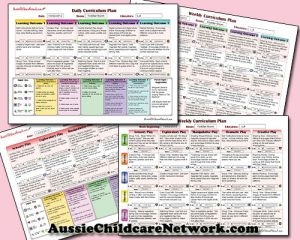 The Early Years Learning Framework describes the curriculum as “all the interactions, experiences, activities, routines and events, planned and unplanned, that occur in an environment… Read More

Early childhood classrooms are vibrant, bustling spaces filled with energy, exploration, and social interaction. While...
See more...
Erik Erikson’s theory of psychosocial development is a great framework for designing activities that support...
See more...
In early childhood education, the words we choose shape how learning is seen, valued, and...
See more...